


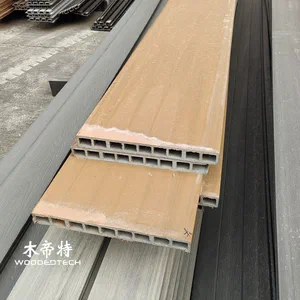
L18080 wpc beams are designed as large outdoor pergola and grape trellis beams with excellent stability
Learn how WPC beam profile design, hollow and solid sections, ribs, and surface patterns affect strength, weight, cost, and installation.
| Payment | T/T in advance. Customized order: T/T, 50% prepayment, 50% balance before loading. |
|---|---|
| Transaction Terms | FOB, CIF, EXW, etc. |
| Samples | <30cm: samples for free. >30cm: samples order (the sample fee can be deducted when placing a container order later). |
| Length | For 20GP container, max length is 5.8 meters (longest); mostly 2.2 / 2.4 / 2.9 / 3.0 / 4.0 meters (recommended) or customized. |
L18080 wpc beams are designed for large outdoor pergolas and grape trellises where long spans, stable support, and clean installation matter. For this kind of structure, the profile is not just a shape choice; it directly affects load capacity, material usage, shipping cost, and how easily the beam can be mounted on site.
Profile design and structural behavior
In WPC extrusion mold design, the first decision is the cross-section. A wider profile with controlled wall thickness gives better resistance to bending and twisting, which is important for overhead beams exposed to wind, heat expansion, and long-term service loads. For pergola applications, the L18080 type profile is commonly chosen because it balances visual proportion with enough structural mass to feel solid without becoming unnecessarily heavy.
Hollow and solid structures each serve a different purpose. Hollow beams reduce weight and material consumption, which lowers production cost and makes handling easier during installation. They are also easier to transport in longer lengths. Solid beams, by contrast, offer higher stiffness and better impact resistance, but they consume more compound and increase both unit cost and dead load. For large outdoor frames, a well-designed hollow section often provides the best practical result when wall thickness, rib layout, and support spacing are properly matched.
Rib design, reinforcement, and load control
Internal ribs are the hidden part of the design that often decides whether a beam performs well in real conditions. Ribs improve section modulus, reduce panel flutter, and help the profile resist sagging under long spans. They also stabilize the extrusion during cooling, which helps maintain dimensional consistency from batch to batch.
A good rib layout allows the beam to use less raw material while keeping the outer walls from collapsing or deforming. That matters in pergola and trellis systems, where the product must stay straight, accept fasteners reliably, and hold alignment over time. In practice, the mold engineer must balance rib density with flowability, because overly complex ribs can slow production or create surface defects.
Surface pattern and installation performance
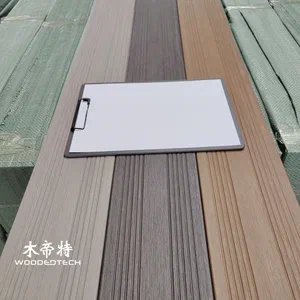
Surface pattern affects more than appearance. A wood grain or fine embossed finish can improve the product’s visual integration with outdoor landscapes, but the texture must not interfere with cutting, drilling, or joining. For beam products, the surface should remain clean enough for precise assembly, especially when brackets, caps, or hidden connectors are used.
Profile edges and corners also influence installation speed. Straight, consistent lines make it easier to mark, align, and fix beams on site. If the design includes practical drainage channels or concealed mounting zones, the installer spends less time adjusting parts and the finished structure looks more uniform. That is a real advantage in commercial outdoor projects where labor efficiency matters.
Cost and application balance
The best WPC beam design is usually not the thickest one. It is the profile that delivers the required stiffness with the lowest material waste and the least installation risk. Hollow structures reduce cost and weight, solid structures raise strength, and rib design fine-tunes performance between those two extremes. Surface patterns support the visual side of the product, but they should never compromise fit, machining, or assembly.
For L18080 beams used in pergolas and grape trellises, the target is stable outdoor performance with manageable extrusion cost and straightforward installation. That is why profile engineering, not just material selection, determines whether the final beam works well in the field.
FAQ
Q: Why are hollow WPC beams often used for pergolas? A: Hollow beams reduce weight and material use while still providing enough stiffness when the wall thickness and rib layout are properly designed.
Q: Do solid WPC beams last longer than hollow ones? A: Not automatically. Solid beams are stronger in some applications, but a properly engineered hollow beam can perform very well with better cost and handling efficiency.
Q: How does surface texture affect installation? A: Texture mainly affects appearance, but it should also support clean cutting, drilling, and fastening without creating fit problems during assembly.
Related Products
 L12070 wpc pergola beams are suitable for creating various outdoor pergola styles with flexible structural applications
 L200200 wpc pergola columns with extra large size and thick wall hollow structure provide strong support for outdoor pergola projects
 L200105 WPC beams with super large dimensions provide reliable structural support for spacious outdoor pergola and landscape designs
 wpc panel size L120120-2 square posts with round inner holes offer a unique design solution for outdoor pergola construction
Related Articles
Get a Free Quote
Interested in L18080 wpc beams are designed as large outdoor pergola and grape trellis beams with excellent stability? Fill in the form and we will reply within 24 hours.