
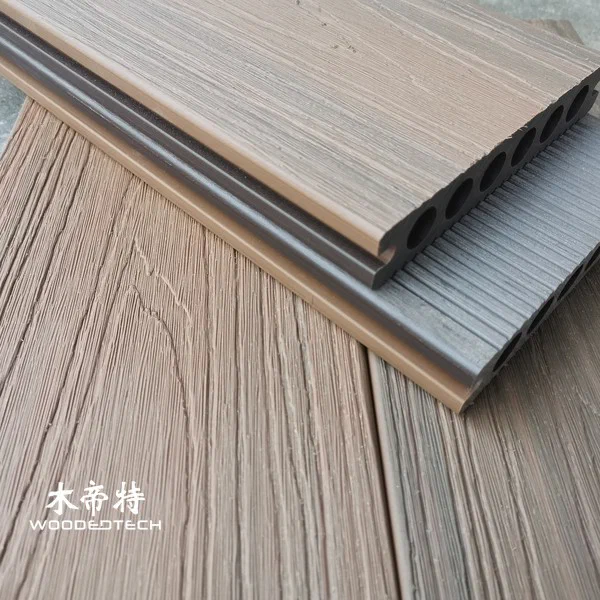
The GD14023 Best Composite Decks Feature a Single-Sided Co Extrusion Surface with a Classic Round Hole Structure for Outdoor Applications
GD14023 combines a protective single-sided co-extrusion surface with a round-hole hollow structure for efficient, durable outdoor WPC decking.
| Payment | T/T in advance. Customized order: T/T, 50% prepayment, 50% balance before loading. |
|---|---|
| Transaction Terms | FOB, CIF, EXW, etc. |
| Samples | <30cm: samples for free. >30cm: samples order (the sample fee can be deducted when placing a container order later). |
| Length | For 20GP container, max length is 5.8 meters (longest); mostly 2.2 / 2.4 / 2.9 / 3.0 / 4.0 meters (recommended) or customized. |
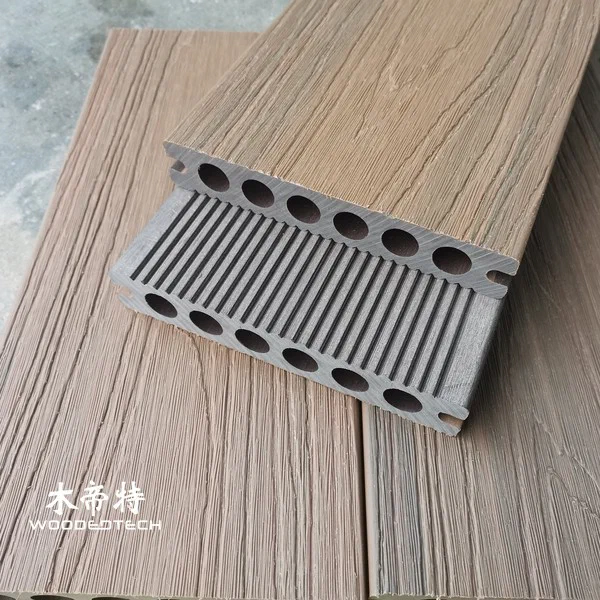
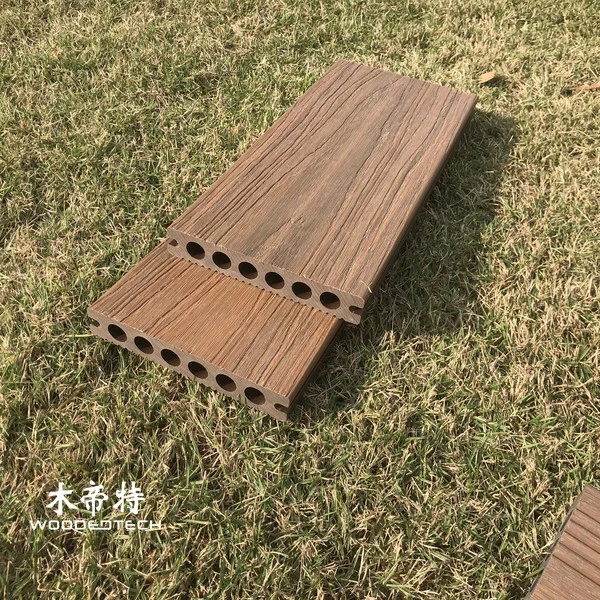
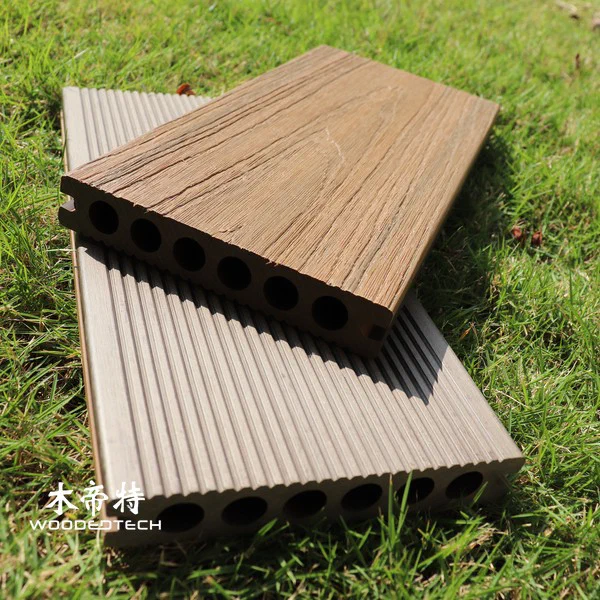
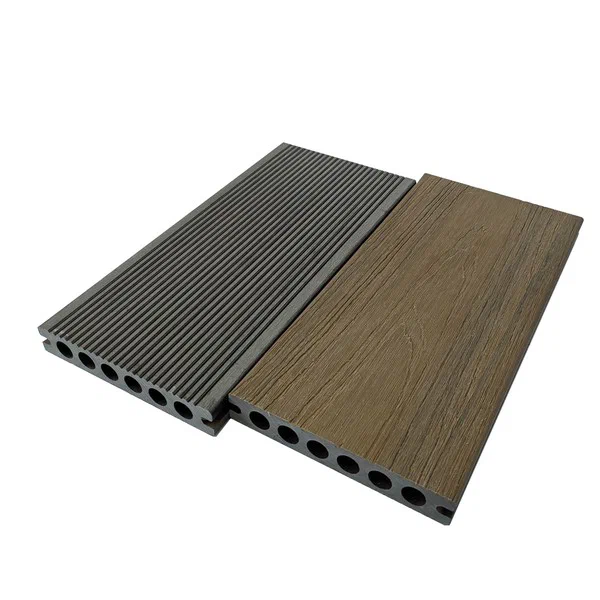
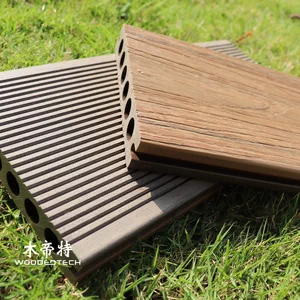
The GD14023 composite decking profile combines a single-sided co-extrusion surface with a classic round-hole hollow structure, creating a practical balance between outdoor durability, structural strength, material efficiency, and installation convenience. Its design demonstrates how extrusion mold engineering can influence the performance, appearance, weight, and manufacturing cost of wood plastic composite (WPC) decking.
How Profile Design Influences Composite Decking Performance
In WPC extrusion, profile design determines how the material is distributed across a decking board and how the finished product responds to loads, temperature changes, and outdoor exposure. A well-designed profile must provide sufficient bending strength and dimensional stability without using unnecessary material.
The GD14023 profile is developed around two complementary design features: a protective co-extruded surface on one side and an internal round-hole structure. These features serve different purposes. The outer layer improves surface protection, while the hollow internal section reduces material consumption and helps control the overall weight of each board.
For manufacturers, the extrusion mold must maintain consistent wall thickness, balanced material flow, and accurate dimensional tolerances. Poorly distributed material can cause uneven cooling, profile deformation, or inconsistent mechanical performance. Mold design therefore plays an important role in achieving reliable production quality.
Hollow Structure vs. Solid Structure: Strength, Weight, and Cost
One of the most important decisions in WPC decking development is whether to use a hollow or solid profile. Both structures have advantages, but their suitability depends on the application, expected loads, installation method, and target price.
Solid WPC decking contains more material throughout its cross-section. This generally provides greater mass and can offer better resistance to localized impact and certain concentrated loads when the material formulation and dimensions are comparable. Solid boards are often selected for demanding applications where a heavier, more substantial profile is preferred.
However, using more raw material increases production costs and board weight. Heavier boards can also require more effort during transportation, handling, and installation.
Hollow WPC decking addresses these concerns by removing material from selected areas inside the profile. This reduces material consumption while maintaining structural support through the remaining outer walls and internal ribs. A properly engineered hollow board can deliver a favorable strength-to-weight ratio at a more competitive manufacturing cost.
The GD14023 uses a classic round-hole structure rather than a completely solid cross-section. Its circular internal cavities help reduce unnecessary material while preserving material around the load-bearing sections. This makes the design suitable for outdoor decking projects where weight control, material efficiency, and practical structural performance are important.
The actual load capacity still depends on board dimensions, wall thickness, material formulation, support spacing, and installation conditions. Hollow construction should therefore be evaluated through mechanical testing rather than appearance alone.
Why Round-Hole Structures Matter in Extrusion Mold Design
The shape, number, and positioning of internal cavities directly influence the mechanical behavior and production stability of a WPC decking profile.
Round holes are a common choice because their curved geometry avoids the sharp internal corners found in some rectangular hollow designs. These corners can create localized stress concentrations, particularly when a board experiences repeated loading or temperature-related movement.
A classic round-hole structure offers several practical advantages:
- Material efficiency: Internal cavities reduce the amount of WPC compound required for each linear meter of decking.
- Weight reduction: Lighter boards are easier to transport, carry, position, and install.
- Structural continuity: The surrounding material forms continuous sections that contribute to bending resistance and load distribution.
- Consistent geometry: Properly designed circular openings can support stable material flow through the extrusion die.
- Manufacturing economy: Lower material consumption can improve production efficiency and reduce unit costs.
From a mold engineering perspective, the diameter and spacing of the holes must be carefully calculated. If the cavities are too large, the remaining walls may become insufficiently strong. If they are too small, the material savings may not justify the additional complexity of the extrusion tooling.
The connecting sections between the holes also require attention. Their thickness influences stiffness, impact resistance, and cooling behavior. A balanced design helps prevent uneven shrinkage, internal stress, and profile distortion during production.
Rib Design and Its Effect on Installation Performance
Internal ribs connect different sections of a hollow WPC profile and help maintain its cross-sectional shape. Their arrangement is particularly important because hollow decking must resist bending while maintaining sufficient support around the internal cavities.
A well-designed rib system distributes loads across the profile and helps prevent excessive deformation under normal service conditions. It also provides additional structural stability during handling and installation.
However, adding more ribs does not automatically produce a better decking board. Excessive ribs increase material consumption and may complicate extrusion flow. Poorly positioned ribs can also create uneven cooling zones, resulting in dimensional inconsistencies.
For GD14023-type round-hole decking, rib thickness, cavity spacing, and outer-wall dimensions should be considered together. The objective is to achieve an appropriate balance between stiffness, weight, material usage, and production stability.
Installation performance also depends on the relationship between the profile and its fixing system. Board dimensions, fastening grooves, clip compatibility, joist spacing, and screw positions must be coordinated during product development. A profile that is structurally efficient but difficult to secure can increase installation time and labor costs.
Single-Sided Co-Extrusion Surface for Outdoor Applications
The surface structure is another important factor in composite decking performance. Unlike conventional uncapped WPC boards, co-extrusion decking uses an additional polymer-rich protective layer around the composite substrate.
The GD14023 features a single-sided co-extrusion surface, placing the protective layer on the designated visible side of the board. This construction provides an additional barrier against common outdoor exposure factors, including moisture, surface staining, and weather-related deterioration.
The protective surface also helps maintain a more consistent appearance during long-term outdoor use. Depending on the polymer formulation and surface treatment, it can improve resistance to fading, scratching, and everyday wear.
Single-sided co-extrusion offers a practical manufacturing option when the upper surface requires enhanced protection while the underside can retain a conventional WPC structure. Compared with fully capped designs, it can reduce the amount of additional coating material required.
For mold designers, the challenge is maintaining consistent bonding and layer distribution throughout the production process. Extrusion temperature, material compatibility, melt pressure, and production speed all influence the quality of the co-extruded layer. Stable processing is essential to avoid uneven coverage, weak bonding, or surface defects.
Surface Patterns and Their Influence on Appearance and Safety
Surface patterns affect more than the visual style of outdoor decking. They also influence walking comfort, surface contact, cleaning requirements, and the overall appearance of an installation.
Wood-grain embossing creates a natural timber-like appearance, making composite decking suitable for residential gardens, patios, balconies, and commercial outdoor spaces. Brushed textures provide a more understated finish, while deeper patterns can create stronger visual definition.
For the GD14023, the surface pattern should be developed together with the single-sided co-extrusion layer. The texture needs to remain consistent without compromising the protective coating or creating excessive material buildup.
Surface geometry can also influence slip resistance, but appearance alone cannot establish whether a decking board is safe under wet conditions. Appropriate wet-slip testing is necessary, particularly for poolside areas, balconies, and other locations exposed to rain or standing water.
Choosing the Right Balance for Outdoor WPC Decking
The GD14023 illustrates how profile geometry, hollow construction, rib placement, and surface treatment work together in composite decking development. Its round-hole structure helps reduce material consumption and board weight, while the single-sided co-extrusion surface provides additional protection for the exposed side.
For WPC manufacturers, importers, and project buyers, evaluating a decking profile requires more than comparing board prices or external dimensions. Wall thickness, internal cavity geometry, bending performance, surface durability, extrusion consistency, and fastening compatibility all influence the final product value.
A carefully engineered profile can reduce raw material costs without sacrificing the mechanical performance required for its intended application. By combining efficient hollow construction with an appropriate co-extrusion surface, GD14023 offers a practical design direction for outdoor composite decking production and installation.
Related Products
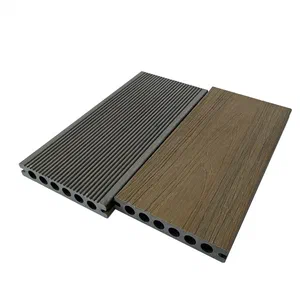 GD14023 Composite Decking Versus Wood Decking Features a Round Hole Structure with Semi Capped Co Extrusion
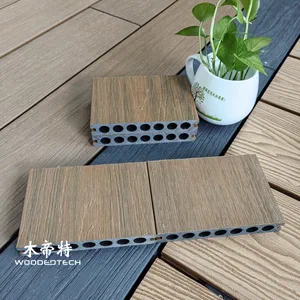 The GD14622 Decking in WPC Features a Classic Round Hole Co Extrusion Design That Has Remained Popular for Years
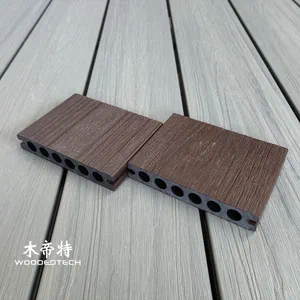 GD13823-3 Redwood Color Round Hole Co Extrusion Decking Composite Decking Brings Classic Chinese Red Style to Outdoor Flooring Projects
 GD14023 Second Generation Semi Capped Co Extrusion Wood Plastic Composites WPC Decking Features a Classic Round Hole Design for Outdoor Flooring
Related Articles
Get a Free Quote
Interested in The GD14023 Best Composite Decks Feature a Single-Sided Co Extrusion Surface with a Classic Round Hole Structure for Outdoor Applications? Fill in the form and we will reply within 24 hours.