
The GD14020S Composite Decking on Sale Features a Solid Core Structure Designed to Withstand Extreme Outdoor Temperature Changes and Freezing Conditions
Explore how the GD14020S solid-core WPC decking profile balances structural strength, weight, surface design, and outdoor temperature resistance.
| Payment | T/T in advance. Customized order: T/T, 50% prepayment, 50% balance before loading. |
|---|---|
| Transaction Terms | FOB, CIF, EXW, etc. |
| Samples | <30cm: samples for free. >30cm: samples order (the sample fee can be deducted when placing a container order later). |
| Length | For 20GP container, max length is 5.8 meters (longest); mostly 2.2 / 2.4 / 2.9 / 3.0 / 4.0 meters (recommended) or customized. |
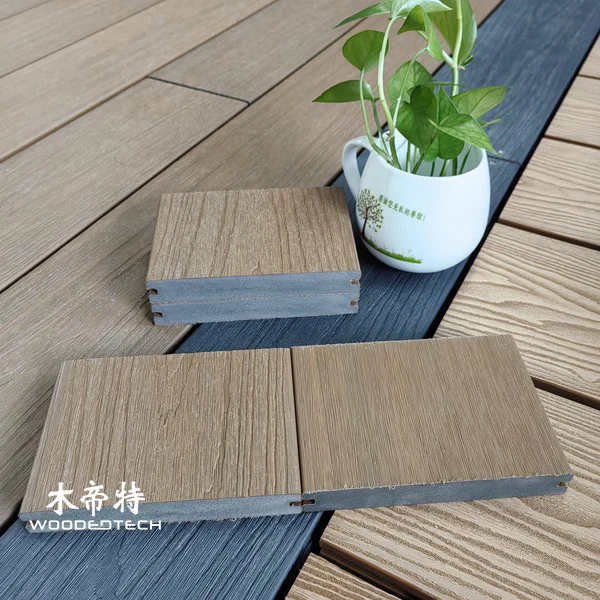
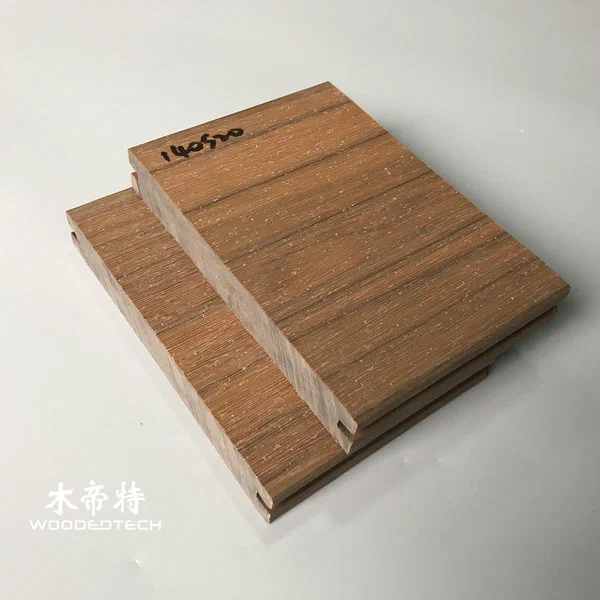
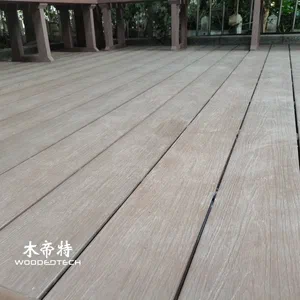
The GD14020S composite decking features a solid core structure engineered to provide reliable strength, dimensional stability, and resistance to demanding outdoor conditions. Designed for environments exposed to extreme temperature fluctuations and freezing weather, this solid-core profile offers a practical solution for projects where structural reliability and long-term performance are essential. Its profile geometry, material distribution, and surface design all contribute to the overall performance of the finished decking system.
How Solid Core Design Improves Structural Strength
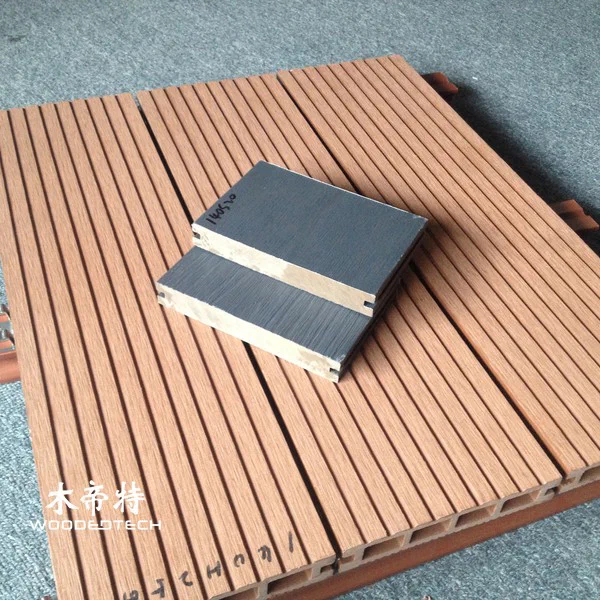
The internal structure of a WPC decking profile directly affects its load-bearing capacity, weight, and resistance to deformation. Compared with hollow profiles, solid composite decking contains more material throughout its cross-section, creating a continuous structure that can provide greater rigidity and more consistent support under concentrated loads.
For the GD14020S, the solid-core configuration is particularly relevant to outdoor applications where decking boards may experience repeated loading, temperature changes, and exposure to moisture. Without internal cavities, the profile has fewer unsupported internal walls and does not rely on thin connecting ribs to maintain its shape. This can improve resistance to localized pressure and reduce the risk of internal structural damage when the board is properly supported and installed.
A solid structure also provides more material around potential fastening locations. This is beneficial during installation because screws and clips can be positioned according to the manufacturer’s fastening requirements without relying on narrow hollow-profile walls. The actual holding strength still depends on the fastening method, material formulation, and installation details.
Solid and Hollow WPC Profiles: Weight, Cost, and Performance
Solid and hollow structures serve different market requirements. Selecting between them requires balancing mechanical performance, transportation costs, material consumption, and installation conditions.
Hollow WPC profiles use internal chambers to reduce material consumption. Their lower weight can make handling and transportation easier, while their reduced material requirements can help control manufacturing costs. However, their performance depends heavily on wall thickness, cavity geometry, and the number and arrangement of internal ribs. Poorly designed hollow sections may experience localized deformation or cracking under concentrated loads.
Solid profiles take a different approach. Their greater material density provides a more substantial cross-section, which can be advantageous for applications requiring additional rigidity and impact resistance. The trade-off is increased weight and higher material consumption per linear meter. For distributors and project contractors, this means transportation, handling, and structural support requirements should be considered alongside the initial board price.
The GD14020S solid-core design targets buyers who prioritize a substantial profile structure and dependable outdoor performance rather than simply minimizing material usage. Its suitability for a particular project should still be evaluated against the expected loads, joist spacing, climate conditions, and installation specifications.
Rib Geometry and Profile Dimensions Matter
For hollow WPC decking, rib design is one of the most important factors influencing structural efficiency. Internal ribs connect the profile walls, distribute applied loads, and help prevent the upper and lower surfaces from bending independently. Their thickness, spacing, orientation, and connection points determine how effectively the profile transfers mechanical stress.
A well-designed hollow profile does not necessarily need thicker walls everywhere. Instead, the extrusion mold should distribute material strategically around areas exposed to higher stress. Excessive rib thickness increases material consumption and weight, while insufficient reinforcement can lead to localized deformation. The objective is to achieve an appropriate balance between stiffness, manufacturing efficiency, and dimensional consistency.
Solid-core profiles eliminate the need for internal supporting ribs, but their external dimensions and cross-sectional geometry remain important. Board width, thickness, edge configuration, and overall material distribution influence bending behavior and load transfer. During mold development, engineers must also consider melt flow, cooling rates, and die design to maintain uniform density and consistent dimensions along the entire extrusion length.
For the GD14020S, a properly engineered solid profile helps simplify the internal cross-section while providing a substantial structure for demanding outdoor decking applications.
Surface Patterns Influence Grip and Installation
Surface design is another important consideration in WPC extrusion mold development. Different patterns influence appearance, friction, cleaning requirements, and manufacturing complexity.
Common composite decking surface treatments include:
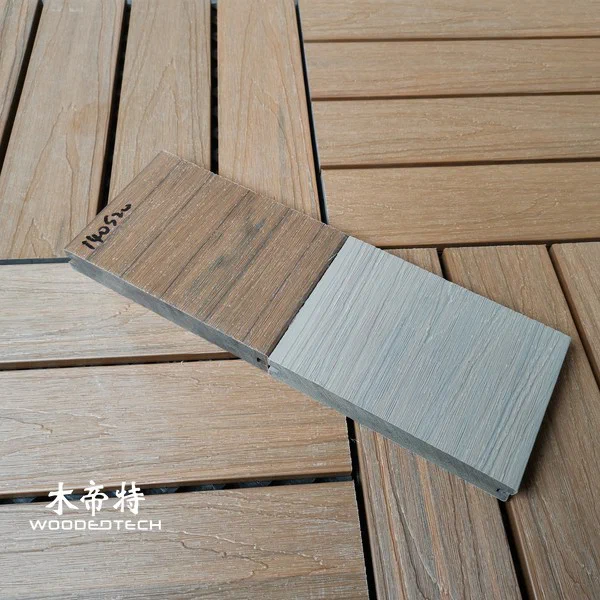
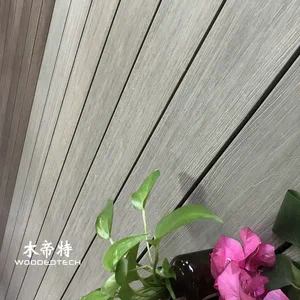
- Wood-grain embossing: Creates a natural timber appearance and adds visual texture.
- Brushed finishes: Provide a relatively subtle texture suitable for contemporary outdoor spaces.
- Grooved surfaces: Create defined lines that influence the board’s appearance and can provide additional surface texture.
- Anti-slip patterns: Use carefully designed surface geometry to improve traction under specified testing conditions.
For the GD14020S, the selected surface pattern should complement its solid-core structure and intended outdoor application. However, surface texture alone does not guarantee slip resistance. Actual performance depends on the material formulation, pattern depth, drainage conditions, wear, and testing results.
Installation performance also depends on the relationship between the board profile and its fastening system. Consistent profile dimensions help installers maintain uniform gaps and alignment. Accurate extrusion tooling is therefore essential for producing boards that fit the specified clips, screws, and supporting joists.
Thermal Expansion and Freezing-Weather Performance
Outdoor WPC decking experiences continuous environmental changes. During summer, elevated temperatures can cause boards to expand, while colder conditions can lead to contraction. Freezing temperatures introduce additional challenges, particularly when moisture enters vulnerable areas and repeatedly freezes and thaws.
The solid-core structure of the GD14020S provides a substantial profile configuration, but solid construction alone does not prevent thermal expansion or guarantee freeze resistance. These properties also depend on the wood-to-polymer ratio, polymer selection, additives, moisture absorption, and manufacturing quality.
From an extrusion engineering perspective, consistent material blending and controlled cooling are essential. Uneven cooling can create internal stress, dimensional variation, and potential warping. Mold temperature, extrusion speed, calibration, and cooling conditions must be carefully controlled to achieve stable profile dimensions.
For installation in regions with significant temperature fluctuations, contractors should follow the manufacturer’s recommended expansion gaps, fastening arrangements, joist spacing, and end-clearance requirements. Proper drainage and ventilation beneath the decking are equally important to minimize prolonged moisture exposure and support long-term performance.
Manufacturing Considerations for Commercial WPC Decking Projects
For wholesalers, importers, and construction material distributors, the GD14020S represents a solid-core profile option for outdoor decking projects where structural characteristics and weather exposure are important purchasing considerations.
Reliable production requires more than selecting a solid cross-section. Extrusion mold precision, raw material consistency, temperature control, calibration accuracy, and surface finishing all influence the quality of the finished boards. Manufacturers should evaluate profile tolerances, bending performance, impact resistance, water absorption, and dimensional stability under temperature cycling.
A well-developed solid WPC decking profile combines appropriate material distribution, consistent extrusion quality, practical fastening compatibility, and a surface finish suited to its intended application. By considering these factors together, buyers can make more informed decisions when selecting composite decking for residential terraces, commercial outdoor spaces, balconies, and other exposed environments.
The GD14020S solid-core design offers a structural approach for projects facing demanding outdoor conditions, including seasonal freezing and substantial temperature changes. Its final performance should be verified through product-specific mechanical and environmental testing, ensuring that the profile meets the requirements of the intended installation.
Related Products
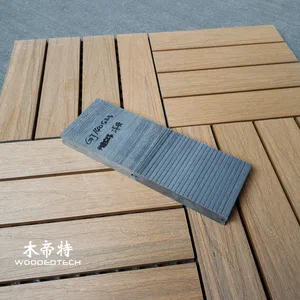 GD14023S Composite Deck Materials Feature a Solid Structure and Side Grooves for Better Adaptability in Extremely Cold Climates
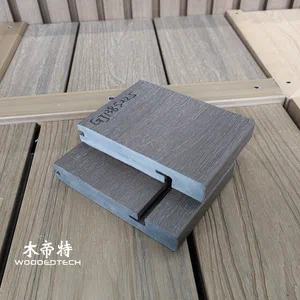 GD13822.5S Fully Capped Solid Starter Wood Polymer Composite Decking Provides a Stable Starting Structure for the First Decking Board
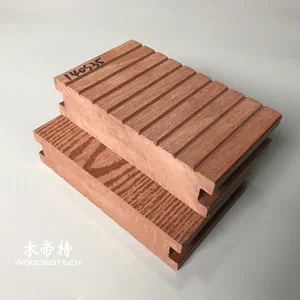 D14035S 35mm Thick Solid Wood Grain WPC Flooring for Outdoor Deck Applications
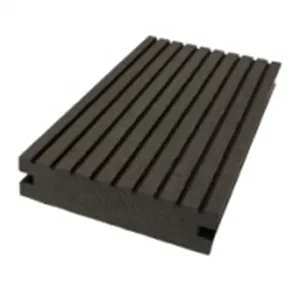 D10025S plastic wood look decking offers a narrow width solid design for versatile outdoor applications
Related Articles
Get a Free Quote
Interested in The GD14020S Composite Decking on Sale Features a Solid Core Structure Designed to Withstand Extreme Outdoor Temperature Changes and Freezing Conditions? Fill in the form and we will reply within 24 hours.