
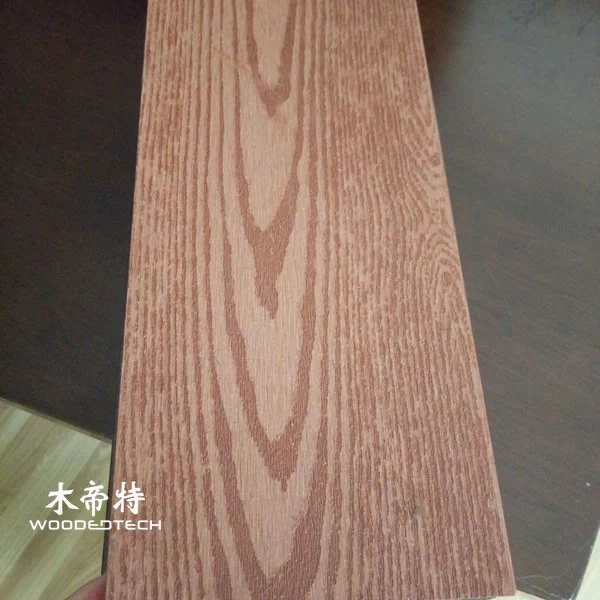
The D14025-5 Wood Composite Panels Feature a Classic Round Hole Design with Optional Embossed Wood Grain and Grooved Surfaces for Outdoor Durability
Explore the D14025-5 WPC panel's round-hole structure, optional wood grain embossing, grooved finishes, and outdoor performance.
| Payment | T/T in advance. Customized order: T/T, 50% prepayment, 50% balance before loading. |
|---|---|
| Transaction Terms | FOB, CIF, EXW, etc. |
| Samples | <30cm: samples for free. >30cm: samples order (the sample fee can be deducted when placing a container order later). |
| Length | For 20GP container, max length is 5.8 meters (longest); mostly 2.2 / 2.4 / 2.9 / 3.0 / 4.0 meters (recommended) or customized. |
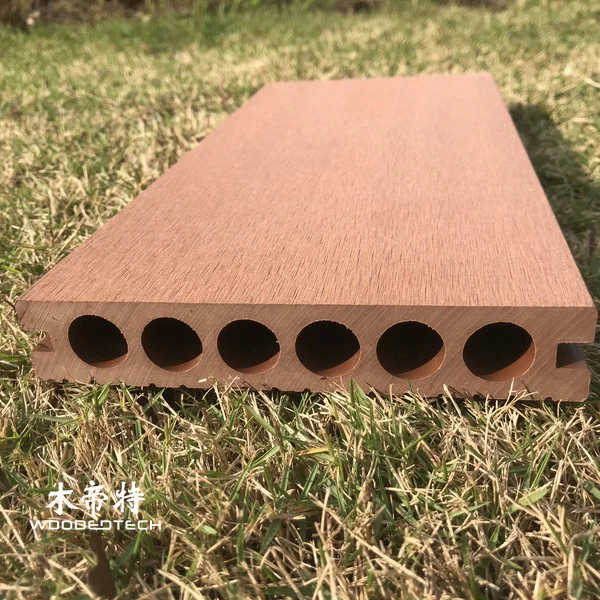
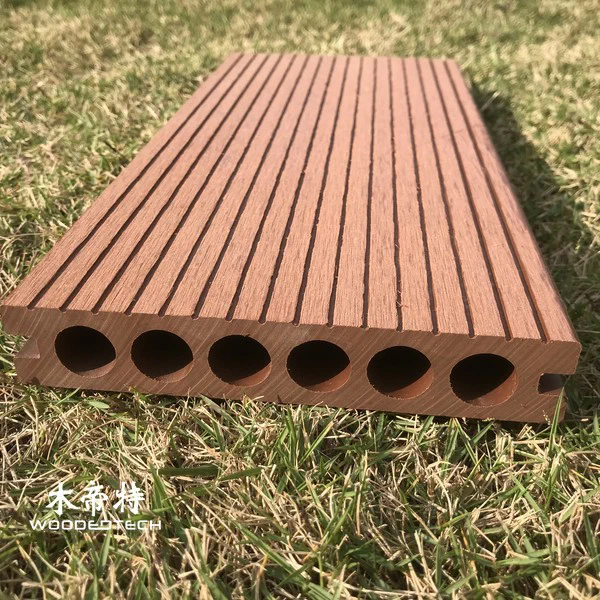
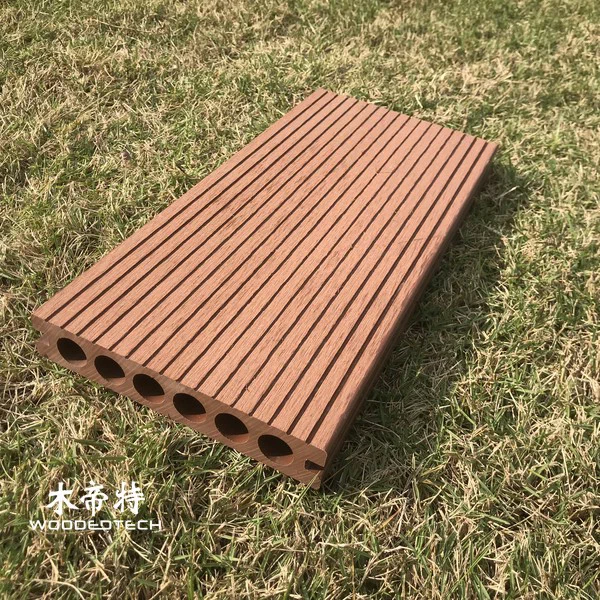
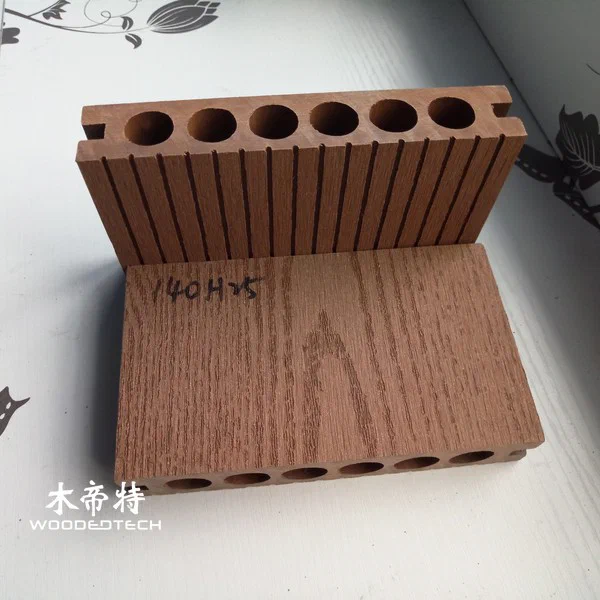
The D14025-5 wood composite panel features a classic round-hole hollow structure designed to balance material efficiency, structural performance, and outdoor durability. With optional embossed wood grain and grooved surface finishes, this WPC profile combines a practical lightweight construction with an attractive appearance for exterior applications.
Round-Hole Structure and Its Impact on Panel Performance
The defining feature of the D14025-5 profile is its round-hole internal structure. Compared with a solid WPC panel of similar external dimensions, a hollow profile uses less raw material while maintaining a functional cross-sectional shape. This helps reduce overall panel weight, material consumption, and production costs.
The round holes are distributed within the profile to create internal walls that connect the upper and lower surfaces. These walls contribute to bending resistance and help the panel maintain its shape under normal service loads. The circular geometry also avoids sharp internal corners, which can help reduce localized stress concentrations when the profile is properly designed and manufactured.
However, the number, diameter, and spacing of the holes directly affect mechanical performance. Excessively large holes or thin connecting walls can reduce stiffness and increase the risk of deformation. For this reason, mold design must consider the relationship between wall thickness, hole diameter, material flow, and cooling behavior. A well-balanced hollow structure provides an effective combination of strength and weight reduction.
Hollow vs. Solid WPC Profiles: Strength, Weight, and Cost
Hollow and solid WPC structures serve different application requirements. Selecting the right construction depends on expected loads, installation conditions, material costs, and the required service performance.
Hollow profiles such as the D14025-5 are suitable for projects where reduced weight and efficient material usage are important. Their internal cavities lower material consumption per meter, which can reduce both extrusion costs and transportation expenses. The lower weight also makes handling, cutting, and installation easier, particularly for large outdoor projects.
Solid WPC profiles provide a more substantial cross-section and generally offer greater resistance to localized impact and concentrated loads when compared with hollow profiles of similar external dimensions. However, they require more material, weigh more, and may involve longer cooling times during extrusion.
For the D14025-5, the round-hole design offers a practical middle ground. Instead of filling the entire cross-section with composite material, the internal geometry is engineered to retain sufficient supporting walls while reducing unnecessary material. The final performance still depends on the formulation, profile dimensions, wall thickness, and manufacturing quality.
Rib Design and Extrusion Mold Engineering
Internal ribs are essential structural elements in hollow WPC profiles. They connect different sections of the panel and help distribute mechanical loads across the cross-section. In a round-hole design, the material surrounding each cavity forms the supporting walls that contribute to overall stiffness.
From an extrusion mold design perspective, these walls must maintain consistent thickness to support stable material flow and uniform cooling. Uneven wall thickness can cause differences in shrinkage, internal stress, and dimensional stability. Poorly balanced flow around the holes may also lead to surface defects or inconsistent cavity dimensions.
Several factors require attention during mold development:
- Wall thickness: Consistent walls help reduce uneven cooling and profile deformation.
- Hole diameter: Appropriate cavity dimensions balance weight reduction with structural strength.
- Rib spacing: Proper spacing distributes loads and supports the upper and lower panel surfaces.
- Flow channel design: Balanced melt distribution helps maintain consistent material density throughout the profile.
- Cooling calibration: Controlled cooling reduces warping and improves dimensional accuracy.
For manufacturers, optimizing these parameters is important for achieving reliable production output and consistent product quality. A well-designed extrusion mold should consider not only the finished profile geometry but also the behavior of the WPC material throughout the extrusion and cooling processes.
Embossed Wood Grain and Grooved Surface Options
Surface design influences more than the visual appearance of a WPC panel. It also affects surface contact, cleaning, maintenance, and the overall suitability of the product for outdoor environments.
The D14025-5 offers optional embossed wood grain and grooved surface treatments to meet different architectural preferences.
Embossed wood grain creates a textured appearance that resembles natural timber. The raised grain pattern adds visual depth and helps reduce the uniform plastic-like appearance sometimes associated with composite materials. It is particularly suitable for outdoor spaces where a natural wood aesthetic is desired without relying on conventional timber.
Grooved surfaces provide a more defined linear texture. Depending on groove depth, spacing, and orientation, they can create a clean architectural appearance and influence surface friction. For applications where slip resistance matters, the finished surface should be tested under relevant conditions rather than assuming that grooves alone guarantee anti-slip performance.
Both finishes require careful coordination with the extrusion process. Embossing pressure, surface tooling, cooling conditions, and profile dimensions must be controlled to maintain consistent texture and prevent surface distortion.
Installation Performance and Outdoor Durability
Profile geometry directly influences how efficiently WPC panels can be transported, cut, positioned, and installed. The lightweight hollow construction of the D14025-5 makes handling more convenient than comparable solid profiles, particularly when large quantities are required.
Its internal structure also needs to be considered when specifying screws, clips, brackets, or other fixing systems. Fasteners should engage the intended supporting sections rather than relying on unsupported hollow areas. Correct fixing positions help prevent cracking, local crushing, and loose connections during long-term use.
For outdoor installation, expansion and contraction are equally important. WPC materials respond to temperature changes, so installers should allow appropriate expansion gaps and follow the manufacturer’s recommendations for fixing distances, support spacing, and end clearance.
Long-term durability also depends on the composite formulation, including wood fiber content, polymer selection, additives, and UV stabilizers. Properly formulated WPC panels can offer resistance to moisture, decay, and many common outdoor weathering conditions. Nevertheless, actual service life depends on exposure, installation quality, and maintenance practices.
The D14025-5 combines a classic round-hole profile with optional embossed wood grain and grooved finishes, giving manufacturers and project buyers flexibility in balancing structural requirements, material consumption, appearance, and installation efficiency. For WPC extrusion manufacturers, the key to achieving consistent performance lies in coordinating cross-sectional geometry, internal wall design, mold flow, and surface finishing. These engineering considerations make the profile a practical option for outdoor composite panel applications where lightweight construction and a natural wood-inspired appearance are both important.
Related Products
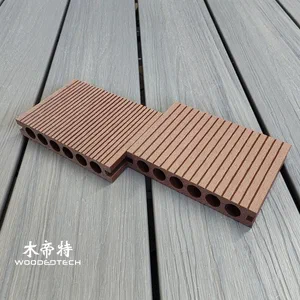 D14025-5 First Generation Large And Small Groove Redwood Color WPC Panel Material With Popular Outdoor Appearance
 B1409.5 Siding WPC Exterior Boards Provide Waterproof Insect Resistant and Durable Outdoor Wall Solutions
 F30028 Wide WPC Panel Sheet Supports Carving Applications and Combination into Larger Outdoor Structures
 F5040 Wood Plastic Composite Panel Is Ideal for Outdoor Grilles and Square Profile Processing Projects
Related Articles
Get a Free Quote
Interested in The D14025-5 Wood Composite Panels Feature a Classic Round Hole Design with Optional Embossed Wood Grain and Grooved Surfaces for Outdoor Durability? Fill in the form and we will reply within 24 hours.