
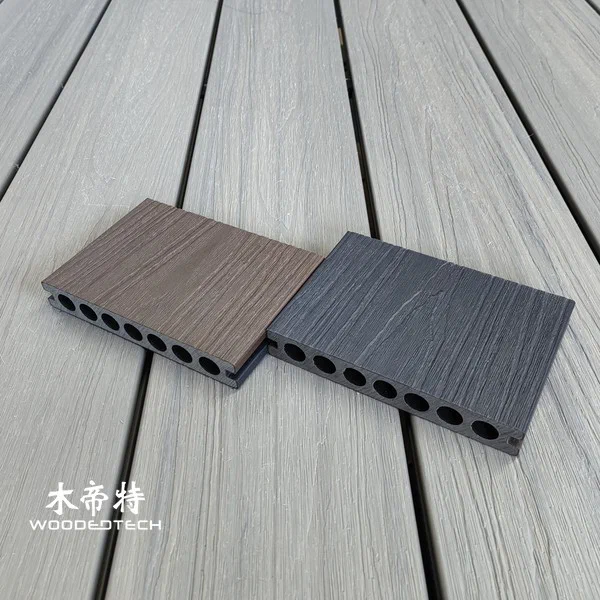
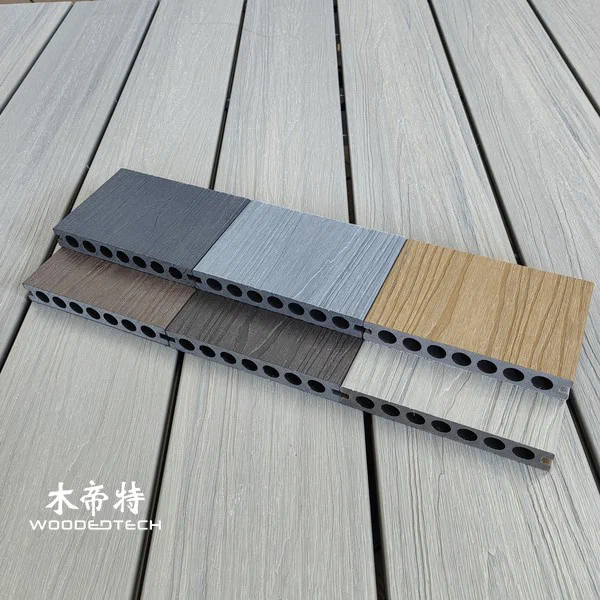
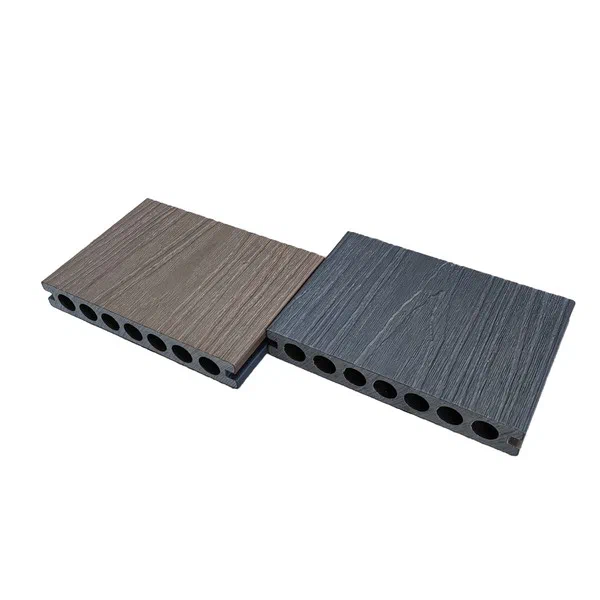
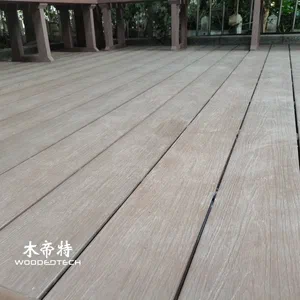
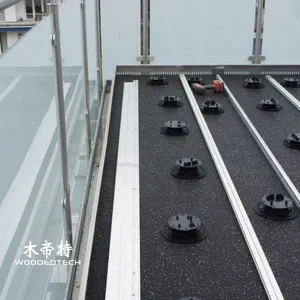
GD14521 Two Tone Co Extruded Decking Composite Wood in Rosewood IP and Dark Grey HG Offers Two Installation Options
Explore the complete outdoor WPC extrusion process for GD14521 Two Tone Co Extruded Decking Composite Wood, ensuring quality and durability.
| Payment | T/T in advance. Customized order: T/T, 50% prepayment, 50% balance before loading. |
|---|---|
| Transaction Terms | FOB, CIF, EXW, etc. |
| Samples | <30cm: samples for free. >30cm: samples order (the sample fee can be deducted when placing a container order later). |
| Length | For 20GP container, max length is 5.8 meters (longest); mostly 2.2 / 2.4 / 2.9 / 3.0 / 4.0 meters (recommended) or customized. |
The outdoor WPC (Wood Plastic Composite) extrusion process involves several key stages to create high-quality decking materials, such as the GD14521 Two Tone Co Extruded Decking Composite Wood in Rosewood IP and Dark Grey HG. This process ensures durability, aesthetic appeal, and versatility for various installation options.
Material Mixing
The initial step in the extrusion process is material mixing, where wood fibers, plastic polymers, and additives are combined in precise ratios. The choice of materials significantly influences the final product’s properties. Common additives include UV stabilizers, color pigments, and anti-fungal agents to enhance the composite’s performance in outdoor conditions. The mixing occurs in a high-shear mixer to ensure a homogeneous blend, which is vital for uniformity in the final product.
Pelletizing
Once the materials are mixed, the next phase is pelletizing. The blended material is fed into a pelletizer, which shapes the mixture into small pellets. This step is crucial as it makes handling and feeding the material into the extruder easier. The pellets should maintain consistent quality, as any variation can lead to defects in the finished product.
Extrusion Temperature Control
Temperature control during the extrusion process is essential for the proper melting and flow of the material. The extruder is equipped with temperature zones that can be adjusted based on the specific formulation of the WPC. Typically, the temperature ranges from 160°C to 220°C, depending on the composition. Proper temperature management ensures that the material is adequately melted without degrading the polymers, which could affect the mechanical properties and color of the decking.
Mold Design
The design of the mold is another critical factor in producing the final decking profile. Molds are custom-designed to create the desired shape and dimensions of the decking boards. For the GD14521, the mold must accommodate the two-tone feature, ensuring that the colors are applied correctly during the co-extrusion process. The mold must also allow for efficient cooling and easy release of the finished product.
Cooling Calibration
After exiting the extruder, the WPC boards need to be cooled rapidly to maintain their shape and prevent warping. This is achieved through a series of cooling baths or air-cooling systems. Proper cooling calibration is essential to maintain dimensional stability and surface quality. If the cooling process is too slow, it could lead to deformation, while an overly rapid cooling could introduce internal stresses.
Surface Treatment
Surface treatment enhances the aesthetics and performance of the WPC decking. For the GD14521, a co-extrusion process applies a protective layer that provides color and texture. This layer enhances UV resistance and improves the overall durability of the product. Surface treatments may include embossing for added grip, which is particularly important for outdoor applications where slip resistance is critical.
Common Production Problems
Despite the advanced technology used in WPC extrusion, several common production problems can occur:
- Inconsistent Coloration: Variations in pigment distribution during mixing can lead to uneven color in the final product.
- Warping: Improper cooling or incorrect mold design can cause warping, affecting the installation and appearance of the decking.
- Surface Defects: Inadequate surface treatment or contamination during extrusion can lead to blemishes or a lack of adhesion in the protective layer.
- Dimensional Variability: Variations in temperature control or feed rate can affect the dimensions of the final product, leading to compatibility issues during installation.
By understanding and addressing these challenges, manufacturers can produce high-quality outdoor WPC decking that meets the demands of both form and function.
Related Products
 GD13823 Double Sided Flat Surface Co Extruded WPC Decking Features a Popular Width and Thickness with Round Hollow Structure
 3DGD13823 Co Extrusion WPC Decking Features Second Generation 3D Embossed Surface with Improved Wood Finish Technology
 GD13823-3 Second Generation Co Extruded Wood Plastic Composites With High Quality Stable Performance For Premium Outdoor Applications
 GD13820 WPC Co Extrusion Decking Provides Reliable Outdoor Flooring Solutions for Extremely Cold Climate Areas
Related Articles
Get a Free Quote
Interested in GD14521 Two Tone Co Extruded Decking Composite Wood in Rosewood IP and Dark Grey HG Offers Two Installation Options? Fill in the form and we will reply within 24 hours.