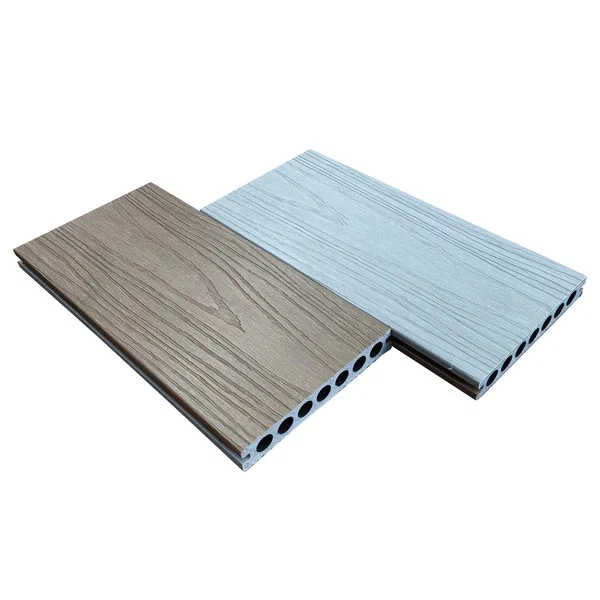


GD14521 Capped Composite Decking Boards Feature a Premium Round Hole Design with Two Colors and Two Usable Surfaces for Outdoor Applications
Explore how the materials in GD14521 capped composite decking enhance durability and performance for outdoor applications.
| Payment | T/T in advance. Customized order: T/T, 50% prepayment, 50% balance before loading. |
|---|---|
| Transaction Terms | FOB, CIF, EXW, etc. |
| Samples | <30cm: samples for free. >30cm: samples order (the sample fee can be deducted when placing a container order later). |
| Length | For 20GP container, max length is 5.8 meters (longest); mostly 2.2 / 2.4 / 2.9 / 3.0 / 4.0 meters (recommended) or customized. |
GD14521 capped composite decking boards incorporate various materials that significantly influence their durability, weather resistance, and overall performance. Understanding the roles of wood powder, HDPE/PVC polymers, additives, pigments, and modifiers is crucial for ensuring high-quality outdoor WPC products.
Material Composition and Performance
Wood powder serves as the primary filler in the composite, providing a natural appearance and texture. The quality of wood powder, including its particle size and moisture content, directly impacts the strength and stability of the decking. Finer particles can enhance the surface finish, while coarser particles contribute to a more rugged texture, which may be desirable for slip resistance.
HDPE (high-density polyethylene) and PVC (polyvinyl chloride) polymers are essential for binding the components together. HDPE is favored for its toughness and resistance to environmental stressors such as UV rays and moisture. PVC, while less expensive, can offer flexibility and is often used to enhance the product’s resistance to decay and insects. The choice between these polymers can affect the longevity and maintenance requirements of the decking boards.
Additives play a pivotal role in enhancing the performance characteristics of WPC products. These can include UV stabilizers, which protect against sun degradation, and anti-fungal agents that prevent mold and mildew growth. Incorporating these additives helps maintain the aesthetic appeal and structural integrity of the boards over time.
Pigments are utilized to achieve specific colors and finishes. The quality of pigments can affect the colorfastness of the decking, ensuring that the boards do not fade significantly when exposed to sunlight. Using high-quality pigments can prolong the vividness of the colors and improve the overall visual appeal of the decking.
Modifiers, such as coupling agents, improve the interaction between the wood powder and polymers, enhancing the bonding strength and overall performance of the composite. This leads to improved mechanical properties, making the decking more resilient to impacts and wear.
Quality Control and Inspection Methods
In our Guangdong factory, rigorous quality control measures are in place to ensure that each component meets our high standards. Regular inspection of raw materials includes:
- Testing wood powder for uniformity in particle size and moisture content.
- Assessing the physical and chemical properties of polymers to ensure optimal performance.
- Evaluating the effectiveness of additives through accelerated weathering tests.
- Conducting color consistency checks on pigments using spectrophotometers.
We also implement a series of mechanical tests on the finished decking boards to evaluate their tensile strength, flexural strength, and resistance to impact. These tests help ensure that the final product meets national and international quality standards for outdoor applications.
The GD14521 capped composite decking boards’ unique round hole design, available in two colors and usable on both surfaces, further enhances their functionality and aesthetic appeal, making them an excellent choice for outdoor environments.
FAQ
Q: What is the primary advantage of using wood powder in WPC decking?
A: Wood powder provides a natural look and feel while contributing to the structural integrity of the decking.
Q: How do additives improve the performance of capped composite decking?
A: Additives enhance properties such as UV resistance and mold prevention, extending the product’s lifespan and maintaining its appearance.
Q: What testing methods are used to ensure quality in WPC products?
A: We use mechanical tests for strength evaluation and conduct inspections of raw materials to maintain high-quality standards.
Related Products
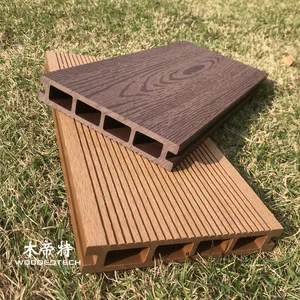 D14025-4 Composite for Decking Provides Stable Performance and Reliable Quality as a Popular Choice for Outdoor Projects
 D14025-3 Double Sided Grooved Walnut Color Composite Wood Decking Offers Low Maintenance Outdoor Flooring Solution
 D14724 Double Sided Grooved Plastic Wood Look Decking Provides Reliable Outdoor Flooring Performance
 B14011 WPC Paneling Sheets Feature Double Flat Surfaces with Heat Pressed Wood Grain Designs for Outdoor Styles
Related Articles
Get a Free Quote
Interested in GD14521 Capped Composite Decking Boards Feature a Premium Round Hole Design with Two Colors and Two Usable Surfaces for Outdoor Applications? Fill in the form and we will reply within 24 hours.