
GD14023S Composite Deck Materials Feature a Solid Structure and Side Grooves for Better Adaptability in Extremely Cold Climates
Explore how GD14023S solid WPC decking with side grooves supports strength, installation adaptability, and reliable performance in extremely cold climates.
| Payment | T/T in advance. Customized order: T/T, 50% prepayment, 50% balance before loading. |
|---|---|
| Transaction Terms | FOB, CIF, EXW, etc. |
| Samples | <30cm: samples for free. >30cm: samples order (the sample fee can be deducted when placing a container order later). |
| Length | For 20GP container, max length is 5.8 meters (longest); mostly 2.2 / 2.4 / 2.9 / 3.0 / 4.0 meters (recommended) or customized. |
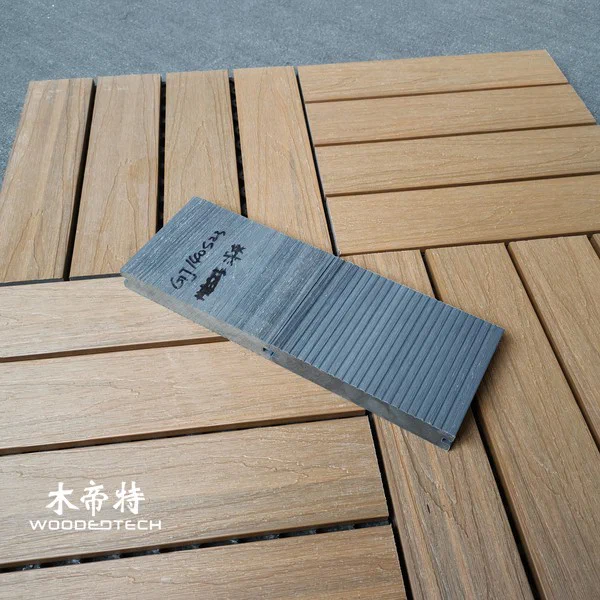
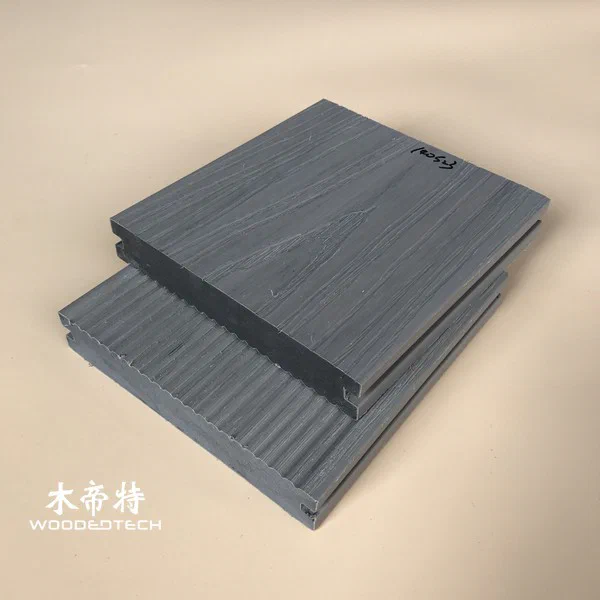
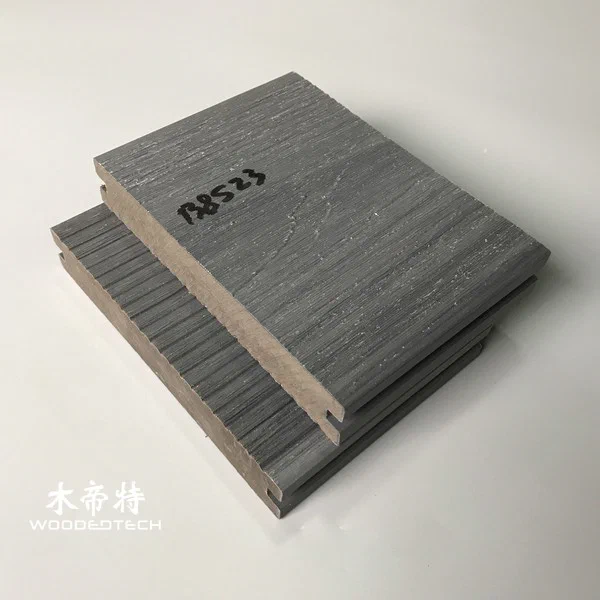
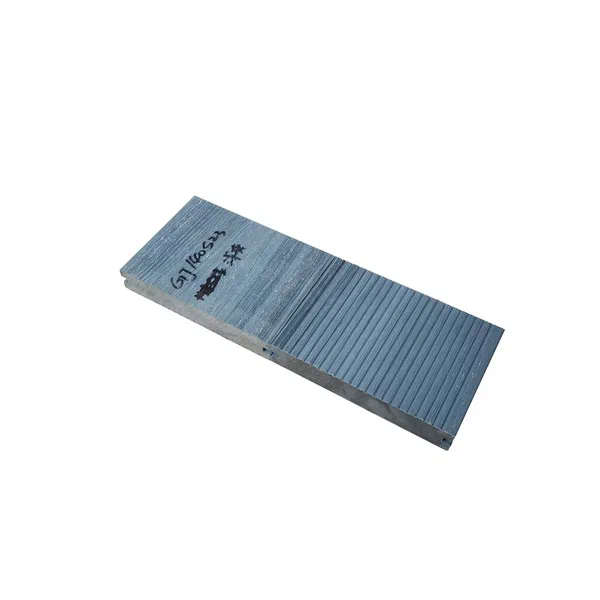
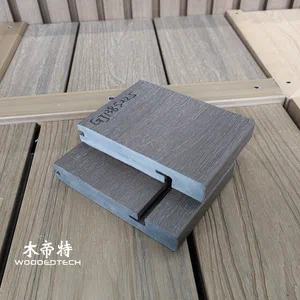
GD14023S composite deck materials use a solid profile structure and side grooves to support reliable performance in demanding outdoor environments. For projects exposed to extremely cold climates, profile geometry, material formulation, and installation details all influence structural stability, handling, and long-term service performance.
How Solid Profile Design Supports Strength in Cold Climates
Solid composite decking has a dense cross-section without the internal cavities found in hollow profiles. This structure provides material throughout the board, helping resist localized loads and reducing the risk of crushing around fastening points when the profile is properly engineered. For commercial walkways, residential terraces, and outdoor platforms, a solid design can offer a practical solution where consistent support and a substantial board feel are priorities.
In extremely cold conditions, however, solid construction alone does not guarantee superior performance. Wood plastic composite (WPC) materials can become more sensitive to impact as temperatures fall, depending on the polymer matrix, wood fiber content, additives, and manufacturing process. The GD14023S profile should therefore be evaluated through low-temperature impact testing, load testing, and dimensional stability assessments. A well-designed extrusion profile combines adequate section strength with a formulation suited to the intended climate.
Side Grooves Improve Installation Adaptability
The side grooves on GD14023S provide a defined interface for compatible concealed fasteners or installation accessories. Compared with fastening through the top surface, a suitable grooved system can create a cleaner deck appearance while helping maintain consistent spacing between boards. It can also simplify installation when the groove dimensions, clip geometry, and joist layout are designed to work together.
For cold-region projects, the groove profile deserves particular attention. Tight dimensional tolerances help prevent installation difficulties, while sufficient groove-wall thickness reduces the risk of damage during fastening. Installers should use compatible clips, follow the specified fastening sequence, and avoid overtightening. Allowances for thermal movement remain essential because WPC boards expand and contract with temperature changes. The recommended end gaps and perimeter clearances should reflect the manufacturer’s installation requirements and local climate conditions.
Profile Geometry, Weight, and Cost Considerations
Solid and hollow structures involve different engineering trade-offs. Hollow boards generally use less material and weigh less, which can reduce handling effort, transportation costs, and material consumption. Their internal webs and ribs must nevertheless be designed carefully to distribute loads and prevent local deformation. Solid boards use more material per unit length, increasing weight and potentially the purchase cost, but may provide advantages where concentrated loading and robust fastening support are important.
Rib geometry, wall thickness, and groove dimensions also affect extrusion stability and finished-product consistency. Poorly balanced sections can create uneven cooling, residual stress, or dimensional variation during production. Surface patterns introduce another consideration: embossed wood-grain textures can improve visual appeal and provide additional surface texture, but excessive pattern depth may complicate cleaning or affect usable material thickness. For GD14023S, the preferred design balances structural requirements, manageable installation, production efficiency, and the appearance specified by the project.
FAQ
Q: Is solid composite decking always better for extremely cold climates?
A: Not necessarily. Material formulation, low-temperature impact resistance, fastening design, and installation clearances are equally important when assessing cold-weather suitability.
Q: What is the purpose of side grooves on GD14023S decking?
A: Side grooves can accommodate compatible concealed fastening systems, helping create consistent board spacing and a cleaner finished surface.
Q: What should buyers verify before selecting GD14023S for a cold-region project?
A: Request the profile drawing, material specifications, low-temperature test data, load ratings, and installation guidelines to confirm suitability for the intended application.
Related Products
 GD13822.5S Fully Capped Solid Starter Wood Polymer Composite Decking Provides a Stable Starting Structure for the First Decking Board
 D15030 Hollow Square Hole Wood Plastic Composite Decking Features Double Grooved Sides for Outdoor Flooring Projects
 D15223 Hollow Square Hole WPC Outdoor Decking Offers Double Grooved Surfaces for Flexible Installation Options
 D14025-6 wpc composite decking with walnut color and round hollow groove surface creates a practical outdoor flooring solution
Related Articles
Get a Free Quote
Interested in GD14023S Composite Deck Materials Feature a Solid Structure and Side Grooves for Better Adaptability in Extremely Cold Climates? Fill in the form and we will reply within 24 hours.