
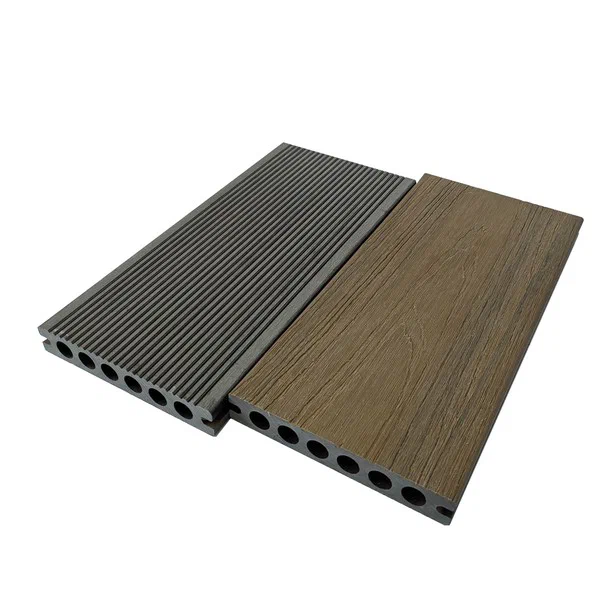
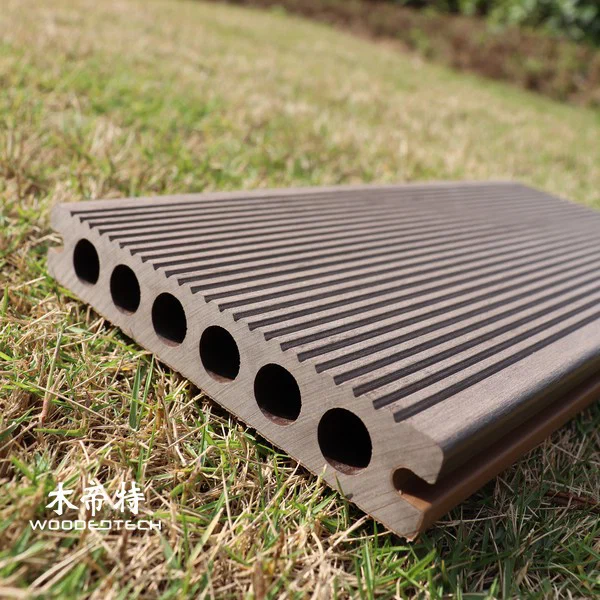
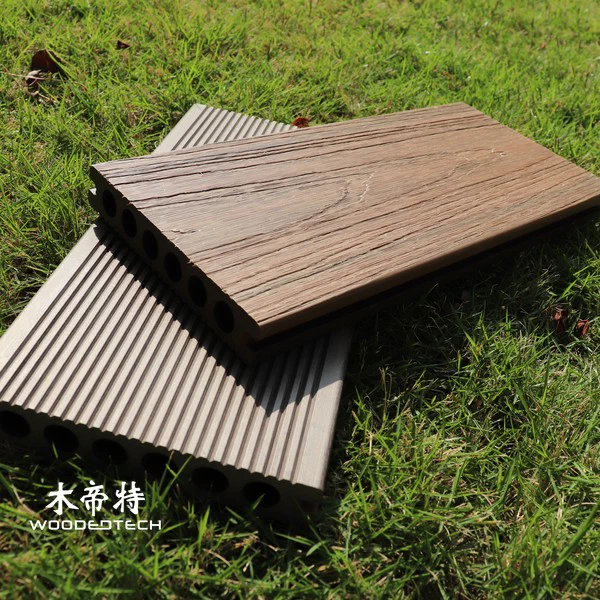
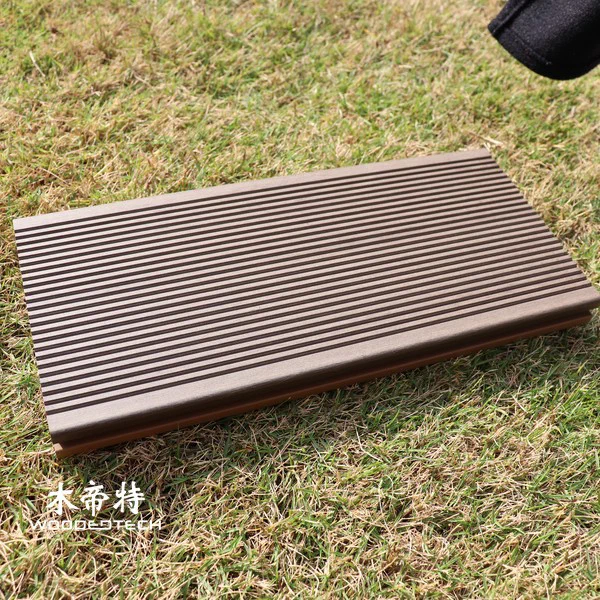
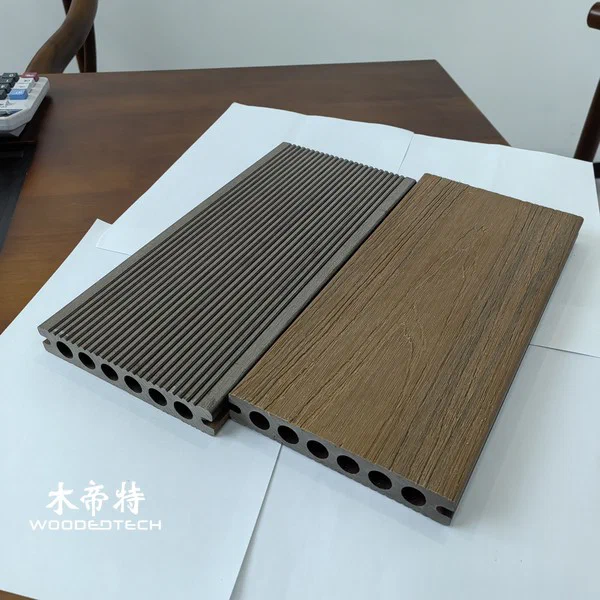
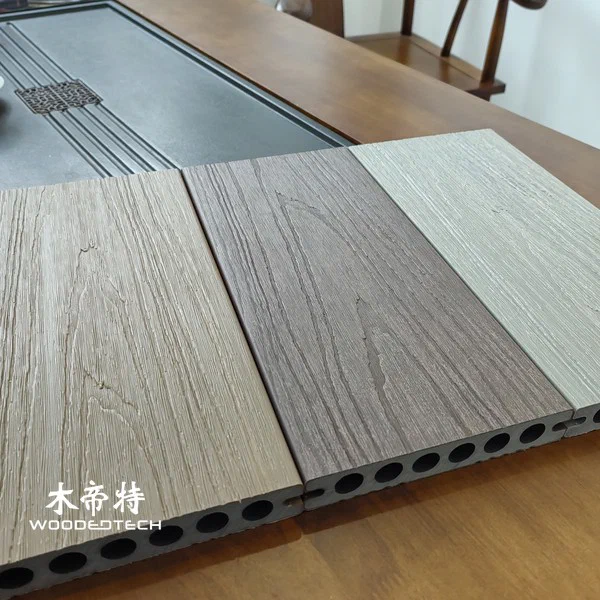
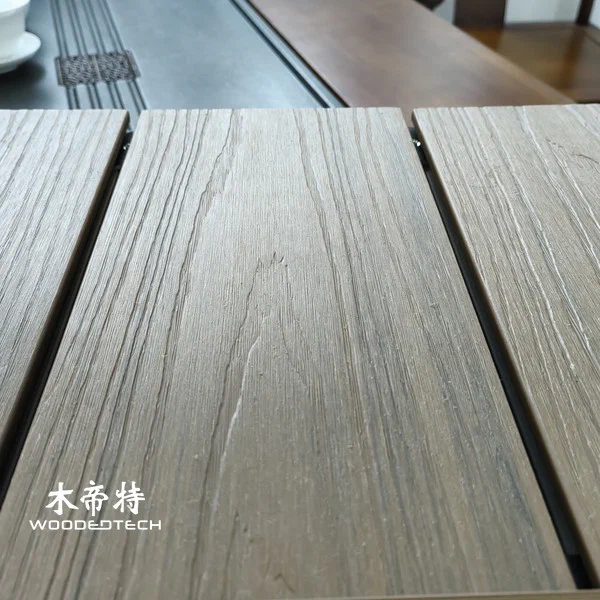
GD14023 Composite Decking Versus Wood Decking Features a Round Hole Structure with Semi Capped Co Extrusion
Compare GD14023 semi-capped co-extrusion composite decking with wood, aluminum, and other materials for durability, maintenance, and lifecycle costs.
| Payment | T/T in advance. Customized order: T/T, 50% prepayment, 50% balance before loading. |
|---|---|
| Transaction Terms | FOB, CIF, EXW, etc. |
| Samples | <30cm: samples for free. >30cm: samples order (the sample fee can be deducted when placing a container order later). |
| Length | For 20GP container, max length is 5.8 meters (longest); mostly 2.2 / 2.4 / 2.9 / 3.0 / 4.0 meters (recommended) or customized. |
GD14023 composite decking combines a round-hole internal structure with a semi-capped co-extrusion surface, offering an alternative to traditional wood decking for outdoor spaces. Compared with natural timber, solid composite boards, and aluminum decking, this design balances material efficiency, weather resistance, maintenance needs, and long-term ownership costs.
GD14023 Composite Decking: Structure and Material Performance
The round-hole structure reduces material usage and board weight compared with a solid profile of similar external dimensions. Depending on the profile design and installation conditions, it can also make handling easier while retaining sufficient rigidity for residential and selected commercial applications. Actual load capacity depends on wall thickness, hole geometry, joist spacing, fixing methods, and the manufacturer’s test data.
The semi-capped co-extrusion surface adds a protective outer layer to the WPC core. This layer can improve resistance to moisture, staining, fading, and everyday wear compared with many uncapped composite products. However, semi-capped construction should not automatically be treated as equivalent to fully capped decking. Buyers should confirm the actual surface coverage, edge protection, UV performance, and water absorption specifications before selecting the product for demanding environments.
Comparing Composite Decking with Wood and Other Materials
Natural wood offers authentic grain, a warm appearance, and the ability to sand or refinish the surface. However, timber species and treatment methods strongly influence durability. Untreated or poorly maintained wood may crack, splinter, warp, or decay under repeated exposure to rain and sunlight. Periodic cleaning, sealing, staining, or oiling adds to its long-term maintenance requirements.
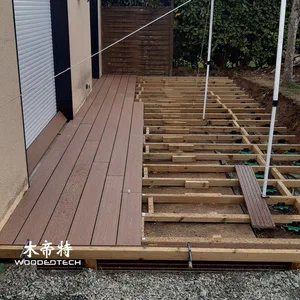
GD14023 WPC decking generally requires less routine maintenance than traditional timber. It does not need regular staining or painting, although cleaning remains necessary and the boards can still experience surface wear, thermal movement, or fading. Its semi-capped finish provides additional protection, while the hollow-core profile may offer a lower material cost than a comparable solid composite board. Installers must account for drainage, ventilation, expansion gaps, and the specified support spacing.
Aluminum decking provides high structural strength, low weight relative to many solid materials, and excellent resistance to rot and insect damage. It can be suitable for projects requiring noncombustible materials, subject to the complete system’s certification. However, its initial cost can be higher, and its metallic appearance and heat behavior may not suit every outdoor design. Stone and porcelain pavers offer excellent surface durability but require appropriate sub-base preparation and may involve greater installation labor. Each material should be assessed against the project’s structural, aesthetic, drainage, and fire-safety requirements.
Maintenance and Lifecycle Cost Considerations
Initial purchase price alone does not determine the most economical decking option. A lifecycle assessment should include material supply, substructure, installation, cleaning, repairs, replacement intervals, and disposal. Timber may have a lower upfront price, but recurring refinishing can increase ownership costs. Composite decking often reduces these maintenance expenses, while aluminum and mineral-based surfaces may offer different advantages depending on the application.
For GD14023, buyers should request product-specific pricing, warranty conditions, slip-resistance results, UV-aging data, and installation instructions. The round-hole structure should be evaluated alongside the board’s tested load performance rather than assumed to guarantee strength. Correct installation and regular removal of debris are essential to maintaining drainage and service life. For coastal, poolside, or high-traffic projects, confirm resistance to salt exposure, standing moisture, surface abrasion, and local environmental requirements before ordering.
FAQ
Q: Is GD14023 composite decking better than natural wood?
A: It can reduce routine maintenance and improve resistance to moisture-related deterioration, but the best choice depends on appearance preferences, budget, installation conditions, and verified product performance.
Q: Does the round-hole structure reduce decking costs?
A: It can reduce material consumption and board weight, potentially lowering supply and handling costs. Structural capacity must still be verified using the manufacturer’s specifications and test results.
Q: Is semi-capped co-extrusion decking fully waterproof?
A: The protective surface can improve moisture resistance, but the board and its edges should not be assumed to be completely waterproof. Follow the manufacturer’s guidance for drainage, installation, and exposure conditions.
Related Products
 Antique Wood GD13823-3 Co Extruded Composite Wood Decking Boards with Round Holes Are Available in Stock in 3 Meter Lengths Year Round
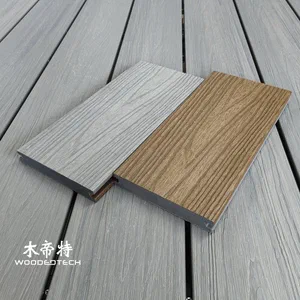 Second Generation Two Color Co Extruded 3D Embossed 3DGD14023S Composite Wood Deck Boards Feature an Extremely Realistic Antique Wood and Teak Grain Texture
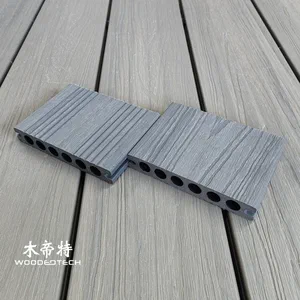 GD13823-3 Light Grey Premium Co Extrusion WPC Composite Decking Offers LG Texture and Excellent UV Resistance for Outdoor Spaces
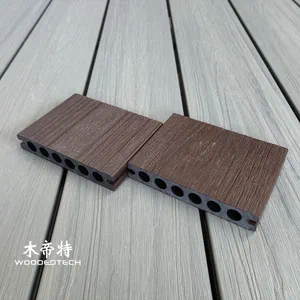 GD13823-3 Redwood Color Round Hole Co Extrusion Decking Composite Decking Brings Classic Chinese Red Style to Outdoor Flooring Projects
Related Articles
Get a Free Quote
Interested in GD14023 Composite Decking Versus Wood Decking Features a Round Hole Structure with Semi Capped Co Extrusion? Fill in the form and we will reply within 24 hours.