
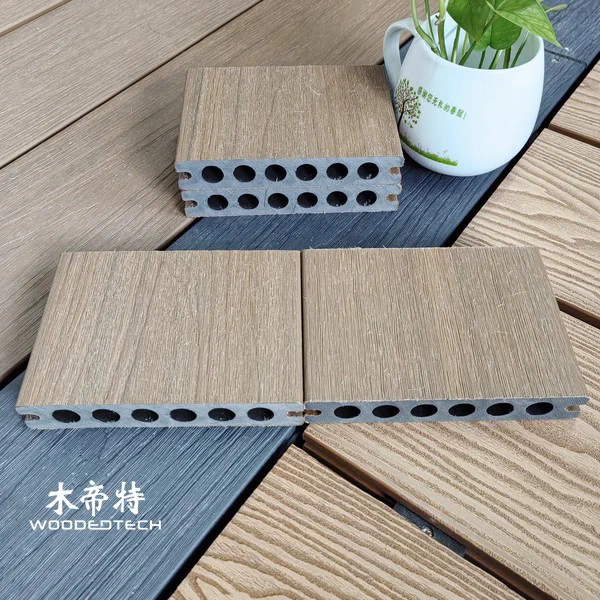
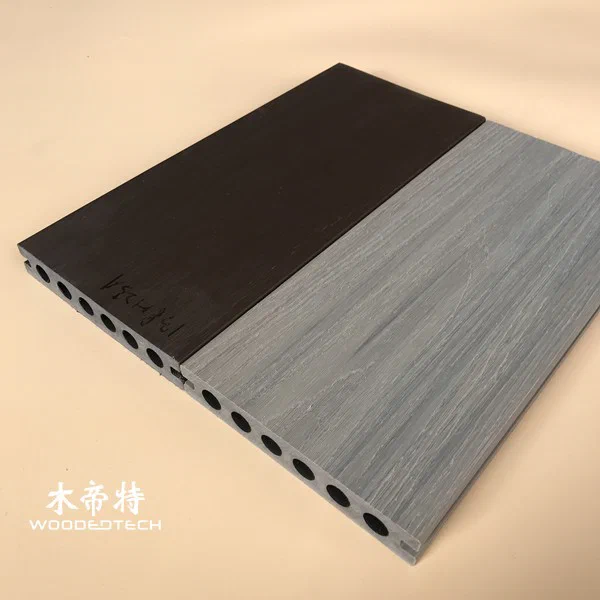
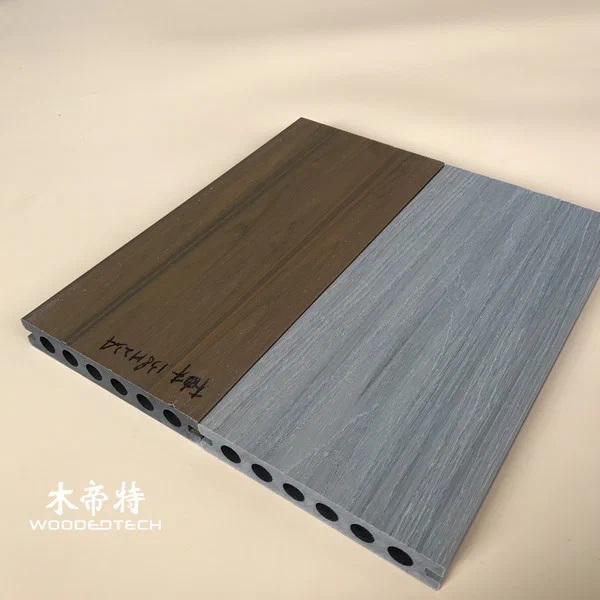
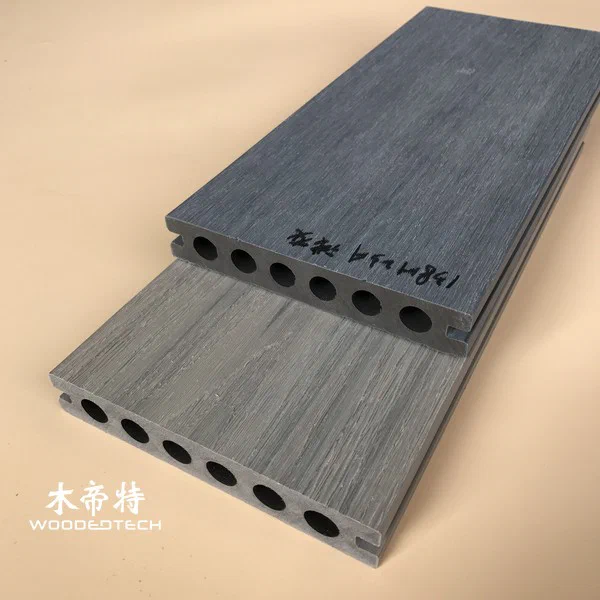
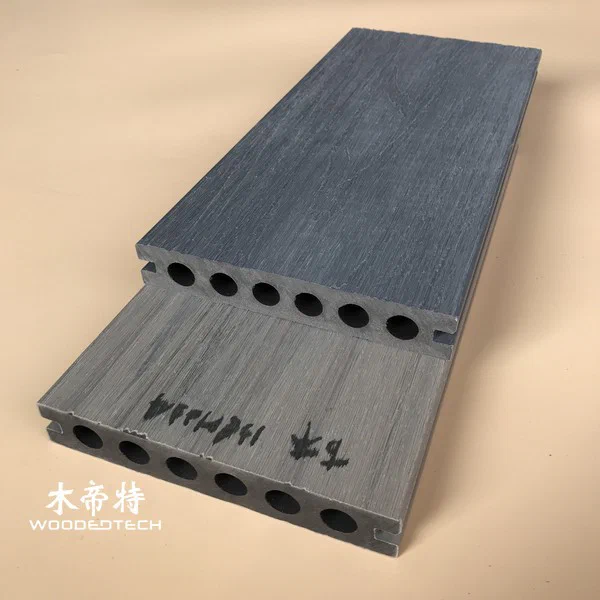
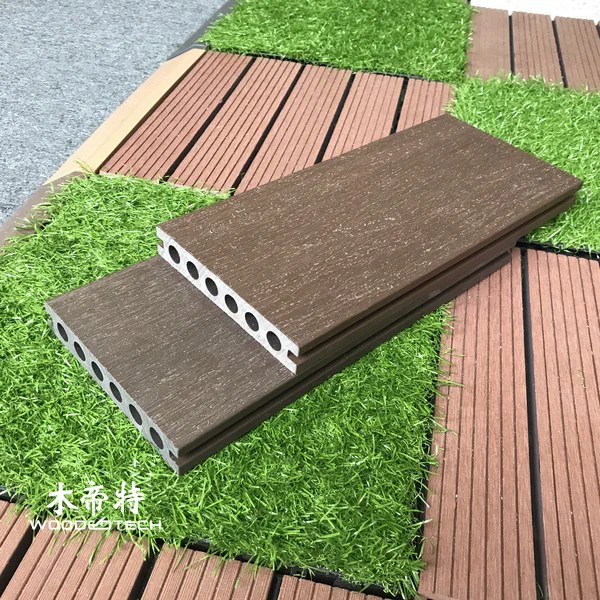
GD13823 Double Sided Flat Surface Co Extruded WPC Decking Features a Popular Width and Thickness with Round Hollow Structure
Learn about the comprehensive process behind GD13823 double sided flat surface co-extruded WPC decking production.
| Payment | T/T in advance. Customized order: T/T, 50% prepayment, 50% balance before loading. |
|---|---|
| Transaction Terms | FOB, CIF, EXW, etc. |
| Samples | <30cm: samples for free. >30cm: samples order (the sample fee can be deducted when placing a container order later). |
| Length | For 20GP container, max length is 5.8 meters (longest); mostly 2.2 / 2.4 / 2.9 / 3.0 / 4.0 meters (recommended) or customized. |
The outdoor WPC extrusion process involves several key steps to create high-quality products such as the GD13823 double sided flat surface co-extruded WPC decking. This decking features a popular width and thickness with a round hollow structure, providing both aesthetic appeal and structural integrity.
Material Mixing
The first step in the extrusion process is material mixing. WPC, or wood plastic composite, typically consists of a blend of wood flour, plastic resins, and additives. The materials are carefully weighed and combined in a high-capacity mixer to ensure a homogeneous mixture. This step is crucial, as the quality of the mix directly impacts the final product’s strength and durability. Common additives may include UV stabilizers, colorants, and fire retardants to enhance performance characteristics.
Pelletizing
Once the materials are mixed, the next phase is pelletizing. The homogeneous mix is fed into a pelletizer, which compresses the mixture into small pellets. This process not only helps in efficient material handling but also ensures consistent feeding into the extruder. The size and shape of the pellets can vary based on the specific requirements of the extrusion line, and they should be uniform to prevent any variations in the extrusion process.
Extrusion Temperature Control
Temperature control during extrusion is vital for achieving the desired properties of the WPC decking. The extruder is equipped with heaters and temperature sensors to maintain precise temperature settings throughout the barrel and die. Typically, the temperature is kept between 160°C to 220°C, depending on the specific formulation and desired characteristics of the decking. Maintaining the right temperature ensures that the mixture melts uniformly, allowing for smooth flow through the die.
Mold Design
The mold design plays a significant role in shaping the final product. For the GD13823 decking, the mold is engineered to create a double-sided flat surface with a round hollow structure. This design not only enhances the aesthetic appeal but also reduces material usage while maintaining structural strength. The mold must be crafted from durable materials to withstand the pressures of the extrusion process, and it should feature precision machining to ensure clean edges and uniform thickness.
Cooling Calibration
After the WPC material exits the mold, it must be cooled rapidly to solidify the shape. Cooling calibration involves passing the extruded product through a water bath or air cooling system. The cooling rate is carefully monitored to prevent warping and ensure that the decking retains its intended dimensions. Proper cooling is essential to achieve the desired mechanical properties, such as tensile strength and impact resistance.
Surface Treatment
Surface treatment is the final step before the finished product is packaged. For the GD13823 decking, surface treatments can include texturing to enhance slip resistance or applying a protective coating to improve UV resistance. These treatments not only improve the product’s durability but also its visual appeal. The treatments can be customized based on customer preferences or specific environmental conditions the decking will face.
Common Production Problems
Despite advanced technology, several challenges can arise during the WPC extrusion process. Some common issues include:
- Inconsistent pellet size leading to feeding problems.
- Temperature fluctuations resulting in poor flow and surface defects.
- Mold wear causing dimensional inaccuracies.
- Inadequate cooling leading to warping or distortion.
- Surface imperfections due to improper treatment application.
By addressing these issues proactively, manufacturers can enhance the quality and performance of outdoor WPC decking products like the GD13823.
Related Products
 3DGD13823 Co Extrusion WPC Decking Features Second Generation 3D Embossed Surface with Improved Wood Finish Technology
 GD14521 Two Tone Co Extruded Decking Composite Wood in Rosewood IP and Dark Grey HG Offers Two Installation Options
 GD13820 WPC Co Extrusion Decking Provides Reliable Outdoor Flooring Solutions for Extremely Cold Climate Areas
 GD13823-3 Second Generation Co Extruded Wood Plastic Composites With High Quality Stable Performance For Premium Outdoor Applications
Related Articles
Get a Free Quote
Interested in GD13823 Double Sided Flat Surface Co Extruded WPC Decking Features a Popular Width and Thickness with Round Hollow Structure? Fill in the form and we will reply within 24 hours.