
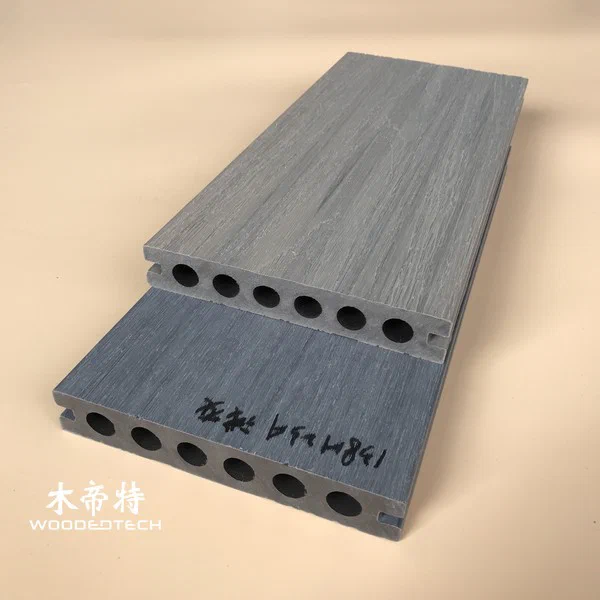
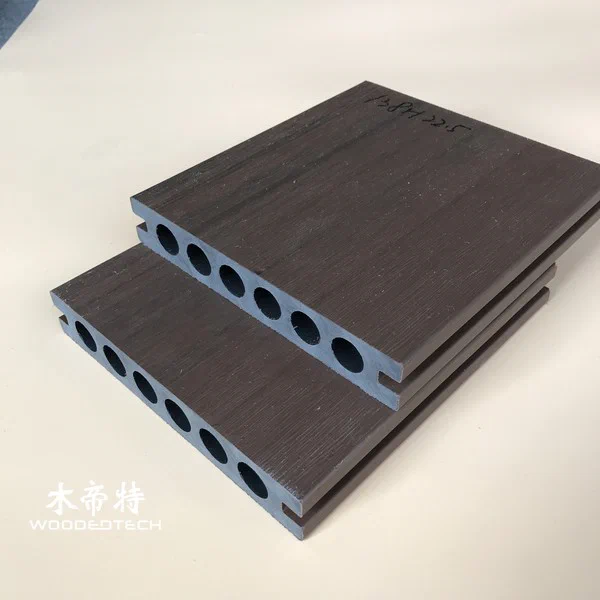
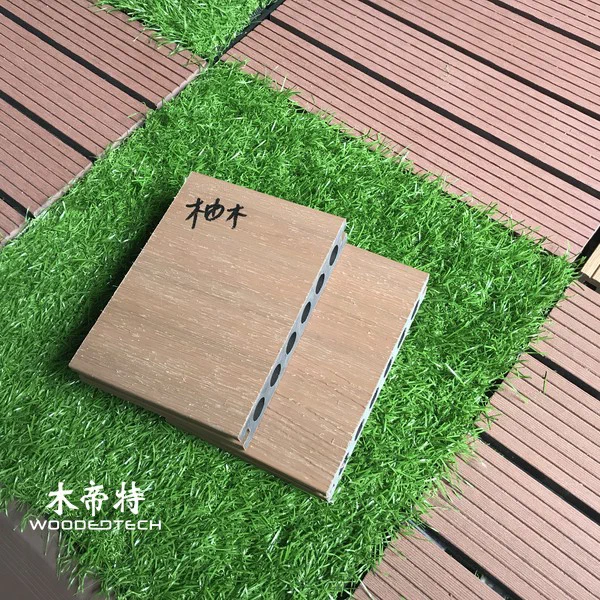
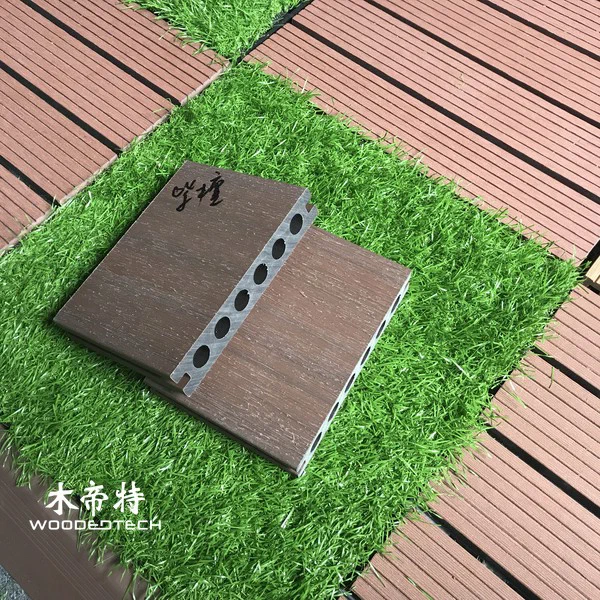
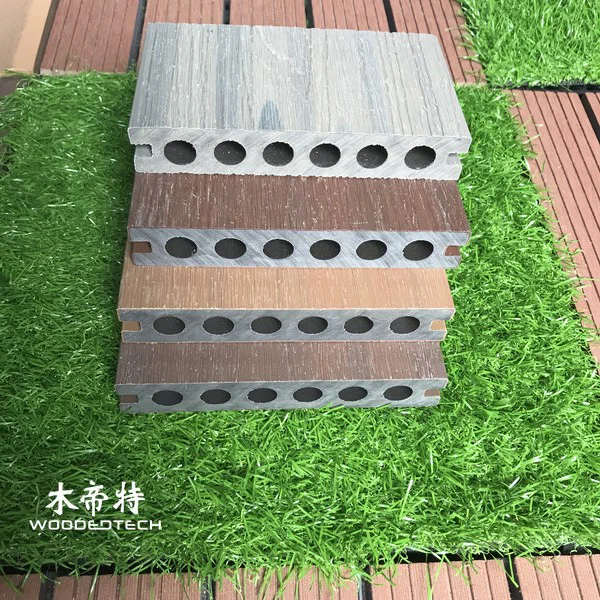
GD13823 Composite Decking Material Features Six Small Round Holes to Reduce Weight While Maintaining Structural Strength
Discover how GD13823 composite decking uses six small round holes to reduce weight, optimize material costs, and maintain structural performance.
| Payment | T/T in advance. Customized order: T/T, 50% prepayment, 50% balance before loading. |
|---|---|
| Transaction Terms | FOB, CIF, EXW, etc. |
| Samples | <30cm: samples for free. >30cm: samples order (the sample fee can be deducted when placing a container order later). |
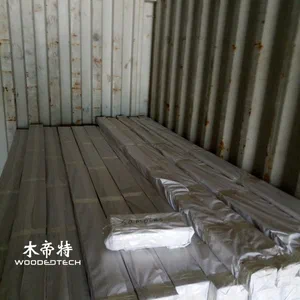
| Length | For 20GP container, max length is 5.8 meters (longest); mostly 2.2 / 2.4 / 2.9 / 3.0 / 4.0 meters (recommended) or customized. |
GD13823 composite decking material features six small round holes designed to reduce board weight while retaining structural strength. From an extrusion mold design perspective, this hollow profile balances material consumption, load-bearing performance, manufacturing efficiency, and installation convenience. The key is to position each hole carefully so the board maintains sufficient wall thickness and support around critical stress areas.
How Six Small Round Holes Improve Profile Performance
Hollow composite decking profiles use internal cavities to reduce material consumption without removing all the structural material. In the GD13823 design, six small round holes distribute the hollow space across the board’s cross-section. Compared with a solid profile of the same external dimensions, this configuration can reduce material usage and finished product weight, depending on wall thickness and hole placement.
Round holes offer an important design advantage because they avoid the sharp internal corners found in rectangular cavities. Sharp corners can concentrate stress, while smooth circular transitions help distribute loads more evenly. However, hole diameter, spacing, outer wall thickness, and the remaining material between adjacent holes must be carefully engineered to prevent deformation or cracking under repeated loading.
Hollow vs. Solid Composite Decking Structures
Solid composite decking provides a continuous cross-section and can offer high local stiffness and impact resistance. However, it generally consumes more material and weighs more than a comparable hollow profile. This can increase raw material costs, transportation expenses, and handling effort during installation.
Hollow decking offers a practical alternative for projects where weight reduction and production efficiency are important. A six-hole configuration can preserve structural material around the perimeter while reducing unnecessary mass in the interior. Its actual strength depends on the overall profile geometry, composite formulation, extrusion quality, and support spacing. For applications involving heavy loads or demanding environments, performance testing is essential before selecting the appropriate structure.
Rib Design and Extrusion Mold Optimization
Internal ribs and connecting walls help stabilize hollow profiles by supporting the upper and lower decking surfaces. For GD13823, the material bridges between the six circular cavities should be designed to resist bending and limit local deformation under foot traffic and furniture loads.
During mold development, engineers need to balance cavity dimensions, flow-channel resistance, and wall thickness. Uneven material flow can cause inconsistent walls, surface defects, or dimensional instability. The extrusion die should therefore be optimized for uniform melt distribution and stable cooling. Production trials can help verify dimensional tolerances, straightness, and the consistency of the finished cross-section.
Surface Patterns and Installation Performance
Surface texture influences appearance, traction, cleaning, and the perceived quality of composite decking. Embossed wood-grain patterns can create a natural timber look, while textured surfaces may improve slip resistance when properly designed and tested. Pattern depth must remain compatible with the board’s wall thickness and extrusion process.
The reduced weight of a hollow GD13823 profile can make boards easier to transport, cut, position, and install. Consistent dimensions also help installers maintain regular gaps and align boards with the supporting joists. Installation planning should account for joist spacing, fastening requirements, drainage, and thermal expansion. For B2B buyers, evaluating the complete profile design rather than weight alone helps ensure a suitable balance of cost, durability, and installation efficiency.
FAQ
Q: Why does GD13823 use six small round holes instead of a solid structure?
A: The six-hole design reduces material consumption and board weight while retaining structural material around the outer walls and between cavities.
Q: Do hollow composite decking boards have sufficient strength for outdoor use?
A: They can provide suitable performance when the profile geometry, material formulation, and support spacing are properly engineered and validated through testing.
Q: How does extrusion mold design affect the final decking quality?
A: Mold design influences wall thickness, material distribution, dimensional stability, surface quality, and the consistency of the finished profile.
Related Products
 D15223 Hollow Square Hole WPC Outdoor Decking Offers Double Grooved Surfaces for Flexible Installation Options
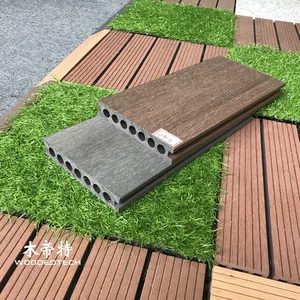 GD13823-2 Wood Versus Composite Decking Features Seven Round Holes with Wood Grain and Brushed Textures on Opposite Sides
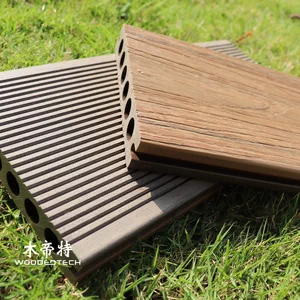 GD14023 Second Generation Semi Capped Co Extrusion Wood Plastic Composites WPC Decking Features a Classic Round Hole Design for Outdoor Flooring
 D15035 Hollow Square Hole WPC Deck Offers Double Grooved Surfaces with Unique Thickness Design for Outdoor Applications
Related Articles

Get a Free Quote
Interested in GD13823 Composite Decking Material Features Six Small Round Holes to Reduce Weight While Maintaining Structural Strength? Fill in the form and we will reply within 24 hours.