
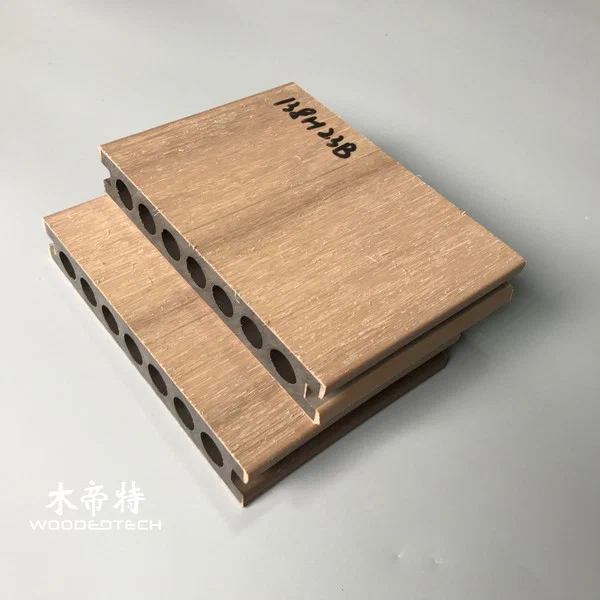
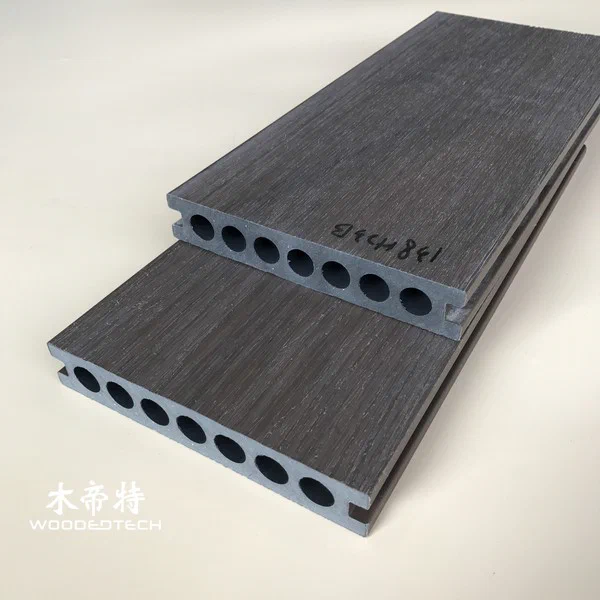
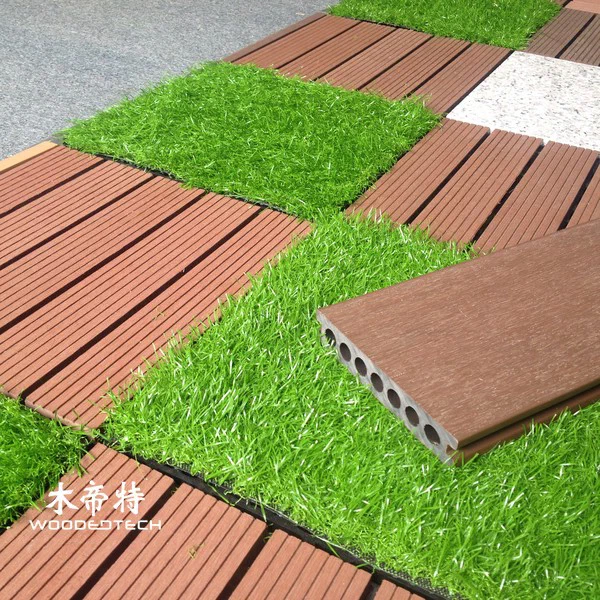
GD13823-2 Wood Versus Composite Decking Features Seven Round Holes with Wood Grain and Brushed Textures on Opposite Sides
Explore how the GD13823-2 seven-hole WPC decking profile balances strength, weight, cost, rib design, extrusion performance, and dual-sided textures.
| Payment | T/T in advance. Customized order: T/T, 50% prepayment, 50% balance before loading. |
|---|---|
| Transaction Terms | FOB, CIF, EXW, etc. |
| Samples | <30cm: samples for free. >30cm: samples order (the sample fee can be deducted when placing a container order later). |
| Length | For 20GP container, max length is 5.8 meters (longest); mostly 2.2 / 2.4 / 2.9 / 3.0 / 4.0 meters (recommended) or customized. |
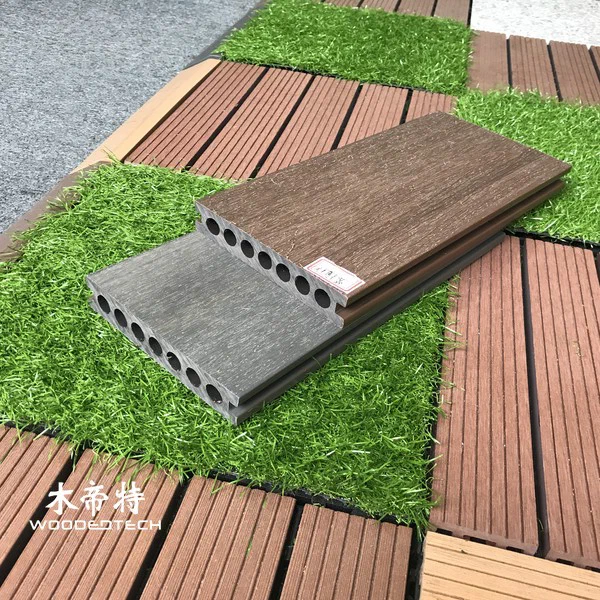
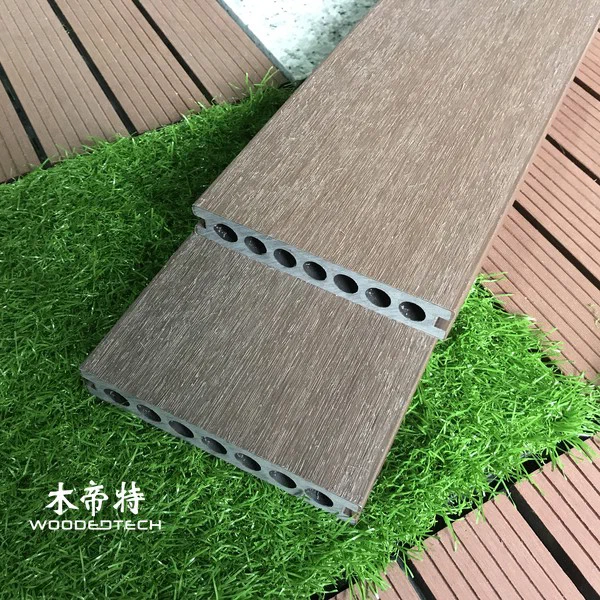
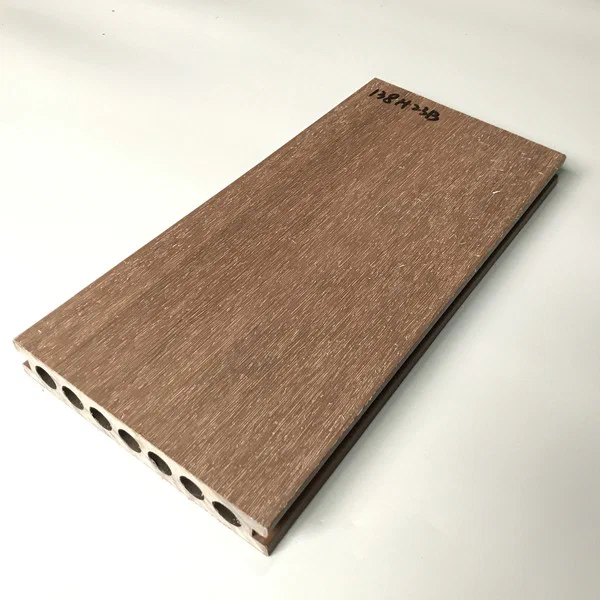
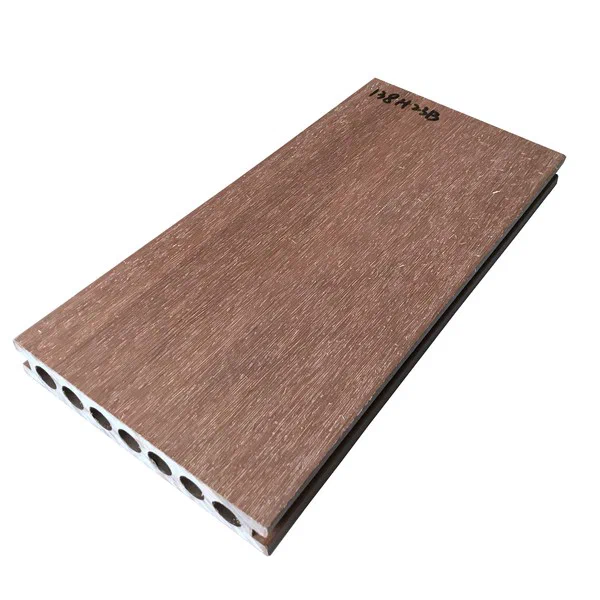
GD13823-2 is a wood plastic composite (WPC) decking profile designed with seven round hollow holes and two different surface finishes: wood grain on one side and brushed texture on the opposite side. For extrusion mold designers and decking manufacturers, this combination offers a practical way to balance structural strength, material consumption, surface appearance, and installation requirements within a single profile.
How the Seven-Hole Structure Affects Performance
The seven round holes in the GD13823-2 profile reduce material consumption compared with a fully solid section of the same external dimensions. Lower material usage can reduce board weight, extrusion costs, and transportation expenses, making hollow composite decking suitable for residential terraces, garden pathways, balconies, and other outdoor applications.
Hole diameter, spacing, and wall thickness determine how effectively the profile distributes loads. Round cavities generally avoid the sharp internal corners associated with rectangular openings, helping reduce local stress concentrations. However, too many holes, excessively thin walls, or uneven material distribution can weaken the board and increase the risk of deformation under concentrated loads.
From a mold design perspective, the seven cavities require carefully positioned core elements and balanced melt flow. Uniform wall thickness helps control cooling rates, minimize shrinkage differences, and maintain dimensional stability. The final design should be validated through extrusion trials and mechanical testing rather than relying on cavity count alone.
Hollow Versus Solid WPC Decking
Hollow and solid structures serve different market requirements. Hollow profiles offer lower weight and reduced material usage, while solid composite decking generally provides greater mass and can be better suited to applications involving demanding point loads or frequent heavy use.
For the GD13823-2 profile, seven-hole construction is a material-efficient option when the external dimensions, supporting joist spacing, and load requirements are properly matched. Manufacturers should evaluate flexural strength, impact resistance, creep, and fastener retention before finalizing the cross-section.
Solid profiles may simplify certain machining operations and provide more material for fastening, but their higher material consumption can increase production costs. The appropriate structure depends on the intended application, installation method, and required performance standards.
Rib Design and Extrusion Mold Optimization
The ribs separating the seven holes are critical load-bearing elements. Their thickness and spacing influence bending stiffness, resistance to local crushing, and the amount of material required per meter. Ribs that are too thin may deform during cooling or under service loads, while unnecessarily thick ribs increase material use and can create uneven cooling.
An effective extrusion mold maintains balanced flow through the outer walls and internal ribs. Proper die-land design, melt distribution, cooling calibration, and haul-off control help produce straight boards with consistent dimensions. For large-volume production, even small improvements in cross-sectional efficiency can deliver meaningful material savings.
Wood Grain and Brushed Textures on Opposite Sides
The dual-sided finish gives GD13823-2 greater design flexibility. A wood grain surface recreates the natural appearance of timber, while a brushed texture offers a different visual character and tactile finish. Buyers can select the preferred side according to project aesthetics and surface requirements.
Texture design also affects mold complexity, surface replication, cleaning, and maintenance. Embossing depth and brushed patterns should be developed to suit the WPC formulation and extrusion process. Neither finish automatically guarantees slip resistance; wet-condition testing is necessary when traction is a key specification.
For B2B buyers, combining seven-hole geometry with two surface options creates opportunities to differentiate product ranges without developing entirely separate structural profiles. The final specification should balance appearance, mechanical performance, production stability, and installation compatibility.
FAQ
Q: Why does the GD13823-2 WPC decking profile use seven round holes?
A: The hollow structure reduces material consumption and board weight while retaining structural support through the surrounding walls and internal ribs.
Q: How does rib thickness affect WPC decking performance?
A: Rib thickness influences stiffness, load distribution, cooling stability, and material cost. It must be optimized according to the board dimensions and intended loading conditions.
Q: What is the benefit of wood grain and brushed textures on opposite sides?
A: The dual-sided design provides two appearance options within one profile, helping manufacturers serve different customer preferences and project requirements.
Related Products
 GD13823 Composite Decking Material Features Six Small Round Holes to Reduce Weight While Maintaining Structural Strength
 GD14023S Composite Deck Materials Feature a Solid Structure and Side Grooves for Better Adaptability in Extremely Cold Climates
 3DGD13823 Second Generation 3D Embossed Teak Decking Composite Material Features Ultra Realistic Wood Grain Texture for Elegant Outdoor Flooring
 3DGD13823 Second Generation 3D Embossed Walnut WPC Decking Combines Ultra Realistic Wood Grain Texture with the Natural Beauty of Walnut for Outdoor Spaces
Related Articles
Get a Free Quote
Interested in GD13823-2 Wood Versus Composite Decking Features Seven Round Holes with Wood Grain and Brushed Textures on Opposite Sides? Fill in the form and we will reply within 24 hours.