


GD13820 WPC Co Extrusion Decking Provides Reliable Outdoor Flooring Solutions for Extremely Cold Climate Areas
Discover the complete WPC extrusion process for GD13820 co-extrusion decking designed for cold climates, ensuring durability and quality.
| Payment | T/T in advance. Customized order: T/T, 50% prepayment, 50% balance before loading. |
|---|---|
| Transaction Terms | FOB, CIF, EXW, etc. |
| Samples | <30cm: samples for free. >30cm: samples order (the sample fee can be deducted when placing a container order later). |
| Length | For 20GP container, max length is 5.8 meters (longest); mostly 2.2 / 2.4 / 2.9 / 3.0 / 4.0 meters (recommended) or customized. |
The GD13820 WPC co-extrusion decking process involves several crucial steps to ensure high-quality outdoor flooring solutions, especially suited for extremely cold climate areas. This article outlines the entire process, from material mixing to common production challenges.
Material Mixing
The initial stage in WPC decking production is the careful mixing of wood fibers and thermoplastics, typically polyethylene or PVC. Additives, such as colorants and UV stabilizers, are incorporated to enhance performance and aesthetics. It’s essential to achieve a homogeneous blend to ensure consistent properties throughout the final product. The mixing process usually involves a high-speed mixer that combines the dry materials before they are fed into the pelletizing machine.
Pelletizing
Once mixed, the material is pelletized to facilitate easier handling and feeding into the extrusion line. The pelletizing process involves heating the mixture and forcing it through a die to create uniform pellets. These pellets can then be stored and later utilized efficiently in the extrusion process. Proper pellet size is vital, as it influences the melting and flow characteristics during extrusion.
Extrusion Temperature Control
Extrusion temperature control is critical for producing high-quality WPC decking. The process involves melting the pellets in a heated barrel before forcing them through a die to form the desired profile. Temperature settings must be carefully monitored and adjusted, typically ranging between 160°C and 220°C, depending on the specific materials used. Maintaining optimal temperatures ensures proper flow and prevents degradation of the material.
Mold Design and Cooling Calibration
Mold design plays an essential role in shaping the decking. Molds must be precisely engineered to achieve the desired profile, surface texture, and finish. After the material exits the die, it enters a cooling calibration system, which often includes water baths or air cooling to solidify the product shape. This stage is crucial for dimensional stability, especially in cold climates where thermal expansion and contraction can occur.
Surface Treatment
To enhance durability and aesthetics, surface treatments such as embossing or coating may be applied after extrusion. These treatments improve slip resistance and protect against UV degradation and moisture. A well-executed surface treatment not only enhances the visual appeal but also extends the lifespan of the decking in harsh outdoor environments.
Common Production Problems
While producing WPC decking, several common issues may arise, including:
- Inconsistent material mixing leading to weak spots.
- Temperature fluctuations causing flow issues or product warping.
- Poor mold design resulting in dimensional inaccuracies.
- Surface defects due to inadequate cooling or finishing processes.
Addressing these challenges requires ongoing monitoring and adjustments throughout the production line.
FAQ
Q: What materials are used in GD13820 WPC co-extrusion decking?
A: The decking is made from a blend of wood fibers and thermoplastics, such as polyethylene or PVC, along with additives for enhanced performance.
Q: How does temperature control affect the extrusion process?
A: Proper temperature control is crucial to ensure the material melts uniformly, allowing for optimal flow and preventing degradation during extrusion.
Q: What are the benefits of surface treatments for outdoor WPC decking?
A: Surface treatments enhance durability, improve slip resistance, and protect against environmental factors like UV exposure and moisture.
Related Products
 3DGD13823 Co Extrusion WPC Decking Features Second Generation 3D Embossed Surface with Improved Wood Finish Technology
 GD13823 Composite Capped Decking Offers Classic Outdoor Flooring Design with Six Round Holes and Durable Performance
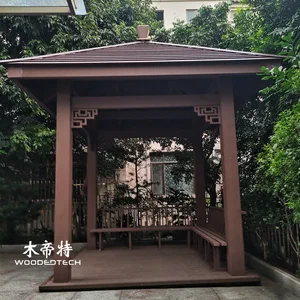 gazebo wpc decking Rustic and natural—no painting or maintenance required
 Aluminum Alloy 40x25 WPC Decking Joist Provides Reliable Outdoor Support Without Fear of Harsh Weather Conditions
Related Articles
Get a Free Quote
Interested in GD13820 WPC Co Extrusion Decking Provides Reliable Outdoor Flooring Solutions for Extremely Cold Climate Areas? Fill in the form and we will reply within 24 hours.