
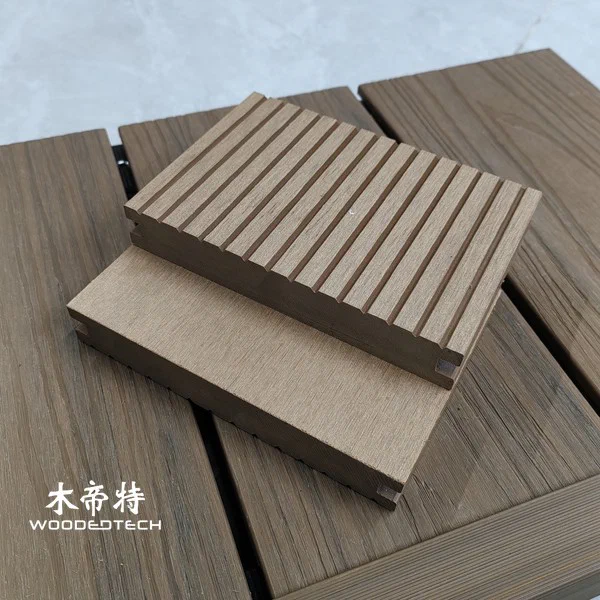
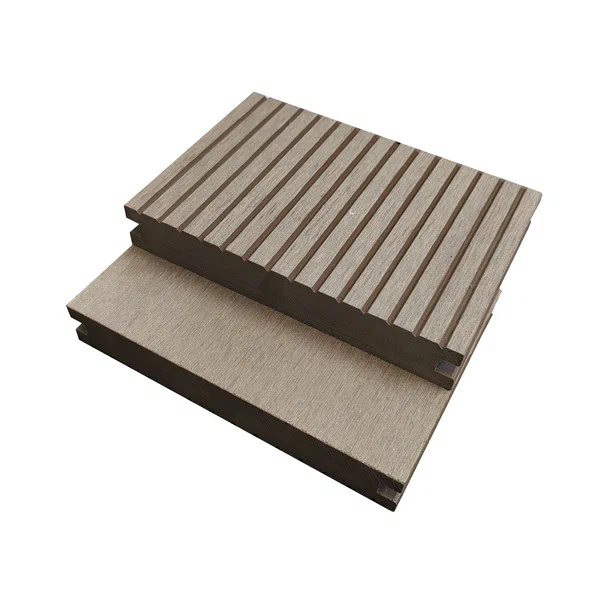
D14623S 23mm Solid Composite Decking Boards for Popular Outdoor Flooring Projects
Learn how D14623S 23mm solid composite decking boards balance strength, weight, cost, and installation performance for outdoor flooring projects.
| Payment | T/T in advance. Customized order: T/T, 50% prepayment, 50% balance before loading. |
|---|---|
| Transaction Terms | FOB, CIF, EXW, etc. |
| Samples | <30cm: samples for free. >30cm: samples order (the sample fee can be deducted when placing a container order later). |
| Length | For 20GP container, max length is 5.8 meters (longest); mostly 2.2 / 2.4 / 2.9 / 3.0 / 4.0 meters (recommended) or customized. |
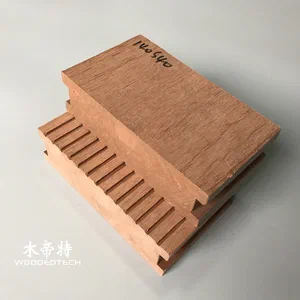
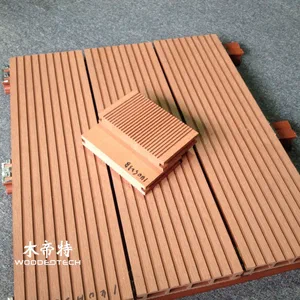
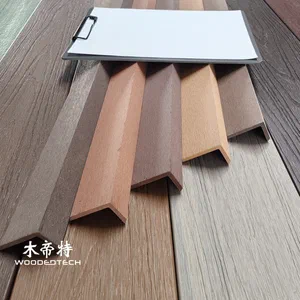
D14623S 23mm Solid Composite Decking Boards are built for outdoor flooring projects that need dependable strength, stable installation, and a clean finished look. For WPC buyers, the real value is not just in the board itself, but in how profile design, wall thickness, rib layout, and surface treatment shape performance on site.
How Profile Design Affects Strength and Handling
In WPC extrusion, the profile is the starting point for everything else. A 23mm solid board like D14623S uses more material than a hollow board, which increases load resistance, improves screw-holding performance, and reduces the chance of local crushing under furniture, foot traffic, or repeated impact.
Solid profiles are especially useful for public walkways, commercial terraces, and residential decks where installation speed and long-term stability matter. They are also easier to cut and finish because installers do not need to worry about exposing internal cavities at the board ends.
Hollow vs Solid Structures
Hollow decking can lower material usage and cost, and it is often lighter to carry and transport. That makes it attractive for some large-area projects where budget and dead load are major concerns. The trade-off is lower section stiffness, more careful substructure planning, and less margin for concentrated loads.
Solid structures, by contrast, offer better durability in demanding applications. They usually cost more per meter, but they can reduce risk during installation and perform better when the deck must handle heavy use, tight spans, or more frequent fastening.
Rib Design and Internal Geometry
For extruded WPC products, ribs are one of the most important design tools. In hollow boards, rib patterns strengthen the section without adding full material across the entire profile. Well-placed ribs improve bending resistance, control deformation, and help keep the board dimensionally stable under heat and load.
Even on solid boards, underside geometry matters. Light reinforcement ridges can improve stiffness while keeping the board manageable for installers. A good engineering balance avoids overbuilding the profile, which would add cost without meaningful performance gains.
Surface Patterns and Installation Performance
Surface pattern affects more than appearance. Embossed or brushed textures improve slip resistance, hide light scratches, and help the deck look consistent over time. For outdoor flooring, that matters in wet areas, poolside zones, and high-traffic paths.
A practical surface also improves installation results. Consistent texture and accurate extrusion tolerances help boards align cleanly, maintain joint spacing, and reduce visible irregularities after fastening. That is why surface design should be matched with the project’s expected use, not chosen on appearance alone.
Cost, Weight, and Project Fit
The best profile is the one that balances performance and total project cost. Hollow boards may be the better choice for price-sensitive private landscaping. Solid boards like D14623S are stronger, heavier, and usually more expensive, but they are often the smarter option when buyers want fewer installation concerns and better long-term service.
For foreign trade buyers, the key is to match board structure with market demand: lightweight and economical for basic residential projects, or solid and durable for premium outdoor flooring and commercial applications.
FAQ
Q: Why choose a solid 23mm WPC decking board instead of a hollow one? A: A solid board offers better strength, screw retention, and impact resistance. It is a safer choice for heavy-use outdoor flooring and projects with tighter installation requirements.
Q: Do ribs still matter on solid WPC decking boards? A: Yes. Even when the board is solid, underside geometry can improve stiffness and help control warping or surface movement. Good rib design supports stable installation and better load performance.
Q: How does surface texture affect decking performance? A: Surface texture influences slip resistance, scratch visibility, and the finished appearance of the deck. A well-designed pattern also helps the board stay practical in wet or high-traffic outdoor areas.
Related Products
 D14040-2S Square Solid Composite Deck Boards Without Side Grooves for Outdoor Decking
 D20025S composite deck provides an extra wide outdoor decking solution with classic solid construction
 40mm Heavy-Duty Solid Composite Deck Boards D14040S with Superior Strength
 Classic Solid Composite Deck Boards D14023S - Durable & Rustic Outdoor Flooring
Related Articles
Get a Free Quote
Interested in D14623S 23mm Solid Composite Decking Boards for Popular Outdoor Flooring Projects? Fill in the form and we will reply within 24 hours.