
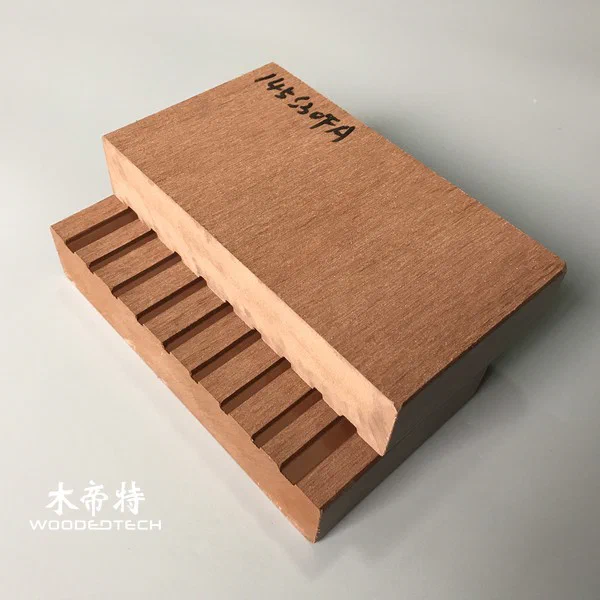
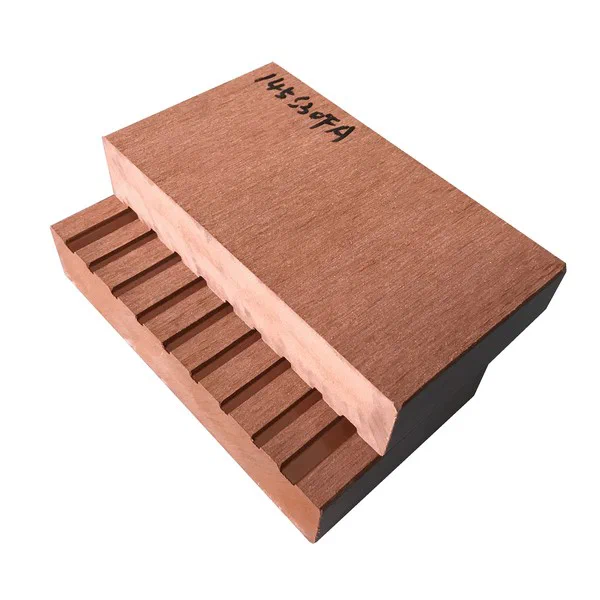
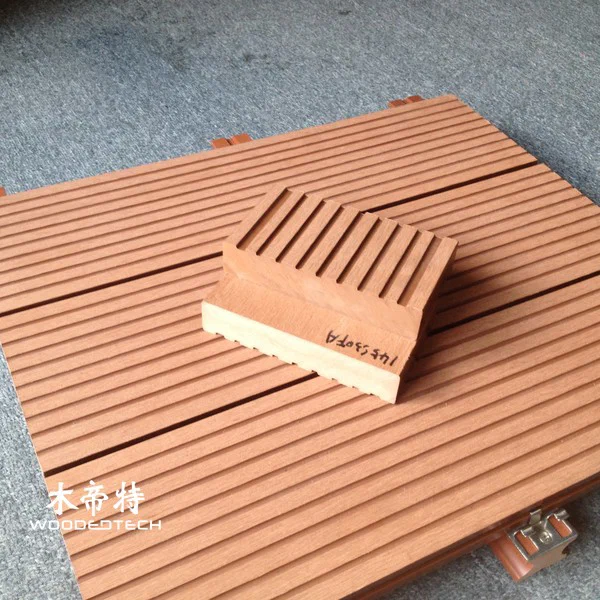
D14530-3S Solid Wood Plastic Decking Without Side Grooves for Outdoor Steps and Stairs
Solid groove-free WPC decking for outdoor steps and stairs, with design guidance on strength, weight, cost, and installation performance.
| Payment | T/T in advance. Customized order: T/T, 50% prepayment, 50% balance before loading. |
|---|---|
| Transaction Terms | FOB, CIF, EXW, etc. |
| Samples | <30cm: samples for free. >30cm: samples order (the sample fee can be deducted when placing a container order later). |
| Length | For 20GP container, max length is 5.8 meters (longest); mostly 2.2 / 2.4 / 2.9 / 3.0 / 4.0 meters (recommended) or customized. |
D14530-3S Solid Wood Plastic Decking Without Side Grooves for Outdoor Steps and Stairs is designed for safe, stable stair use where load-bearing performance matters more than decorative edge details. For outdoor steps and stair treads, the profile, internal structure, rib layout, and surface finish all affect strength, weight, cost, and how easily the product installs.
Why this profile suits steps and stairs
A solid decking profile is the right choice when the board must carry repeated point loads from foot traffic. Compared with hollow boards, solid wood plastic decking gives better screw holding, less vibration underfoot, and a cleaner cut edge at stair noses and end finishes.
The “without side grooves” design also makes sense for stairs. Side grooves are useful in some hidden-clip deck systems, but they are unnecessary when the board is fixed on stair framing or used as a stair tread where edge trimming, fascia alignment, and neat exposed sides are more important.
How structure changes performance
Hollow profiles reduce material use and lower shipping weight, which helps with large decking projects. They also cool faster in direct sun and can be easier to handle on site. The tradeoff is reduced impact resistance and more care needed at cut ends, fixing points, and concentrated load areas.
Solid profiles increase raw material usage, but they improve density, stiffness, and installation tolerance. For outdoor steps and stairs, that extra body is valuable because the board must resist flexing at shorter spans and handle repeated edge loading. In practice, solid construction often reduces complaints after installation because the tread feels more stable.
Rib design, thickness, and load distribution
Ribs are the engineer’s way of placing material where it works hardest. In hollow boards, well-designed internal ribs improve bending strength without making the profile too heavy. Rib spacing, wall thickness, and chamber shape all influence whether the board feels rigid or hollow-sounding underfoot.
For stair applications, rib design is less about minimum material and more about balanced support. A profile with proper thickness at the top wear layer and a reinforced core helps distribute load from heels, edges, and fastening points. If the board is too thin, it may deflect at the nosing; if it is overbuilt without proper design, cost rises without a meaningful installation benefit.
Surface pattern and installation behavior
Surface patterns affect both safety and appearance. A wood grain or embossed finish improves traction and helps hide minor scratches, which is useful on outdoor steps exposed to rain and dirt. Deeper textures can also reduce the visual impact of dust, but they should not be so aggressive that cleaning becomes difficult.
For stair and step projects, the best surface is usually one that combines grip with predictable fastening. A uniform, stable top layer makes cutting cleaner and reduces chipping at the edges. When the profile is solid and groove-free, installers can achieve a straighter look with fewer special accessories.
Cost and application balance
From a manufacturing point of view, solid stair decking costs more per meter than hollow decking because it uses more material and requires stronger extrusion control. Yet for steps and stairs, that extra cost is often justified by lower risk, simpler fixing, and better long-term performance.
For outdoor steps, stairs, and landings, D14530-3S is suited to projects that need a dependable tread surface, a strong body, and a tidy exposed edge. It is a practical choice when appearance, safety, and structural confidence all matter in the same profile.
FAQ
Q: Why choose solid WPC decking for outdoor steps instead of hollow boards? A: Solid boards handle concentrated foot traffic better and give stronger screw holding. They are also more stable for stair treads and exposed edges.
Q: Do side grooves matter on stair treads? A: Usually not. Side grooves help hidden-clip decking systems, but stairs often benefit more from clean edges and simple fixing.
Q: What surface pattern works best for outdoor stairs? A: A wood grain or embossed anti-slip surface is a good balance. It improves traction while keeping the tread easy to maintain.
Related Products
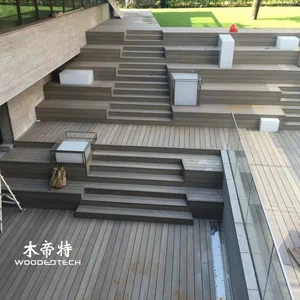 Building Composite Deck Stairs with Solid Specification Profiles
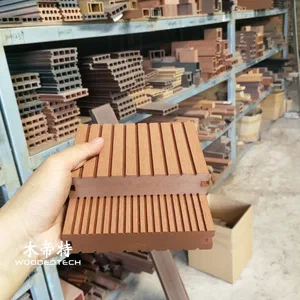 WPC Solid Decking D14532S: High-Strength Alternative to Hollow Profiles
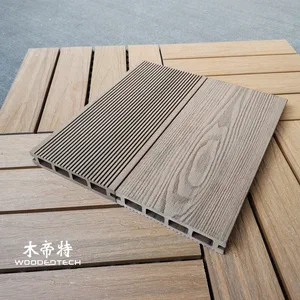 3D14025 plastic wood decking for garden provides four square holes with attractive installation effect and controlled cost
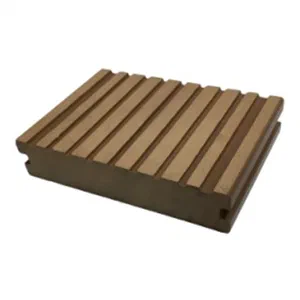 D14530S plastic wood decking with deep anti slip grooves is ideal for public area stair applications
Related Articles
Get a Free Quote
Interested in D14530-3S Solid Wood Plastic Decking Without Side Grooves for Outdoor Steps and Stairs? Fill in the form and we will reply within 24 hours.