
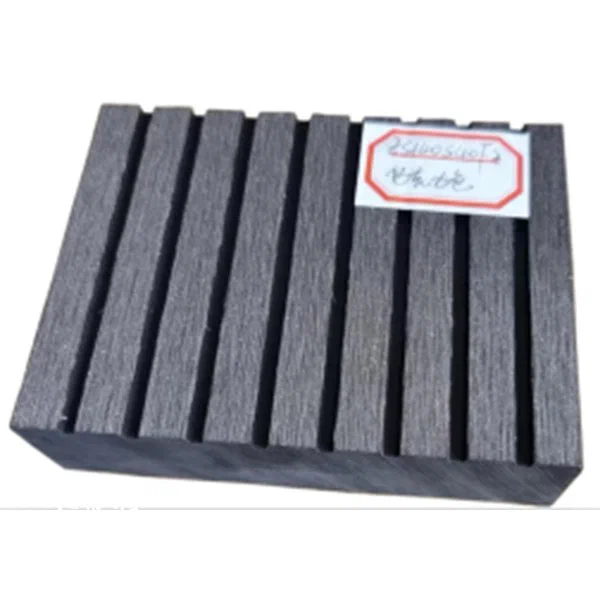
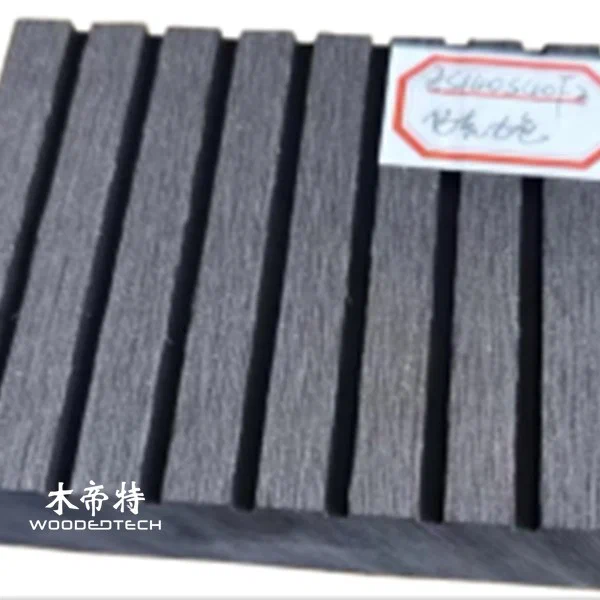
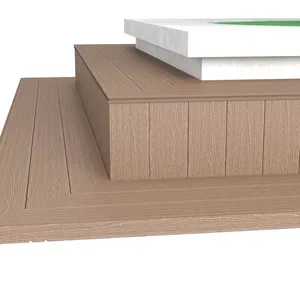
D14040-3S 40mm Thick Square Solid Plastic Wood Composite Flooring Without Side Grooves
Learn how WPC profile structure, ribs, and surface patterns affect strength, weight, cost, and installation performance.
| Payment | T/T in advance. Customized order: T/T, 50% prepayment, 50% balance before loading. |
|---|---|
| Transaction Terms | FOB, CIF, EXW, etc. |
| Samples | <30cm: samples for free. >30cm: samples order (the sample fee can be deducted when placing a container order later). |
| Length | For 20GP container, max length is 5.8 meters (longest); mostly 2.2 / 2.4 / 2.9 / 3.0 / 4.0 meters (recommended) or customized. |
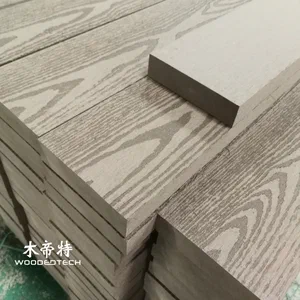
D14040-3S 40mm Thick Square Solid Plastic Wood Composite Flooring Without Side Grooves is built for projects that need high load capacity, stable foot feel, and a clean edge detail. Its performance comes from the profile itself: solid cross-section, controlled rib placement, and a surface finish that balances grip with easy cleaning.
How profile design changes performance
In WPC extrusion, the profile is not just the shape of the board; it is the structure that controls stiffness, impact resistance, and material usage. A square solid flooring profile like D14040-3S uses full-section material to resist bending and local crushing, which makes it suitable for areas with frequent foot traffic, furniture loads, or long-term dimensional demands.
Compared with hollow profiles, solid structures carry more weight and cost more in raw material, but they also deliver better edge strength and less risk of denting around fasteners. For buyers, that usually means fewer complaints during installation and better retention of surface flatness over time.
Hollow, solid, and ribbed structures
Hollow WPC profiles reduce weight and lower extrusion cost, which is useful when the target is easy handling or lower-priced outdoor flooring. The trade-off is that hollow chambers can be more sensitive to point loads, weak screw retention, and noise if the wall thickness is not well designed.
Ribs are the middle ground. Proper rib design improves stiffness without making the profile fully solid, and it helps the material cool more evenly during extrusion. If ribs are too thin, they do little for strength; if they are too thick or uneven, they can create shrinkage marks, warping, or a rough internal stress pattern.
For D14040-3S, the solid square body avoids the structural uncertainty of hollow chambers and gives a more predictable installation result, especially when the floor must stay stable across temperature changes.
Surface patterns and installation behavior
Surface treatment affects more than appearance. Embossed, brushed, or wood-grain patterns can improve slip resistance and hide minor wear, but deep texture can also collect dust and make cleaning slower. For flooring intended for commercial or outdoor use, the pattern should provide enough friction without compromising comfort under bare feet.
“No side grooves” is also a practical design choice. It creates a cleaner side wall, which can simplify edge finishing and give a tighter visual line at exposed ends. It may also suit installations where the board is fixed from the top or where side accessories are not required.
Strength, weight, cost, and jobsite efficiency
A heavier solid profile generally means higher material consumption and transport cost, but it can reduce installation risk. Installers often prefer profiles that stay straight, cut cleanly, and fasten securely without deforming. That is where a well-designed solid WPC flooring profile can outperform a lighter hollow board on overall project value.
- Strength: better bending resistance and edge durability
- Weight: higher than hollow profiles, but more stable under load
- Cost: higher material cost, lower risk of replacement
- Installation: easier alignment, cleaner cuts, fewer structural surprises
FAQ
Q: Why choose a solid WPC flooring profile over a hollow one? A: Solid profiles offer better load-bearing performance, stronger edges, and more reliable fastening. They are a better fit for heavy-use flooring where stability matters more than weight reduction.
Q: What is the main benefit of having no side grooves? A: It gives the board a cleaner edge and can simplify exposed-end finishing. This is useful when the floor layout needs a neat appearance and straightforward installation.
Q: How do surface patterns affect WPC flooring performance? A: Surface patterns improve grip and influence how the floor looks after wear. The right texture helps balance safety, maintenance, and visual quality.
Related Products
 Compact Solid Outdoor WPC Flooring D10023S - Mini Width & Easy Installation
 D10030S outdoor floor narrow board design offers an elegant appearance with solid structure and excellent load bearing performance
 D10025-2S Solid Outdoor Flooring with Four Flat Sides Is Ideal for Custom Stair and Step Cutting Projects
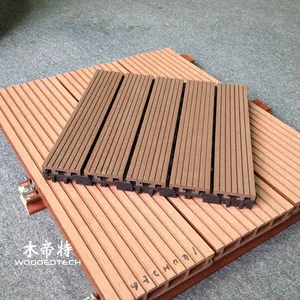 Waterproof & Insect-Resistant Plastic Wood Tile Flooring - Easy DIY Setup
Related Articles
Get a Free Quote
Interested in D14040-3S 40mm Thick Square Solid Plastic Wood Composite Flooring Without Side Grooves? Fill in the form and we will reply within 24 hours.