
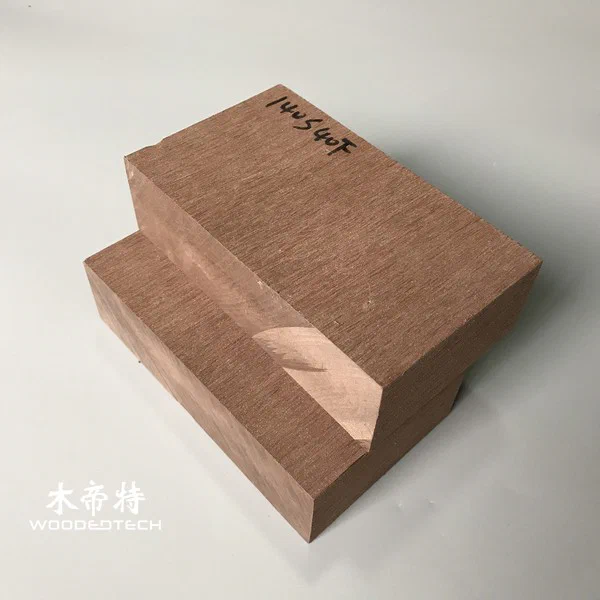
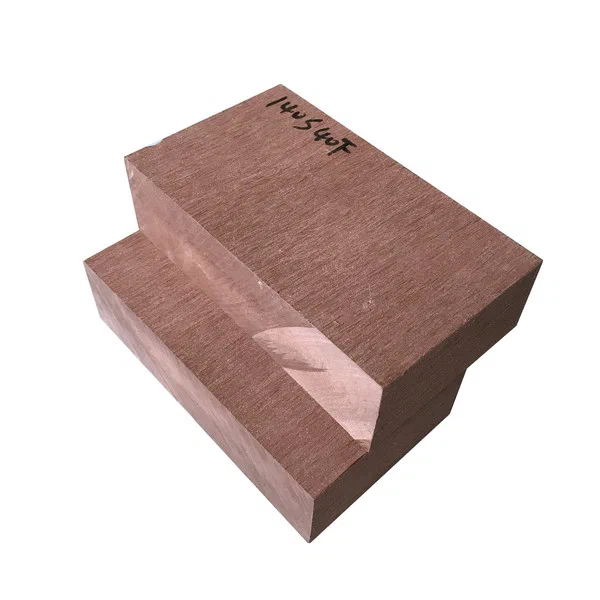
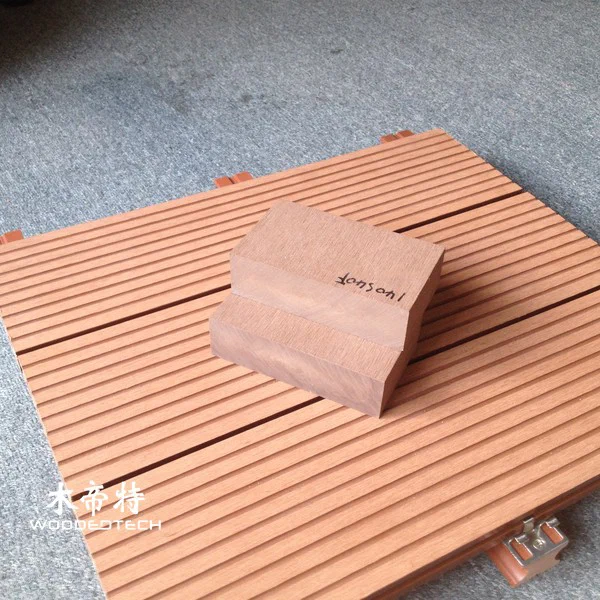
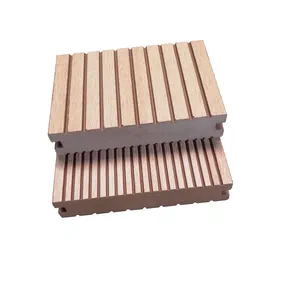
D14040-2S Square Solid Composite Deck Boards Without Side Grooves for Outdoor Decking
Learn how WPC profile design, ribs, and surface patterns affect strength, weight, cost, and installation for D14040-2S deck boards.
| Payment | T/T in advance. Customized order: T/T, 50% prepayment, 50% balance before loading. |
|---|---|
| Transaction Terms | FOB, CIF, EXW, etc. |
| Samples | <30cm: samples for free. >30cm: samples order (the sample fee can be deducted when placing a container order later). |
| Length | For 20GP container, max length is 5.8 meters (longest); mostly 2.2 / 2.4 / 2.9 / 3.0 / 4.0 meters (recommended) or customized. |
D14040-2S Square Solid Composite Deck Boards Without Side Grooves are designed for outdoor decking projects that need a clean look, strong load-bearing performance, and simple installation. The profile choice matters as much as the material itself, because the board shape directly affects durability, weight, cost, and the way a deck handles everyday use.
Profile design and why it matters
For WPC deck boards, the cross-section is the first engineering decision. A square solid profile like D14040-2S puts material where it is most useful, giving the board better resistance to bending, impact, and concentrated foot traffic than a thin hollow profile. That makes it a practical choice for open terraces, heavy-use patios, and commercial outdoor flooring where stiffness is more important than saving every gram of material.
Hollow boards can reduce material consumption and lower shipping weight, but they need careful internal structure to avoid weak points, noise, or visible deformation. Solid boards cost more in resin and fiber content, yet they usually offer better fastening stability, better edge protection, and a more substantial feel underfoot. For many buyers, that trade-off is worth it when the deck must stay straight and solid over time.
Rib design, stiffness, and cost balance
Inside a profile, ribs are the main tool for engineering strength without making the board unnecessarily heavy. In hollow WPC designs, ribs help control warping and support screw zones. In solid designs, ribs are less about creating cavities and more about shaping stress flow, improving dimensional stability, and reducing the chance of cracking around fasteners or cut edges.
The more complex the rib layout, the more precise the mold must be. That increases tooling cost, but it can also reduce waste and improve performance. A simpler square solid profile is often easier to manufacture consistently, which helps keep quality stable in large-volume decking orders.
Surface patterns and installation performance
Surface pattern is not only about appearance. Embossed wood grain, brushed textures, and anti-slip finishes all influence traction, cleaning, and how the board ages outdoors. A tighter surface texture can hide scratches and light wear, while a deeper pattern may improve grip in wet areas such as poolsides and exposed walkways.
For installation, boards without side grooves usually rely on face screwing or top-fix systems, which can be a benefit when the design calls for a straight, clean edge and fewer accessory parts. This can simplify layout and reduce installation errors. It also makes edge finishing more predictable, especially on square solid profiles that need neat trimming at corners and borders.
What buyers should expect from D14040-2S
D14040-2S is well suited to projects where strength and a premium visual finish matter more than minimum weight. It supports stable fastening, resists local crushing better than many hollow options, and works well for outdoor decking that must handle regular traffic and changing weather. For exporters and project buyers, the best profile is the one that matches the real load, the desired appearance, and the installation method from the start.
FAQ
Q: Why choose a solid WPC deck board instead of a hollow one? A: Solid boards generally provide better stiffness, stronger fastener holding, and a more substantial underfoot feel. They are a better fit for high-traffic decks and projects that prioritize durability.
Q: Do side grooves improve decking performance? A: Side grooves mainly affect hidden-clip installation options. Boards without side grooves are often easier to use with face-fix systems and can give a cleaner square-edge finish.
Q: How do surface patterns affect WPC decking? A: Surface patterns influence slip resistance, appearance, and maintenance. A well-designed texture can improve traction and help the board look better for longer outdoors.
Related Products
 D20025S composite deck provides an extra wide outdoor decking solution with classic solid construction
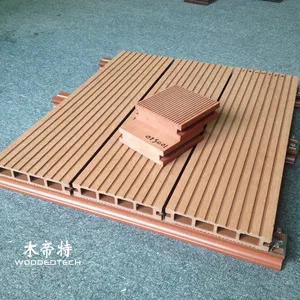
 D13740S 40mm Thick Solid Composite Decking Material for Durable Outdoor Flooring Applications
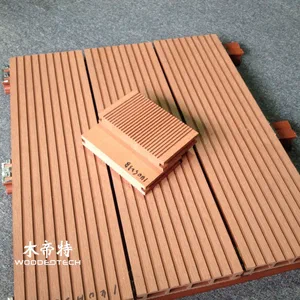
 D10030S outdoor floor narrow board design offers an elegant appearance with solid structure and excellent load bearing performance
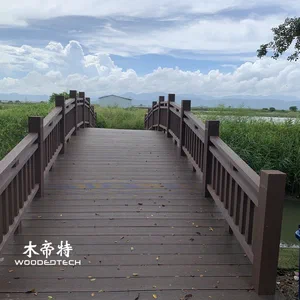
 Classic Solid Composite Deck Boards D14023S - Durable & Rustic Outdoor Flooring
Related Articles
Get a Free Quote
Interested in D14040-2S Square Solid Composite Deck Boards Without Side Grooves for Outdoor Decking? Fill in the form and we will reply within 24 hours.