


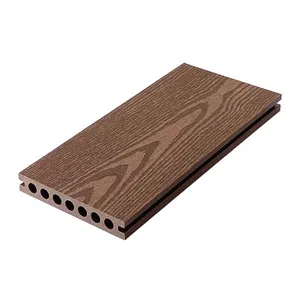
D14025-6 wpc composite decking with walnut color and round hollow groove surface creates a practical outdoor flooring solution
Learn how WPC decking profile design, hollow structure, ribs, and surface grooves shape strength, weight, cost, and installation performance.
| Payment | T/T in advance. Customized order: T/T, 50% prepayment, 50% balance before loading. |
|---|---|
| Transaction Terms | FOB, CIF, EXW, etc. |
| Samples | <30cm: samples for free. >30cm: samples order (the sample fee can be deducted when placing a container order later). |
| Length | For 20GP container, max length is 5.8 meters (longest); mostly 2.2 / 2.4 / 2.9 / 3.0 / 4.0 meters (recommended) or customized. |
D14025-6 wpc composite decking with walnut color and round hollow groove surface is designed as a practical outdoor flooring solution for projects that need a balanced mix of strength, weight control, and fast installation. For extrusion mold design, this profile is a good example of how section geometry and surface treatment directly shape product performance and manufacturing cost.
How profile design affects performance
A WPC decking board is never judged by color alone. Its cross-section determines how the board carries load, resists bending, and behaves during installation. Wider top skins improve walking comfort and surface stability, while controlled wall thickness helps prevent collapse during extrusion and reduces material waste. For a board like D14025-6, the profile has to support everyday residential use without becoming too heavy or too expensive to ship.
Hollow structure versus solid structure
Hollow designs are often preferred for outdoor decking because they reduce weight and resin-filler usage. That lowers cost and makes handling easier on site, especially for long boards and elevated decks. They also cool faster after extrusion, which can improve line efficiency.
Solid structures, by contrast, offer higher impact resistance and better screw-holding performance. They are useful for heavy traffic, commercial platforms, or areas that need more rigidity. The trade-off is obvious: more material, more weight, and higher cost. For many garden and patio projects, a well-designed hollow board gives a better overall balance.
Rib design and internal support
Internal ribs are the hidden part of a strong WPC profile. They support the top surface, reduce deflection, and keep the hollow chambers stable during use. Good rib design also helps the board resist warping and twisting after installation.
From a mold engineer’s point of view, rib thickness must be kept consistent. If ribs are too thick, cooling becomes uneven and the board may shrink or bow. If they are too thin, the profile loses strength and can feel soft underfoot. The right rib layout improves both product quality and production stability.
Surface pattern and installation behavior
The round hollow groove surface on D14025-6 adds more than appearance. Grooves improve traction in wet outdoor conditions and help hide minor scratches from daily use. They also give the board a more natural wood-like look, which suits walnut color well.
Surface texture can influence installation too. A patterned face helps mask small alignment differences between boards, while a stable co-extruded or textured top layer can improve weather resistance and reduce maintenance. For installers, a predictable profile means cleaner cuts, easier fastening, and fewer callbacks.
Cost, weight, and project choice
In real projects, the best decking profile is not always the heaviest or the thickest. It is the one that meets the required load, keeps the board easy to handle, and stays within budget. D14025-6 shows how thoughtful extrusion mold design can deliver a practical outdoor flooring option with a good visual finish and efficient installation performance.
FAQ
Q: Why are hollow WPC decking boards popular? A: They use less material than solid boards, so they are lighter and more cost-effective. They still provide enough strength for many residential outdoor flooring applications.
Q: What is the role of ribs inside a WPC decking profile? A: Ribs support the top surface and improve stiffness without adding too much weight. They also help control deformation during extrusion and long-term use.
Q: How does surface pattern affect decking performance? A: It improves slip resistance and changes the visual style of the board. A grooved surface can also help hide wear and make the deck look more natural.
Related Products
Related Articles
Get a Free Quote
Interested in D14025-6 wpc composite decking with walnut color and round hollow groove surface creates a practical outdoor flooring solution? Fill in the form and we will reply within 24 hours.