


Y5030-2 Hollow Structure Composite Deck Joist Provides Lightweight Support for Modern Decking Projects
Y5030-2 hollow structure composite deck joist offers lightweight support with optimized WPC extrusion design for modern decking systems.
| Payment | T/T in advance. Customized order: T/T, 50% prepayment, 50% balance before loading. |
|---|---|
| Transaction Terms | FOB, CIF, EXW, etc. |
| Samples | <30cm: samples for free. >30cm: samples order (the sample fee can be deducted when placing a container order later). |
| Length | For 20GP container, max length is 5.8 meters (longest); mostly 2.2 / 2.4 / 2.9 / 3.0 / 4.0 meters (recommended) or customized. |
:::writing{variant=“document” id=“48391” title=“Y5030-2 Hollow Structure Composite Deck Joist Provides Lightweight Support for Modern Decking Projects”} Y5030-2 Hollow Structure Composite Deck Joist is designed for modern decking systems that require reliable support with reduced material weight. Its engineered hollow profile, internal rib structure, and optimized extrusion design help improve installation efficiency while maintaining structural performance for outdoor applications.
Profile Design and Structural Optimization
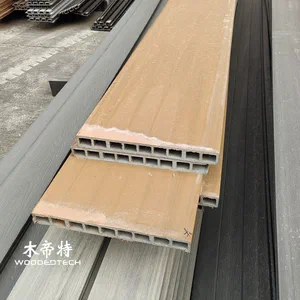
WPC profile design directly affects load capacity, material usage, and long-term stability. The Y5030-2 composite deck joist uses a hollow structure to achieve a balance between strength and weight. Compared with fully solid profiles, hollow designs reduce raw material consumption and make transportation and handling easier during installation.
A well-designed hollow profile does not simply remove material; it uses precise wall thickness and internal support geometry to maintain rigidity. The position and shape of internal ribs help distribute pressure across the joist, reducing deformation under regular decking loads. For large outdoor projects, this design approach can lower project weight without sacrificing practical performance.
Hollow and Solid Structure Comparison
Solid WPC profiles provide maximum density and are suitable for applications requiring high impact resistance. However, they require more material, increase product weight, and may raise manufacturing costs. Hollow structures like the Y5030-2 are often preferred for decking substructures because they offer efficient strength-to-weight performance.
Key differences include:
- Hollow profiles reduce material usage and improve handling efficiency.
- Solid profiles provide higher mass and stronger resistance in heavy-duty applications.
- Rib-reinforced hollow structures deliver improved stiffness while keeping production costs controlled.
The correct profile choice depends on project requirements, including span distance, expected load, installation environment, and budget considerations.
Rib Design and Surface Engineering
Internal rib placement is an important factor in WPC extrusion mold design. Proper rib spacing supports load distribution, improves dimensional stability, and helps the joist maintain its shape during temperature changes. Poorly designed ribs may create weak points, while optimized structures improve overall reliability.
Although deck joists are usually hidden components, surface and extrusion details still influence manufacturing consistency. Accurate mold design ensures smooth production, stable dimensions, and easier assembly with decking boards. These factors contribute to faster installation and reduced adjustment work on-site.
Installation Benefits for Modern Decking Projects
The Y5030-2 hollow structure composite deck joist supports efficient decking installation by combining lightweight handling with dependable structural support. Contractors can benefit from easier positioning, reduced labor effort, and lower transportation costs.
For WPC manufacturers and project suppliers, profile engineering is essential for creating competitive decking systems. By combining advanced mold design, optimized hollow structures, and reinforced internal ribs, composite joists can provide practical solutions for residential, commercial, and landscape decking applications.
FAQ
Q: Why is a hollow WPC deck joist suitable for modern decking projects? A: Hollow WPC joists reduce weight while maintaining strength through engineered wall thickness and internal rib structures.
Q: How do ribs improve a composite extrusion profile? A: Internal ribs increase stiffness, improve load distribution, and help maintain profile stability during use.
Q: Are solid WPC profiles stronger than hollow profiles? A: Solid profiles provide higher density, but optimized hollow profiles can deliver efficient strength with lower weight and material costs.
:::
Related Products
 Y4030S Solid I Shaped Composite Deck Joist Provides Reliable Support for Outdoor Decking Systems
 F5030 outdoor solid square decorative bar is widely used for garden products and decking composite joists
 Y4040S Solid Outdoor Composite Deck Spacing Joist Is Designed for Long Lasting Deck Installation
 Y6040S Extra Large Thick Solid I Shaped Composite Deck Joist Offers Strong Support for Outdoor Structures
Related Articles
Get a Free Quote
Interested in Y5030-2 Hollow Structure Composite Deck Joist Provides Lightweight Support for Modern Decking Projects? Fill in the form and we will reply within 24 hours.