


Y4025S is a commonly used solid I shape joist for stable ground installation with wpc decking joists
Learn how WPC joist profiles, ribs, hollow or solid structures, and surface patterns affect strength, cost, weight, and installation.
| Payment | T/T in advance. Customized order: T/T, 50% prepayment, 50% balance before loading. |
|---|---|
| Transaction Terms | FOB, CIF, EXW, etc. |
| Samples | <30cm: samples for free. >30cm: samples order (the sample fee can be deducted when placing a container order later). |
| Length | For 20GP container, max length is 5.8 meters (longest); mostly 2.2 / 2.4 / 2.9 / 3.0 / 4.0 meters (recommended) or customized. |
Y4025S is a commonly used solid I shape joist for stable ground installation with wpc decking joists. In WPC decking systems, the joist profile is not a minor detail. It directly affects load transfer, floor feel, material use, and how reliably the deck stays aligned during installation and long-term service.
Profile Design and Structural Behavior
A solid I shape joist like Y4025S is chosen when installers need firm support on level ground and predictable fixing performance. The I-section concentrates material where bending resistance matters most, so it can deliver stronger support than a simple rectangular section with similar weight. That helps reduce deflection under foot traffic and improves the overall stability of the decking surface.
Hollow structures are useful when lower weight and reduced material consumption are the priority. They can be easier to handle and cheaper to produce, but the designer must control wall thickness, internal rib layout, and screw-holding zones carefully. If the profile is too thin or poorly reinforced, it may deform under fastening pressure or show weaker point loads at joist connections.
Solid structures bring a different advantage: they are easier to fix, cut, and anchor, especially on project sites where installation conditions vary. For ground installation, the extra mass and contact stability of a solid joist can reduce movement and simplify alignment. That is one reason solid I shape profiles are widely used in decking substructure systems that need consistent performance.
Rib Design, Weight, and Cost
Rib design is where extrusion engineering becomes practical. Internal ribs can raise stiffness without using as much material as a fully solid profile. This lowers weight and resin consumption, which helps control cost. The tradeoff is that ribs must be placed with care; weak rib spacing can create localized stress and reduce screw retention around the fixing zone.
For commercial buyers, the best profile is rarely the heaviest one. The right design balances raw material cost, extrusion stability, and installation speed. A profile that is too heavy increases transport and labor costs. A profile that is too light may need tighter spacing or more substructure members, which shifts the cost back into the project.
Surface Pattern and Installation Performance
Surface pattern matters more than many buyers expect. A textured or patterned surface can improve grip during handling and installation, especially in wet conditions. It can also hide minor scratches and wear from tools. For joists, surface texture may support better bonding behavior in special systems and help reduce slip during positioning, though the main job remains structural rather than decorative.
In the case of wpc decking joists, installation performance depends on straightness, consistent dimensions, and clean fastening points. A profile with stable geometry reduces rework on site. That is especially important for long spans, where even small deviations can create visible waves in the finished deck boards.
Choosing the Right Profile
For stable ground installation, a solid I shape joist is often the most practical choice when the project needs reliable support and easy fixing. Hollow profiles suit lighter-duty applications or cost-sensitive projects. Ribbed designs help optimize material use, while surface patterns contribute to handling, grip, and finish quality.
FAQ
Q: Why is a solid I shape joist preferred for some WPC decking projects? A: It provides strong load support, easier fixing, and better stability on level ground. That makes it a practical choice for installations that need reliable long-term alignment.
Q: Are hollow WPC joists always cheaper than solid ones? A: Not always. They usually use less material, but installation requirements, spacing, and reinforcement can change the total project cost.
Q: What profile feature matters most for installation performance? A: Dimensional stability matters most. Straight profiles with consistent fixing zones reduce installation errors and improve the finished deck’s flatness.
Related Products
 F200105 extra wide and thick solid wpc board offers large size solutions for outdoor structural projects
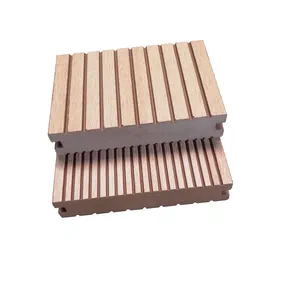 D13740S 40mm Thick Solid Composite Decking Material for Durable Outdoor Flooring Applications
 F30071 extra wide and thick solid square board allows one step with one board and few wpc factory can produce this size
 F5030 outdoor solid square decorative bar is widely used for garden products and decking composite joists
Related Articles
Get a Free Quote
Interested in Y4025S is a commonly used solid I shape joist for stable ground installation with wpc decking joists? Fill in the form and we will reply within 24 hours.