


F5030 outdoor solid square decorative bar is widely used for garden products and decking composite joists
Learn how WPC profile design, solid and hollow structures, ribs, and surface patterns affect strength, weight, cost, and installation.
| Payment | T/T in advance. Customized order: T/T, 50% prepayment, 50% balance before loading. |
|---|---|
| Transaction Terms | FOB, CIF, EXW, etc. |
| Samples | <30cm: samples for free. >30cm: samples order (the sample fee can be deducted when placing a container order later). |
| Length | For 20GP container, max length is 5.8 meters (longest); mostly 2.2 / 2.4 / 2.9 / 3.0 / 4.0 meters (recommended) or customized. |
F5030 outdoor solid square decorative bar is a practical WPC extrusion profile for garden products and decking composite joists. Its solid square geometry gives dependable support, while the wood-plastic composite material keeps the part stable, weather resistant, and easier to process at scale.
Profile Design and Structural Behavior
In WPC extrusion, profile design controls how material is used and how the part performs after installation. A solid square bar like F5030 carries load more evenly than a thin-walled section, so it is well suited to composite joists, edging, frames, and decorative garden components that need consistent stiffness. The square format also simplifies alignment, cutting, and fastening, which matters on site where installers need parts that fit without excessive adjustment.
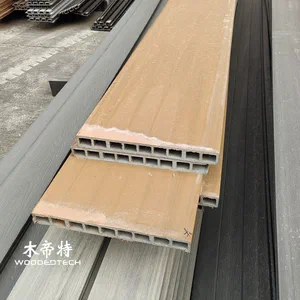
Hollow profiles can reduce weight and material cost, but they depend heavily on wall thickness and rib layout to avoid deformation. For secondary parts or low-load decorative applications, hollow designs are efficient. For joists and support members, however, solid profiles usually offer better screw-holding, fewer distortion risks, and more stable performance under concentrated loads.
Solid vs Hollow and the Role of Rib Design
The choice between solid and hollow structures is not only about strength. It also affects cooling behavior during extrusion, dimensional stability, and the final product price. Hollow profiles cool faster and use less compound, but they can be more sensitive to crushing, local impact, and installation damage. Solid bars cost more in material, yet they are often preferred when the project values reliability and a cleaner installation result.
Rib design is the middle ground between those two extremes. Internal ribs increase section efficiency by adding stiffness without filling the entire cross-section with material. On many decking composite joists and support profiles, ribs help control deflection while reducing weight. The correct rib layout depends on span length, fastening method, and expected service load. Poor rib placement can create weak points, uneven shrinkage, or visible surface distortion.
Surface Pattern and Installation Performance
Surface pattern influences more than appearance. Smooth surfaces are easier to clean and often work well for hidden support members, while textured or embossed surfaces improve grip and help the profile blend with decorative garden products. On exposed components, a patterned surface can also reduce the visibility of minor scratches and extrusion marks.
For installation, surface treatment affects friction, cutting behavior, and screw response. A stable, uniform surface makes drilling and fixing more predictable, especially when the profile is used as a decking composite joist. If the profile is too soft or poorly calibrated, fasteners may wander or create local cracking. That is why die design, calibration control, and cooling must work together from the start.
Cost, Weight, and Project Value
In practice, buyers compare three things: material efficiency, labor efficiency, and service life. Solid bars increase weight and resin usage, but they can lower installation risk and reduce callbacks. Hollow and ribbed profiles save material and shipping cost, but only when the design is strong enough for the intended use.
For garden products and joist systems, the best profile is the one that balances those trade-offs clearly. F5030 is suited to projects that need a solid, reliable section with simple handling and stable outdoor performance.
FAQ
Q: Why choose a solid square WPC bar instead of a hollow profile? A: A solid bar offers better stiffness, screw holding, and impact resistance. It is a stronger choice for joists and other load-bearing outdoor parts.
Q: How do ribs improve WPC profile performance? A: Ribs raise stiffness without adding as much weight as a fully solid section. They are useful when a design needs better strength-to-cost balance.
Q: Do surface patterns affect installation? A: Yes. Surface texture can improve grip, hide wear, and influence how well the profile accepts cutting and fastening during installation.
Related Products
 T12149 is used as outdoor plastic wood gazebo ridge tile board with wpc lumber for exterior structures
 Φ200 extra large round column is rarely produced by manufacturers with technology for fake wood plastic outdoor structures
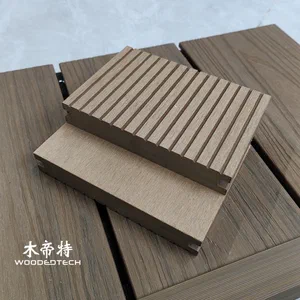 D14623S 23mm Solid Composite Decking Boards for Popular Outdoor Flooring Projects
 F30071 extra wide and thick solid square board allows one step with one board and few wpc factory can produce this size
Related Articles
Get a Free Quote
Interested in F5030 outdoor solid square decorative bar is widely used for garden products and decking composite joists? Fill in the form and we will reply within 24 hours.