


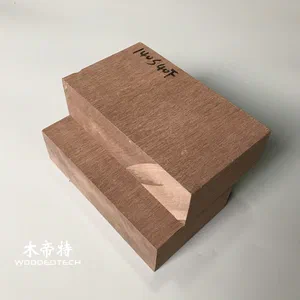
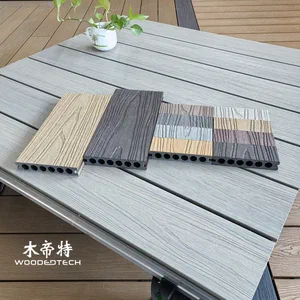
F30071 extra wide and thick solid square board allows one step with one board and few wpc factory can produce this size
Learn how WPC profile design, solid and hollow structures, ribs, and surface patterns affect strength, weight, cost, and installation.
| Payment | T/T in advance. Customized order: T/T, 50% prepayment, 50% balance before loading. |
|---|---|
| Transaction Terms | FOB, CIF, EXW, etc. |
| Samples | <30cm: samples for free. >30cm: samples order (the sample fee can be deducted when placing a container order later). |
| Length | For 20GP container, max length is 5.8 meters (longest); mostly 2.2 / 2.4 / 2.9 / 3.0 / 4.0 meters (recommended) or customized. |
F30071 extra wide and thick solid square board is designed for projects that need a stronger section, a more stable walking feel, and a cleaner single-board look. For WPC extrusion mold design, this kind of profile is a good example of how geometry controls not only appearance, but also strength, weight, cost, and installation performance.
Profile shape sets the performance baseline
In WPC extrusion, the profile design decides how material is distributed across the section. A wide board with a thick solid body carries load differently from a hollow profile, because the full section resists bending and local compression. That makes solid square boards suitable for steps, platforms, heavy-use outdoor flooring, and other applications where users expect a rigid, solid underfoot feel.
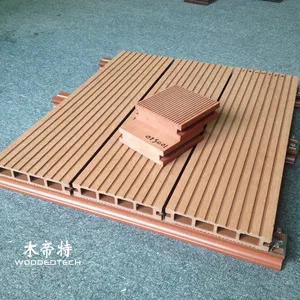
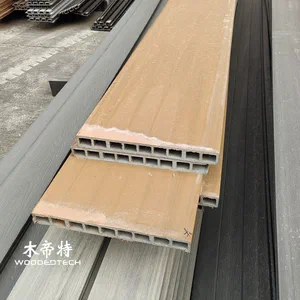
Hollow structures reduce material usage and lower unit weight, which helps shipping and handling. They also cool faster during extrusion and can improve output efficiency. The trade-off is that hollow boards depend heavily on rib layout and wall thickness, so poor design can lead to deformation, weak screw holding, or a hollow sound under load.
Solid, hollow, and rib design each serve a different purpose
A solid profile is the simplest way to increase strength, but it also raises resin and filler consumption. That increases cost and weight, yet it gives better screw retention, better edge durability, and more stable performance when the board is cut or machined. For a size like F30071, the solid section supports one-step installation with fewer boards because each piece covers more area and tolerates higher service load.
Ribs matter even on solid-heavy designs. Internal reinforcing ribs can control shrinkage, reduce warpage, and improve dimensional stability during cooling. On hollow profiles, ribs are essential for transferring stress between walls and preventing collapse. On solid profiles, ribs are less about weight reduction and more about process control and shape retention.
Surface pattern affects more than appearance
Surface treatment changes how the product behaves in real use. Embossed, grooved, or brushed patterns improve slip resistance and hide minor scratches. Deeper textures usually require tighter mold control and can slightly increase cleaning difficulty, but they often improve outdoor practicality.
For mold design, the surface pattern also affects release, cooling balance, and visible flow lines. If the texture is too aggressive, it can trap dirt or make color variation more noticeable. If it is too shallow, the board may look premium in the catalog but underperform on wet or high-traffic sites. The best pattern is the one that fits the application, not the one that only looks good in sample photos.
Why this size is hard for many factories
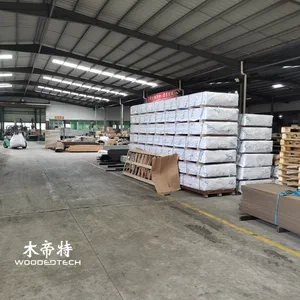
Extra wide and thick solid boards place higher demands on extruder capacity, die strength, cooling calibration, and hauling stability. Few WPC factories can produce this size consistently because the process window is narrow. A stable mold must control melt flow evenly across the full width, otherwise one side thickens, the board twists, or the surface finishes unevenly.
That is why mold design is a production decision, not just a drawing exercise. When the profile is correct, the board installs faster, carries more load, and reduces the need for multiple narrower pieces. When the profile is wrong, the product becomes expensive to make and difficult to fit on site.
FAQ
Q: Why choose a solid WPC board instead of a hollow one? A: A solid board offers higher strength, better screw holding, and a denser feel. It is usually preferred for steps, heavy-use flooring, and wide formats.
Q: How do ribs improve WPC profile performance? A: Ribs help control warpage, support the section during cooling, and improve structural stability. They are especially important in hollow and semi-hollow profiles.
Q: Do surface patterns affect installation? A: Yes. Texture can improve slip resistance and visual quality, but it also affects mold release, cleaning, and how easily the board shows wear.
Related Products
 F200105 extra wide and thick solid wpc board offers large size solutions for outdoor structural projects
 F5050 solid four side flat WPC Board is suitable for outdoor bench slats and various construction applications
 D14040-2S Square Solid Composite Deck Boards Without Side Grooves for Outdoor Decking
 D10030S outdoor floor narrow board design offers an elegant appearance with solid structure and excellent load bearing performance
Related Articles
Get a Free Quote
Interested in F30071 extra wide and thick solid square board allows one step with one board and few wpc factory can produce this size? Fill in the form and we will reply within 24 hours.