


F200105 extra wide and thick solid wpc board offers large size solutions for outdoor structural projects
Learn how WPC profile design affects strength, weight, cost, and installation performance in large outdoor structural projects.
| Payment | T/T in advance. Customized order: T/T, 50% prepayment, 50% balance before loading. |
|---|---|
| Transaction Terms | FOB, CIF, EXW, etc. |
| Samples | <30cm: samples for free. >30cm: samples order (the sample fee can be deducted when placing a container order later). |
| Length | For 20GP container, max length is 5.8 meters (longest); mostly 2.2 / 2.4 / 2.9 / 3.0 / 4.0 meters (recommended) or customized. |
The F200105 extra wide and thick solid WPC board is built for outdoor structural projects that need higher load capacity, better surface stability, and a cleaner installation result. For large-size applications, profile design matters as much as material formula, because hollow, solid, ribbed, and patterned boards all behave differently in strength, cost, and long-term performance.
Why profile design changes performance
A WPC profile is not just a shape. It controls how the board carries load, resists bending, handles fasteners, and reacts to heat and moisture outdoors. When a project requires wide coverage or thicker sections, the profile must support both structural reliability and practical installation, especially on decks, platforms, stairs, and other heavy-use areas.
Hollow and solid structures
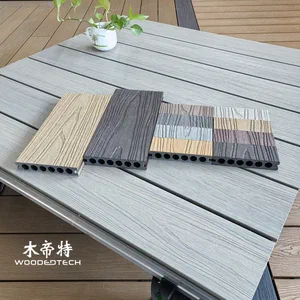
Hollow profiles are lighter and usually more economical in material use. They work well where lower weight, easier handling, and reduced transport cost matter more than maximum stiffness. The tradeoff is that hollow boards need careful support spacing, and they are less suitable for concentrated loads or edge impacts.
Solid structures, like the F200105 board, offer better bearing strength, stronger screw retention, and improved resistance to local deformation. They are heavier and cost more in material, but they simplify detailing for outdoor structural projects. For large-size boards, solid construction also reduces the risk of deflection, hollow-noise issues, and installation errors caused by uneven subframing.
Rib design and internal reinforcement
Rib design is the main tool for tuning performance without changing the entire board into a fully solid section. Internal ribs can increase moment of inertia, improve bending resistance, and reduce material consumption at the same time. In practice, ribs help control how the board spans between joists, how it behaves under foot traffic, and how much support the installer needs to provide.
For extrusion mold design, rib thickness, rib spacing, and the transition between ribs and outer skin are critical. Too thin, and the board loses strength where stress concentrates. Too heavy, and the profile becomes expensive without adding much benefit.
Surface pattern and installation behavior
Surface patterns influence more than appearance. A brushed, grooved, or embossed texture can improve slip resistance, hide scratches, and reduce visible waviness on wide boards. For outdoor structural use, the surface must also work with expansion and contraction, because large-format boards show alignment issues more clearly than standard decking sizes.
Pattern depth and tooling quality affect cleaning, wear, and installation consistency. A well-designed surface helps the board stay visually stable after cutting, fastening, and long-term exposure. It also improves the finished project by making wide solid boards look intentional rather than bulky.
Cost, handling, and project fit
Extra wide and thick solid boards increase material consumption, but they can reduce hidden costs on projects that demand stronger support, fewer joints, and faster field installation. In many outdoor structural applications, the right profile is the one that balances strength with practical construction, not the lightest or cheapest section on paper.
FAQ
Q: When should a solid WPC board be preferred over a hollow board? A: Use a solid board when the project needs better load-bearing capacity, stronger screw holding, or a more rigid feel under heavy traffic. It is especially useful for large-size outdoor structural applications.
Q: Do ribbed profiles always save cost? A: Not always. Ribbed profiles can reduce material use while keeping good stiffness, but the savings depend on mold design, wall thickness, and the required span performance.
Q: How does surface pattern affect installation? A: Surface pattern affects slip resistance, cut-edge appearance, and how well the board hides minor alignment issues. On wide boards, a stable pattern also improves the final visual result.
Related Products
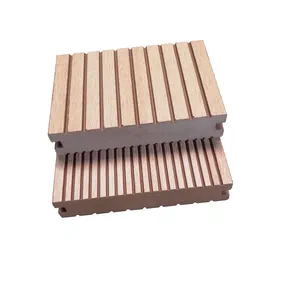 D13740S 40mm Thick Solid Composite Decking Material for Durable Outdoor Flooring Applications
 F5050 solid four side flat WPC Board is suitable for outdoor bench slats and various construction applications
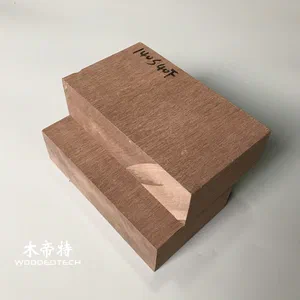 D14040-2S Square Solid Composite Deck Boards Without Side Grooves for Outdoor Decking
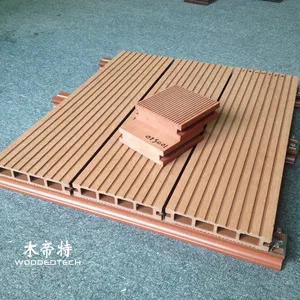 D10030S outdoor floor narrow board design offers an elegant appearance with solid structure and excellent load bearing performance
Related Articles
Get a Free Quote
Interested in F200105 extra wide and thick solid wpc board offers large size solutions for outdoor structural projects? Fill in the form and we will reply within 24 hours.