
WPC Qualität: Industrial Quality Standards and Performance Evaluation Guide
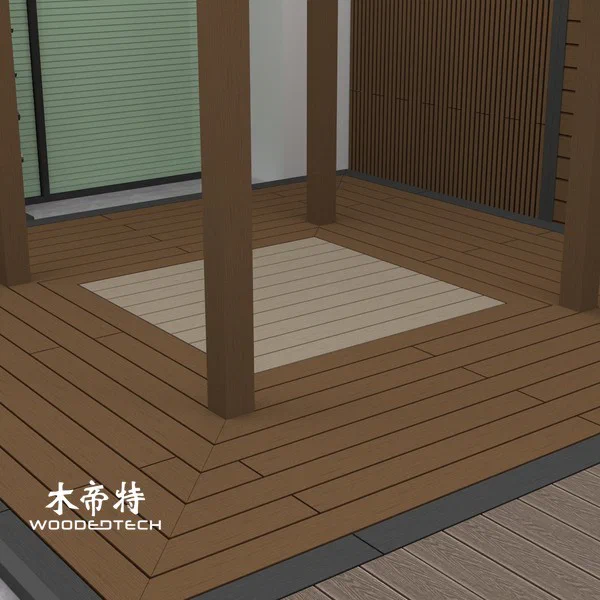
Outdoor WPC quality inspection is a systematic process used to verify that wood plastic composite products meet dimensional, mechanical, physical, and visual requirements before shipment. For manufacturers, importers, and wholesale buyers, a reliable inspection procedure helps identify production defects, maintain consistent product performance, and reduce quality risks during transportation, installation, and long-term outdoor use.
1. Dimensional Accuracy Inspection
Dimensional accuracy is one of the first checks performed on outdoor WPC decking, wall panels, fencing, and other extruded profiles. Even small variations in board thickness, width, or length can create installation difficulties, uneven joints, and inconsistent finished surfaces.
During inspection, quality control staff use calibrated digital calipers, micrometers, steel rulers, and measuring tapes to check the main dimensions of finished products. Measurements should be taken at multiple positions along each sample to identify extrusion variations, deformation, or uneven cutting.
Key dimensions include:
- Length: Verifies that boards meet the specified cutting tolerance.
- Width: Checks profile consistency and alignment between adjacent boards.
- Thickness: Ensures stable installation and consistent product appearance.
- Profile geometry: Confirms that grooves, edges, cavities, and locking structures match approved drawings.
- Straightness: Identifies bending, twisting, or uneven extrusion.
The inspection team should compare actual measurements with approved technical drawings and purchase specifications. Sampling frequency and acceptable tolerances should be agreed upon before mass production rather than determined after manufacturing.
For large-volume orders, dimensional records should be maintained by production batch to help identify recurring extrusion or cutting problems.

2. Density Testing
Density is an important indicator of WPC material consistency. It is influenced by the proportion of wood fiber, plastic resin, additives, and processing conditions used during manufacturing.
A density test helps determine whether the product has a consistent material structure and whether significant variations exist between production batches.
The usual procedure involves cutting a sample with a known volume, measuring its mass using a precision balance, and calculating density:
Density = Mass ÷ Volume
The result is generally expressed in g/cm³.
For hollow WPC decking, inspectors must distinguish between overall profile density and the density of the solid composite material. These measurements are not interchangeable. Hollow structures contain internal cavities, so their apparent density is naturally different from that of solid boards.
Quality inspectors should compare results with the manufacturer’s approved material specifications. Unusually low density may indicate excessive filler content, inconsistent formulation, or insufficient material compaction. Significant density variation between samples may also suggest unstable production conditions.
3. Impact Resistance Testing
Outdoor WPC products are regularly exposed to mechanical impacts during transportation, installation, and everyday use. Impact resistance testing evaluates how well a board or profile withstands sudden external forces without cracking, splitting, or suffering unacceptable deformation.
Common testing methods include falling-weight impact tests and pendulum impact tests, depending on the product design and applicable testing standard.
For a falling-weight test, a prepared sample is positioned on a specified support structure. A weight with a defined mass is dropped from a controlled height onto the test area. Inspectors then examine the impact point for cracks, fractures, surface damage, and structural failure.
Important test conditions include:
- Impact weight and drop height.
- Sample dimensions and support arrangement.
- Testing temperature and conditioning time.
- Number and location of impact points.
- Visible damage and failure criteria.
For outdoor decking, impact performance is particularly relevant to areas exposed to dropped tools, furniture movement, and frequent pedestrian activity.
Test results should be evaluated against the agreed product specification. A single impact result should not be treated as proof of overall durability, as material formulation, temperature, profile structure, and aging can all affect performance.
4. Water Absorption Testing
Water absorption testing evaluates how much moisture a WPC product takes in after exposure to water. This property matters because outdoor decking and wall cladding regularly encounter rain, humidity, and wet cleaning conditions.
The typical test procedure involves drying a sample to a specified condition, recording its initial mass, immersing it in water for a defined period, and measuring its mass again after removing surface water.
Water absorption is calculated using:
Water Absorption (%) = [(Wet Mass - Dry Mass) ÷ Dry Mass] × 100
The test report should specify immersion time, water temperature, sample dimensions, and drying conditions to ensure comparable results.
Lower water absorption generally indicates better resistance to moisture penetration. However, performance also depends on the internal structure, edge exposure, surface treatment, and quality of the extrusion process.
For co-extrusion WPC decking, inspectors should pay particular attention to the integrity of the protective outer layer and its bonding with the core material. Surface protection can improve resistance to moisture and staining, but it does not automatically make every product completely waterproof.
5. Color Stability and UV Resistance Testing
Color stability is an important quality requirement for outdoor WPC products because prolonged exposure to sunlight, temperature changes, and moisture can cause fading or discoloration.
Before shipment, manufacturers may conduct accelerated weathering tests using xenon arc or UV fluorescent equipment. These tests simulate selected environmental conditions over a controlled period.
Inspectors evaluate:
- Initial color consistency across samples.
- Color changes after accelerated weathering.
- Surface chalking or fading.
- Cracking, peeling, or coating deterioration.
- Differences between production batches.
A colorimeter can measure color changes using the CIELAB color system. The total color difference, commonly expressed as ΔE, provides a numerical indication of how much the appearance has changed.
Testing duration, light intensity, temperature, moisture exposure, and evaluation criteria should follow the selected standard or agreed customer requirements.
It is important to distinguish accelerated weathering results from actual outdoor service life. Laboratory exposure provides comparative performance data, but it cannot guarantee a specific number of years without color change in every climate.
6. Bending Strength and Flexural Performance
Bending strength testing determines how well WPC products withstand loads without excessive deflection or structural failure. It is particularly important for decking boards, outdoor flooring, railing components, and structural profiles.
A common method is the three-point bending test. A prepared sample is placed on two supports, and a loading device applies force at the center until the specified test endpoint is reached.
The test can measure:
- Maximum bending load.
- Flexural strength.
- Flexural modulus.
- Deflection under load.
- Failure behavior.
Flexural strength indicates the material’s resistance to bending stress, while flexural modulus describes its stiffness.
For decking applications, inspectors should also consider board span and support spacing. A product may achieve satisfactory laboratory flexural results but still perform poorly if installed with excessive joist spacing.
Testing should follow an applicable method, such as ASTM D790 or an equivalent agreed standard, with sample preparation and loading conditions documented.
7. Appearance Inspection Before Shipment
Appearance inspection is the final visual quality checkpoint before outdoor WPC products are packed and released for delivery. It helps identify manufacturing defects that may affect installation, product presentation, or customer acceptance.
Inspectors should examine samples under consistent lighting conditions and compare them with approved samples, drawings, and color references.
Common inspection points include:
- Surface scratches, dents, cracks, and visible defects.
- Uneven embossing or wood-grain textures.
- Color differences between individual boards.
- Surface bubbles, rough edges, or peeling layers.
- Inconsistent gloss or surface finish.
- Broken corners and damaged profiles.
- Incorrect labels, product codes, and packaging marks.
For co-extrusion products, the protective surface should be checked for uniform coverage, peeling, blistering, and visible bonding defects. For embossed decking, inspectors should also verify that the texture is consistent across the production batch.
Appearance defects should be classified according to their severity. Critical defects may affect product safety or essential functionality, major defects may interfere with installation or product performance, and minor defects may have limited visual impact.
The inspection team should use an agreed sampling plan and acceptance criteria rather than relying on subjective judgments.
8. Final Quality Control and Shipment Approval
A complete outdoor WPC quality inspection should combine dimensional, physical, mechanical, and visual testing. Each inspection result needs to be recorded and compared with the approved technical specifications before the shipment is released.
A practical pre-shipment inspection checklist includes:
- Confirm product models, quantities, and specifications against the purchase order.
- Check dimensions and profile consistency.
- Verify density and material uniformity.
- Review impact resistance and bending strength results.
- Check water absorption performance.
- Review UV resistance and color stability records.
- Inspect surface finish, texture, and color consistency.
- Verify packaging strength, labeling, and loading condition.
- Prepare inspection reports with sample identification and test results.
For international B2B orders, buyers should agree on inspection standards, sampling levels, testing methods, and acceptable quality limits before production begins. Depending on the product and destination market, relevant methods may include ASTM, ISO, or EN standards. Not every test applies to every WPC profile, so the inspection plan should reflect the intended application.
A professional WPC manufacturer should be able to provide traceable batch records, internal laboratory results, material specifications, and third-party testing reports when required. Consistent inspection procedures help buyers evaluate product quality with greater confidence and reduce the risk of receiving inconsistent outdoor WPC materials.
Related Articles
 Plastic Wood Composite: Industrial Applications, Benefits, and Quality Standards
 WPC MPC: Industrial Applications, Performance Standards, and Key Benefits
 Composite Material Applications for Outdoor Decking Cladding Fencing Furniture and Garden Structures
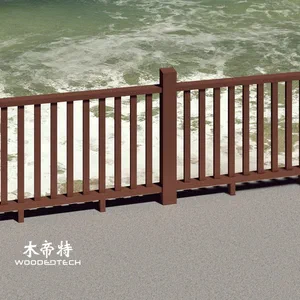 Composite Teak for Durable Outdoor Decking Furniture Cladding and Landscape Applications
Related Products
 GD13823 Double Sided Flat Surface Co Extruded WPC Decking Features a Popular Width and Thickness with Round Hollow Structure
 GD13823-3 Composite Boards for Decking Are Available in Multiple Stock Colors with 3 Meter Lengths and Single Piece Delivery
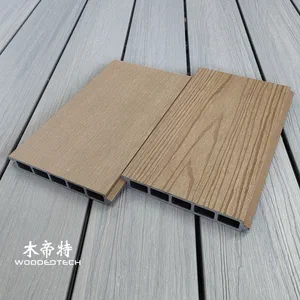 3DGL18024 WPC Longboard Fence Features Premium Co Extruded 3D Embossed Teak Wood Grain Texture with Realistic Natural Wood Fibers