
WPC Panel Room Solutions: Industrial Design, Applications, and Performance Standards
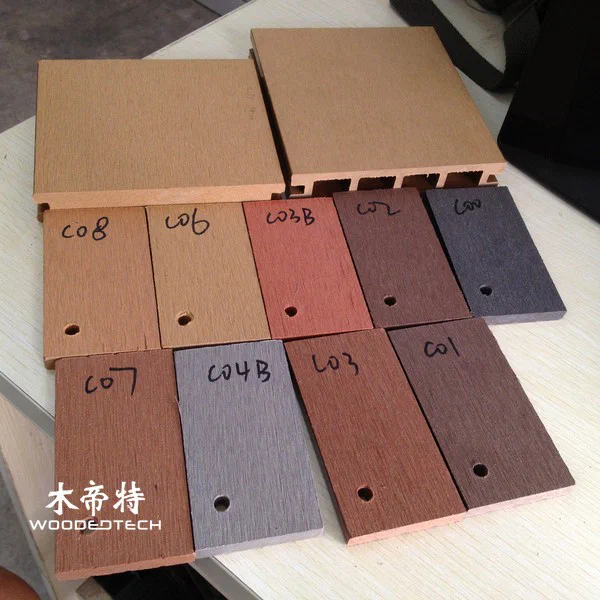
WPC panel room solutions combine the appearance of natural wood with the practical advantages of wood plastic composite materials. In industrial and commercial interiors, these panels offer a flexible way to create durable wall surfaces, decorative partitions, and coordinated architectural details. Their range of colors, textures, profiles, and modular configurations makes them suitable for projects that require both visual consistency and reliable material performance.
Understanding WPC Panel Room Solutions
Wood plastic composite (WPC) panels are manufactured using a combination of wood-based fibers and polymer materials. Depending on the formulation and production process, manufacturers can develop panels with different surface finishes, densities, dimensions, and mechanical properties. These variations allow designers and contractors to select products according to the functional requirements of a specific space.
Industrial-style interiors often feature exposed structural elements, neutral color schemes, geometric lines, and practical surface materials. WPC panels complement this design direction through wood-grain finishes, linear profiles, and consistent panel dimensions. They can be used in offices, commercial facilities, showrooms, hospitality spaces, and selected industrial environments where decorative wall treatments are required.
The main advantage of WPC panel systems is their ability to combine decorative flexibility with standardized manufacturing. Rather than relying on individual decorative elements, designers can create coordinated wall surfaces using repeatable panel modules.
Modern Design Trends in Industrial WPC Interiors
Modern industrial interiors are moving beyond plain concrete walls and dark metal finishes. Designers increasingly combine natural-looking surfaces with clean architectural lines to make commercial spaces feel more welcoming without losing their functional character.
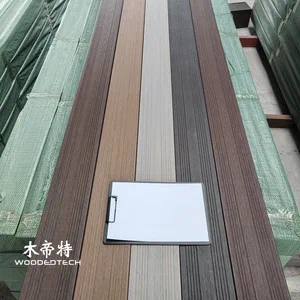
Color selection plays an important role in this development. Popular WPC panel finishes include natural oak, walnut, teak, charcoal, warm gray, and contemporary black. Lighter wood tones can soften large industrial spaces, while darker finishes create contrast around metal fixtures, glass partitions, and exposed structural elements. Neutral colors also make it easier to coordinate wall panels with composite flooring, furniture, and architectural accessories.
Texture is another important design consideration. Embossed wood-grain surfaces provide a more natural appearance than completely flat finishes. Fluted panels and narrow slatted profiles introduce depth through light and shadow, creating visual interest without requiring complicated decorative structures. Smooth finishes, meanwhile, suit minimalist interiors and spaces where a clean, uniform appearance is preferred.
Panel profiles also influence the overall design. Wide boards create a more continuous visual effect, while narrow slats emphasize vertical or horizontal lines. Three-dimensional profiles can be used as feature walls, reception backgrounds, and decorative partitions. Combining different profiles within one project allows designers to establish distinct zones while maintaining a consistent material palette.
Applications Across Commercial and Industrial Spaces
WPC wall panels can serve several purposes beyond basic wall decoration. In office buildings, they can provide feature-wall finishes in reception areas, meeting rooms, and shared workspaces. Wood-look surfaces help balance the appearance of glass, steel, and concrete, creating a more comfortable working environment.
In retail stores and showrooms, modular WPC panels offer a practical background for product displays and branded interior layouts. Different colors and profiles can distinguish product zones without introducing unrelated materials. In hotels, restaurants, and leisure facilities, decorative panels can help establish a consistent interior style across reception areas, corridors, and selected public spaces.
Industrial facilities may also use WPC panels in administrative offices, staff areas, display rooms, and other suitable interior environments. However, product selection must account for actual operating conditions. Standard decorative WPC panels should not automatically be considered suitable for heavy industrial exposure, high-temperature areas, or environments requiring specialized fire protection.
WPC profiles can also coordinate with outdoor composite products. For projects that include exterior terraces, garden structures, fences, or entrance features, matching wood-look finishes can create a visual connection between indoor and outdoor spaces. Composite decking, pergolas, privacy screens, and wall cladding can be selected from compatible color families to support a unified architectural concept.
Modular Designs and Installation Considerations
Modular construction is an important trend in contemporary WPC panel design. Standardized panel widths, lengths, connection systems, and accessory profiles make it easier to plan large wall surfaces and maintain consistent spacing. Repeated modules also simplify material estimation, cutting plans, and replacement of individual sections when necessary.
Interlocking edges, tongue-and-groove connections, and compatible mounting systems can improve installation efficiency, depending on the product design. Decorative trims, corner profiles, and transition accessories help create cleaner connections around doors, windows, and wall intersections.
Before installation, project teams should evaluate the supporting wall, substrate condition, moisture exposure, ventilation requirements, and expected movement. Appropriate expansion gaps and fixing methods are essential because WPC materials can expand and contract with temperature changes. Installation instructions should always follow the manufacturer’s technical specifications.
For large commercial projects, custom extrusion profiles may provide additional flexibility. Manufacturers can develop specific panel dimensions, surface patterns, colors, and connection details to meet architectural requirements. This is particularly useful for projects involving repeated room layouts or coordinated wall and ceiling treatments.
Performance Standards and Material Selection
Visual appearance is only one part of selecting a suitable WPC panel system. Buyers should also assess mechanical performance, dimensional stability, moisture resistance, surface durability, and maintenance requirements.
Important technical considerations include:
- Moisture resistance: Evaluate water absorption and dimensional changes under the expected environmental conditions.
- Mechanical strength: Review relevant bending, impact, and fastening performance data.
- Surface durability: Consider scratch resistance, abrasion resistance, and resistance to everyday cleaning.
- Dimensional stability: Check expansion and contraction behavior under temperature and humidity variations.
- Fire performance: Request applicable fire-test reports and verify compliance with local building regulations.
- Environmental documentation: Review recycled-content information, material declarations, and relevant emissions test results where required.
Performance standards vary by market, product construction, and intended application. Buyers should request current technical data sheets, independent laboratory reports, and certificates applicable to the specific panel model rather than relying on general claims about WPC materials.
Fire safety deserves particular attention in commercial buildings. WPC panels are not automatically fireproof or suitable for every building classification. Where fire-rated construction is required, the complete wall assembly and its approved components must meet the relevant project requirements.

Choosing the Right WPC Panel Supplier
For distributors, contractors, and commercial project buyers, supplier selection should consider more than the initial product price. Consistent color matching, stable production quality, customization capabilities, and reliable technical support all influence the success of a WPC panel project.
A capable manufacturer should provide clear product specifications, available surface finishes, dimensional options, installation guidance, and testing documentation. Buyers handling large orders should also confirm production tolerances, sample approval procedures, packaging requirements, and delivery schedules before placing bulk orders.
WPC panel room solutions offer designers a practical material option for creating modern commercial interiors with coordinated textures, architectural profiles, and modular layouts. By matching the panel design to the intended application and checking performance documentation carefully, project teams can achieve attractive wall systems that meet functional requirements while maintaining consistency across different spaces.
Related Articles
Related Products
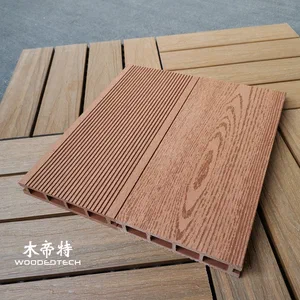 The Classic D14025-4 Red Wood WPC Wood Sheet Features a Timeless 2D Flat Wood Grain Design That Remains Popular After Twenty Years
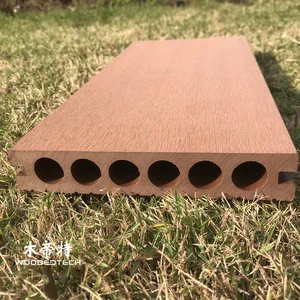 The D14025-5 Wood Composite Panels Feature a Classic Round Hole Design with Optional Embossed Wood Grain and Grooved Surfaces for Outdoor Durability
 B17010 Plastic Wood Look Siding Provides Decorative Thin Boards for Modern Outdoor Wall Applications