
WPC MPC: Industrial Applications, Performance Standards, and Key Benefits
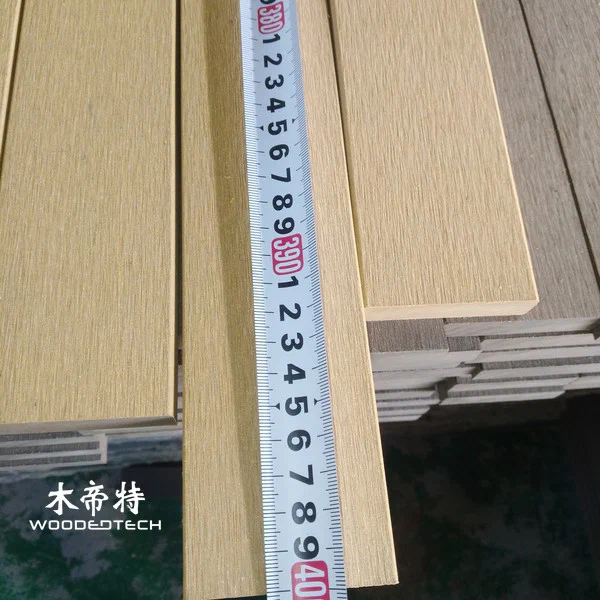
WPC MPC products are engineered wood-plastic composite materials designed for outdoor construction, landscaping, and architectural applications. Their combination of wood fibers and polymer materials offers a practical balance of durability, weather resistance, low maintenance, and natural wood aesthetics, making them suitable for residential, commercial, hospitality, and public infrastructure projects.
Understanding WPC MPC Materials and Their Industrial Applications
WPC (Wood Plastic Composite) is manufactured by combining wood flour or wood fibers with thermoplastic polymers and selected additives. The resulting material can be extruded into decking boards, wall panels, fencing profiles, louvers, railings, benches, and other outdoor components. In industrial and commercial applications, product selection should consider mechanical strength, moisture exposure, UV resistance, surface friction, dimensional stability, and expected service conditions.
WPC MPC solutions are particularly useful in environments where traditional timber requires frequent painting, sealing, or replacement. Compared with conventional wood, properly formulated WPC products generally offer better resistance to moisture-related deterioration, insect damage, and surface decay. However, performance varies according to the polymer formulation, wood content, manufacturing process, and protective surface treatment.
Residential Gardens and Outdoor Living Spaces
Residential gardens are among the most common applications for outdoor WPC products. WPC decking provides an attractive surface for patios, garden walkways, outdoor dining areas, and relaxation spaces. Homeowners can achieve a consistent wood-grain appearance without the regular staining and sealing associated with natural timber.

For garden projects, we recommend selecting UV-resistant decking with an appropriate anti-slip surface texture. Hollow profiles can reduce material weight and cost, while solid boards may be preferable for applications requiring greater structural rigidity or heavier loading. Installation should include a properly designed substructure, suitable drainage, and the expansion gaps specified by the manufacturer.
WPC fencing, pergolas, planter boxes, and decorative screens can also be used to create coordinated outdoor designs. For properties exposed to strong sunlight or seasonal temperature changes, products with verified dimensional stability and suitable UV protection are particularly important.
Commercial Landscapes, Hotels, and Resorts
Commercial landscapes place greater demands on outdoor building materials because of higher pedestrian traffic, heavier furniture loads, and longer operating hours. Shopping centers, office complexes, restaurants, and public plazas can use WPC decking for pedestrian platforms, outdoor seating zones, entrance walkways, and landscaped terraces.
Hotels and resorts benefit from the combination of appearance and maintenance efficiency. WPC decking can be installed around outdoor restaurants, garden lounges, poolside relaxation areas, and recreational facilities. Matching WPC wall cladding, privacy screens, and pergolas can create a consistent architectural appearance across different outdoor zones.
For these projects, application engineers should evaluate expected traffic intensity, support spacing, fastening systems, drainage requirements, and cleaning procedures before specifying products. Commercial installations should use profiles with documented load-bearing performance rather than relying solely on appearance or nominal board dimensions.
Balconies, Swimming Pool Areas, and Waterfront Applications
Balconies and swimming pool surroundings require particular attention to moisture management and surface safety. WPC decking tiles and boards are suitable for balconies because they provide a wood-like finish and can be installed over appropriately prepared supporting structures. However, balcony waterproofing and drainage must remain independent and functional beneath the decking system.
Swimming pool areas present additional challenges, including frequent water exposure, cleaning chemicals, bare-foot traffic, and temperature fluctuations. We recommend textured WPC decking with tested slip-resistance characteristics and a profile design that allows water to drain efficiently.
For poolside applications, specify materials according to their resistance to moisture, chlorine exposure, and outdoor weathering. Do not assume that every WPC product is waterproof or suitable for permanent immersion. Adequate ventilation beneath the boards, accessible drainage channels, and correctly installed expansion joints are essential for long-term performance.
Parks, Public Facilities, and Infrastructure Projects
Public parks, waterfront promenades, pedestrian platforms, outdoor fitness areas, and community recreation facilities are suitable applications for heavy-duty WPC products. WPC park benches, decking, fencing, handrails, and decorative wall panels can help create attractive public spaces with reduced routine maintenance requirements.
For these projects, material selection should be based on expected service loads, vandalism exposure, environmental conditions, and accessibility requirements. Structural components must be appropriately supported, while handrails and guardrails should comply with applicable local building and safety regulations.
Public facilities also benefit from recycled-content WPC materials, where verified material composition and environmental documentation support project sustainability objectives. Procurement teams should request relevant product specifications, technical data sheets, and testing reports before approving materials for large-scale installations.
Performance Standards and Quality Requirements
WPC performance should be evaluated through measurable testing rather than marketing descriptions. Different markets and project types may require different standards, so manufacturers and buyers should identify the applicable requirements before production.
Important performance indicators include:
- Mechanical strength: Flexural strength, stiffness, impact resistance, and load-bearing capacity.
- Water resistance: Water absorption, thickness swelling, and dimensional changes after moisture exposure.
- Weather resistance: UV exposure, color stability, heat resistance, and resistance to environmental aging.
- Surface safety: Slip resistance, particularly for wet decking and swimming pool applications.
- Fire performance: Reaction-to-fire classification based on the relevant building regulations and test methods.
- Durability: Resistance to biological deterioration, cracking, surface wear, and repeated environmental exposure.
Depending on the destination market, relevant references may include ASTM D7032 for evaluating performance requirements of wood-plastic composite decking and guardrail systems, ASTM D7031 for assessing WPC properties, and EN 15534 for wood-plastic composites and products. Fire classification, slip resistance, and structural compliance may require additional testing under applicable regional standards.
Buyers should also request information about manufacturing consistency, recycled material content, warranty conditions, and installation limitations. A test report should correspond to the actual product formulation and profile being supplied.
Key Benefits and Professional Product Selection
The main advantages of WPC MPC products include reduced maintenance, resistance to moisture-related deterioration, design flexibility, and the ability to incorporate recycled raw materials. Their consistent extrusion profiles also support large-scale projects requiring uniform dimensions, repeatable installation, and coordinated architectural finishes.
However, selecting the right product requires matching its technical properties to the intended application. Hollow decking may suit residential gardens and balconies, while reinforced or solid profiles may be more appropriate for demanding commercial environments. Co-extrusion decking provides an additional protective outer layer that can improve resistance to staining, moisture penetration, and surface fading, depending on the quality of the protective formulation.
For distributors, contractors, and project developers, working with an experienced WPC manufacturer is essential. Before placing bulk orders, confirm profile dimensions, material composition, color consistency, mechanical test results, packaging specifications, and installation guidance. For customized projects, manufacturers can also develop dedicated extrusion profiles, surface textures, colors, and matching accessories.
The most effective WPC solution is not necessarily the product with the highest specifications, but the one engineered for its actual operating environment. By considering site conditions, traffic levels, structural requirements, and maintenance expectations, project teams can achieve reliable outdoor installations across residential gardens, commercial landscapes, hotels, swimming pool areas, parks, and public facilities.
Related Articles
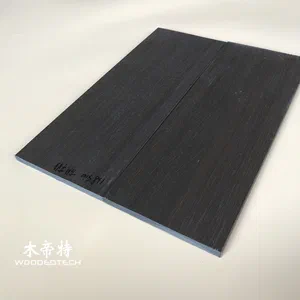 Outdoor WPC Deck for Durable Residential Gardens Patios Balconies and Landscape Projects
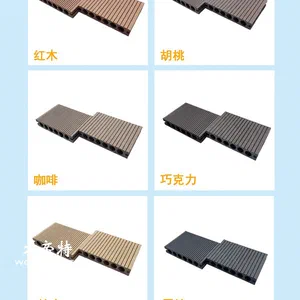 WPC Deck Flooring for Durable Outdoor Patios Gardens Balconies and Landscape Applications
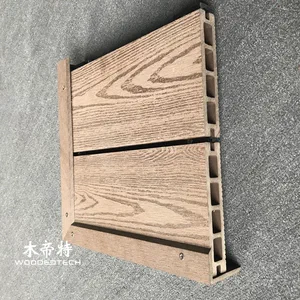 Composite Deck Flooring Options for Residential Gardens Patios Balconies and Commercial Outdoor Areas
 Garden Decking Composite Board Creates Beautiful And Durable Outdoor Living Areas
Related Products
 GD13823 Double Sided Flat Surface Co Extruded WPC Decking Features a Popular Width and Thickness with Round Hollow Structure
 GD13823-3 Composite Boards for Decking Are Available in Multiple Stock Colors with 3 Meter Lengths and Single Piece Delivery
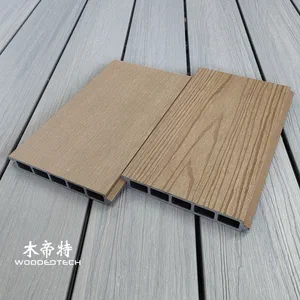 3DGL18024 WPC Longboard Fence Features Premium Co Extruded 3D Embossed Teak Wood Grain Texture with Realistic Natural Wood Fibers