
WPC Decking Weight Information Helps Customers Choose Suitable Outdoor Flooring Materials

The durability, weather resistance, and overall performance of outdoor wood plastic composite (WPC) products are heavily influenced by the choice of raw materials. Key components such as wood powder, HDPE or PVC polymers, additives, pigments, and modifiers each play a critical role in enhancing the final product. Understanding how these elements interact can aid manufacturers in producing high-quality WPC products suitable for outdoor use.
Raw Material Components
Wood powder serves as the main filler in WPCs, providing a natural aesthetic and contributing to the material’s mechanical properties. The quality of wood powder, including its particle size and source, affects the composite’s strength and durability. Fine wood powders can enhance the surface finish, while coarser powders may improve structural integrity.

The choice of polymer—HDPE or PVC—also significantly impacts performance. HDPE is known for its impact resistance and low moisture absorption, making it suitable for outdoor applications. PVC, on the other hand, offers enhanced weather resistance and UV stability. The selection between these two polymers should be based on the specific environmental conditions the WPC will face.
Additives are crucial for improving the performance of WPC. For example, UV stabilizers help prevent degradation from sunlight, while anti-fungal agents minimize mold and mildew growth. These additives ensure that the product retains its appearance and functionality over time.
Pigments are used to achieve various colors and finishes in WPC products. The type of pigment can influence not only aesthetic appeal but also UV resistance. High-quality pigments can enhance colorfastness, ensuring that the WPC maintains its look even after prolonged exposure to the elements.
Modifiers, such as coupling agents, are added to improve the bonding between wood fibers and polymers. This enhances the mechanical properties of the WPC, making it more resilient to bending and breaking under stress.
Quality Control and Inspection Methods
Ensuring the quality of these materials begins with rigorous inspection methods at the factory level. Here are some practical approaches:
- Visual Inspection: Regular checks for consistency in color and texture of wood powder and other raw materials.
- Moisture Content Testing: Measuring moisture levels in wood powder to prevent issues like mold and decay in the final product.
- Mechanical Testing: Conducting tensile and flexural strength tests to evaluate the performance of the WPC under load.
- Weather Resistance Tests: Subjecting samples to accelerated weathering tests to assess UV stability and resistance to environmental factors.
Quality standards such as ASTM and ISO guidelines should be adhered to during production to ensure that the final WPC products meet industry benchmarks for durability and performance.
FAQ
Q: What is the role of wood powder in WPCs?
A: Wood powder acts as a filler in WPCs, enhancing mechanical properties and providing a natural appearance.
Q: How do additives improve WPC performance?
A: Additives like UV stabilizers and anti-fungal agents protect the material from environmental degradation and improve longevity.
Q: What inspection methods are used to ensure WPC quality?
A: Methods include visual inspections, moisture content testing, mechanical strength testing, and weather resistance evaluations.
Related Articles
 Plastic Wood Deck Floor Offers Low Maintenance And Natural Looking Outdoor Flooring Performance
 WPC Wooden Decking Combines Natural Wood Appearance With Modern Composite Material Advantages
 WPC Decking Panel Provides Durable And Stylish Solutions For Outdoor Flooring Projects
 WPC Flooring Detail Shows Advanced Structure And Quality Design For Outdoor Applications
Related Products
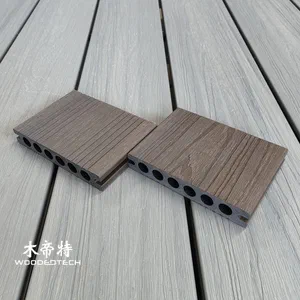 Purple Sandalwood GD13823-3 Co Extruded WPC Outdoor Decks with Round Holes Are Available in Stock in 3 Meter Lengths Year Round
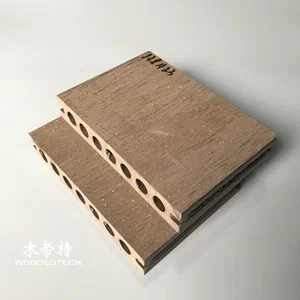 D13823 Round Hole Double Sided Flat WPC Bamboo Decking Boards With Strong Quality And Various Wood Grain Surface Treatments
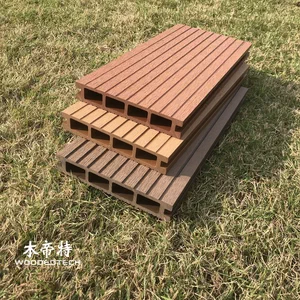 D14025-3 Square Hole Double Sided Grooved WPC Board Factory Producing Outdoor Decking Boards With Good Slip Resistance