
WPC Decking Surface Treatment Improves Appearance Texture and Long Term Outdoor Performance

:::writing{title=“WPC Decking Surface Treatment Improves Appearance Texture and Long Term Outdoor Performance” id=“48391”}
WPC decking surface treatment plays an important role in improving the visual quality, wood-like texture, and outdoor durability of wood plastic composite decking. Through processes such as embossing, brushing, sanding, and co-extrusion finishing, manufacturers can create decking boards with better appearance and stronger resistance to weathering.
Surface Treatment Process for WPC Decking
After WPC decking boards are formed through extrusion, the surface treatment process begins to enhance both appearance and performance. The first step is usually profile cleaning and preparation to remove dust, residue, or minor surface defects. A stable surface allows later treatments to bond evenly and produce consistent texture.
Common surface treatment methods include:
- 3D embossing to create realistic wood grain patterns
- Brushing to expose natural-looking surface details
- Sanding to improve smoothness and remove extrusion marks
- Co-extrusion surface layers to add UV resistance and stain protection
These processes help transform standard extruded profiles into premium outdoor products with improved texture and a more natural wood appearance.
How Surface Treatment Improves Outdoor Performance

Outdoor WPC decking faces long-term exposure to sunlight, rain, temperature changes, and daily wear. A well-designed surface treatment system reduces these effects by improving the protective properties of the decking surface.
Co-extrusion technology adds a durable outer layer around the WPC core, helping prevent moisture absorption, color fading, and surface damage. Embossed textures also improve slip resistance by creating a more functional walking surface, especially for gardens, balconies, and pool areas.
During production, engineers must control extrusion temperature, material formulation, and cooling calibration together with surface treatment. Poor temperature control can cause uneven surfaces, while incorrect cooling can affect dimensional stability and reduce the quality of embossing results.
Common Surface Treatment Problems and Solutions
WPC decking manufacturers may encounter several production issues during finishing. Uneven embossing can result from unstable board temperature or incorrect pressure settings. Surface color differences may appear when additives are not mixed evenly or when UV stabilizers are insufficient.
Other common problems include:
- Surface scratches caused by improper handling after extrusion
- Weak co-extrusion bonding caused by unsuitable temperature settings
- Warping caused by insufficient cooling calibration
- Inconsistent wood grain patterns caused by worn embossing rollers
A complete quality control system covering material mixing, extrusion, mold design, cooling, and finishing helps ensure stable production results. Proper surface treatment allows WPC decking to achieve a realistic wood appearance while maintaining the durability required for outdoor applications.
FAQ
Q: Why is surface treatment important for WPC decking? A: Surface treatment improves the appearance, texture, UV resistance, and weather durability of WPC decking boards for outdoor use.
Q: What surface treatment methods are commonly used for WPC decking? A: Common methods include 3D embossing, brushing, sanding, and co-extrusion surface protection.
Q: Does co-extrusion improve WPC decking lifespan? A: Yes, co-extrusion adds a protective outer layer that helps improve resistance against moisture, stains, fading, and outdoor aging.
:::
Related Articles
 wpc co extrusion decking surface treatment improves appearance durability and outdoor weather resistance performance
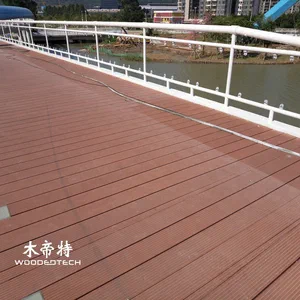 Various Types of WPC Decking Profiles and Surface Treatments
 0.5 Composite Deck Board Provides a Compact Profile Choice for Specific Outdoor Flooring Designs
 Composite Deck Boards 16 ft Provide Convenient Length Options for Large Outdoor Decking Projects
Related Products
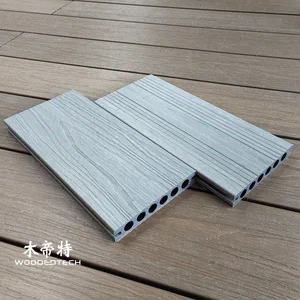 Antique Wood GD13823-3 Co Extruded Composite Wood Decking Boards with Round Holes Are Available in Stock in 3 Meter Lengths Year Round
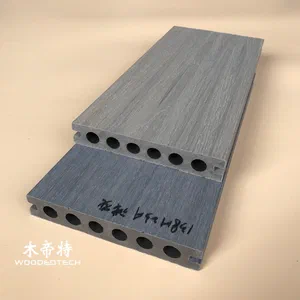 GD13823 Composite Decking Material Features Six Small Round Holes to Reduce Weight While Maintaining Structural Strength
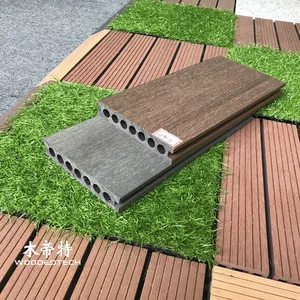 GD13823-2 Wood Versus Composite Decking Features Seven Round Holes with Wood Grain and Brushed Textures on Opposite Sides