
WPC Decking Meaning: Materials, Manufacturing, Benefits, and Applications
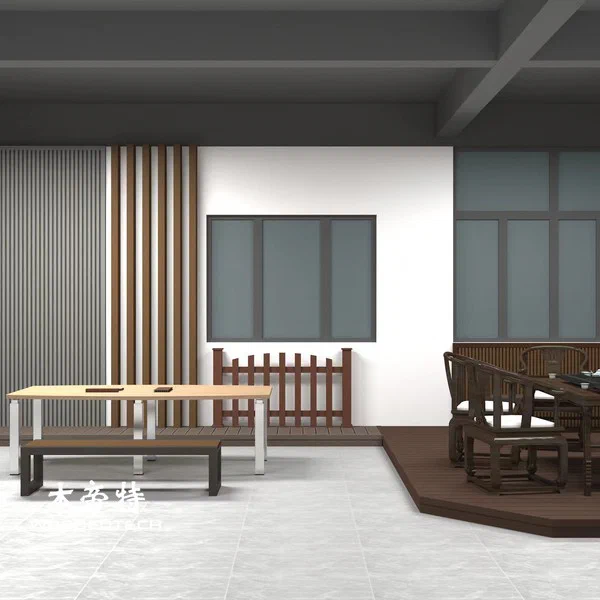
WPC decking, or wood plastic composite decking, is an outdoor flooring material made by combining wood fibers or wood flour with thermoplastic polymers and selected additives. It is designed to provide the natural appearance of timber while improving resistance to moisture, insects, weathering, and everyday wear. Understanding its materials, manufacturing process, benefits, and applications helps buyers select suitable products and evaluate the capabilities of a reliable manufacturer.
What Is WPC Decking Made Of?
WPC decking is a composite material rather than natural solid wood or conventional plastic. Its performance depends on the quality and proportion of its raw materials, the formulation, and the manufacturing process.
In our Guangdong factory, we work with several main material categories:

- Wood flour or wood fibers: These provide the natural wood-like structure and contribute to the product’s appearance and rigidity.
- Thermoplastic polymers: Common options include HDPE, PP, and PVC, depending on the product formulation. They bind the wood particles together and help resist moisture.
- Coupling agents: These improve the bonding between wood fibers and plastic, supporting mechanical strength and material stability.
- Processing additives: Lubricants, stabilizers, pigments, and other modifiers help control extrusion, color consistency, UV resistance, and overall product performance.
The exact formulation varies according to the intended application. A residential garden deck, a commercial walkway, and a poolside installation may require different material properties.
One important point for buyers is that WPC quality cannot be judged by wood content alone. A higher percentage of wood flour does not automatically mean a better product. The balance between polymer content, wood particle quality, additives, and processing conditions is what determines the final performance.
How Is WPC Decking Manufactured?
Manufacturing technology plays a major role in determining the durability, appearance, and consistency of WPC decking. As a manufacturer with more than ten years of production experience in Guangdong, we consider formulation control and extrusion stability essential throughout the production process.
The process generally involves five stages.
1. Raw Material Preparation
Wood flour must be dried to an appropriate moisture level before processing. Excessive moisture can cause bubbles, surface defects, and unstable extrusion. Plastic materials and additives are also checked and prepared according to the production formula.
2. Mixing and Compounding
Wood flour, plastic, and functional additives are blended in controlled proportions. Uniform mixing helps distribute the materials evenly and reduces the risk of inconsistent color, strength, or surface quality.
3. Extrusion and Profile Formation
The prepared compound enters an extrusion system, where controlled heating and pressure allow it to flow through a specially designed mold. The mold determines the board’s dimensions, internal structure, and profile design.
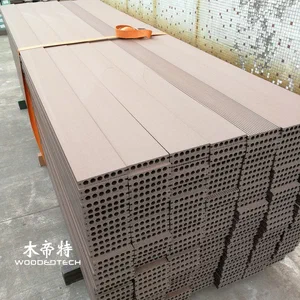
Hollow and solid profiles serve different purposes. Hollow boards can reduce material consumption and product weight, while solid boards may be suitable for applications requiring greater material density. Neither structure is universally better; the correct choice depends on span, loading conditions, installation design, and budget.
4. Cooling and Surface Treatment
After extrusion, the boards are cooled, calibrated, and cut to the required length. Additional surface treatments can create brushed textures, embossed wood grains, or other decorative finishes.
For buyers seeking more realistic timber aesthetics, 3D embossing and co-extrusion technologies offer additional design possibilities. Co-extrusion decking uses an outer protective layer around a composite core, providing enhanced surface protection when properly manufactured.
5. Inspection and Packaging
Finished boards are checked for dimensions, color consistency, surface defects, and structural quality. Packaging is selected according to product dimensions, transportation requirements, and destination market conditions.
A dependable manufacturer should maintain consistent production standards across batches rather than relying only on final visual inspection.
Main Benefits of WPC Decking
WPC decking offers several practical advantages for outdoor construction projects.
First, it requires less routine maintenance than conventional timber. Natural wood may need regular staining, sealing, or painting, whereas WPC generally requires ordinary cleaning to remove dust, dirt, and surface stains.
Second, its resistance to moisture makes it suitable for many outdoor environments. Unlike untreated timber, WPC does not readily absorb water in the same way, reducing problems associated with swelling, decay, and insect damage. However, it should not be described as completely waterproof under every installation condition.
Third, WPC provides relatively consistent dimensions and appearance. Buyers can select from different colors, surface textures, and board profiles without depending on the natural variations found in solid wood.
Fourth, it supports long-term design flexibility. Manufacturers can develop different extrusion molds, dimensions, colors, and surface finishes to meet residential, commercial, and landscape project requirements.
Environmental considerations are another reason buyers explore wood plastic composite decking. Some formulations use recycled plastics and wood by-products, helping reduce reliance on virgin materials. However, the environmental value depends on the actual raw material sources, manufacturing efficiency, product lifespan, and end-of-life recycling options.
Where Is WPC Decking Used?
Outdoor applications depend on the board structure, surface finish, installation system, and local environmental conditions.
WPC decking is commonly used in residential gardens, patios, balconies, terraces, swimming pool surroundings, and outdoor entertainment areas. Its wood-like appearance makes it suitable for projects where designers want a warm, natural-looking floor without the maintenance requirements of traditional timber.
Commercial applications include hotel terraces, restaurant outdoor seating areas, resort walkways, public landscape platforms, and selected recreational facilities. For these projects, buyers should pay particular attention to load requirements, slip resistance, drainage, and the suitability of the supporting substructure.
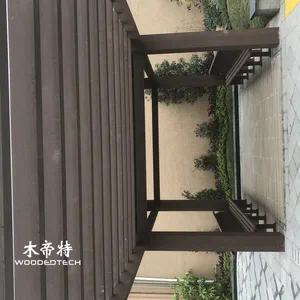
WPC can also be incorporated into larger exterior design systems alongside composite fencing, wall cladding, pergolas, and decorative screens. Using coordinated colors and surface textures helps create a consistent architectural appearance.
For poolside and other frequently wet environments, product selection requires particular care. A textured surface may improve grip, but actual slip performance should be evaluated through relevant test results rather than appearance alone.
How to Choose a Reliable WPC Decking Manufacturer
For overseas importers, distributors, contractors, and project developers, choosing the right factory is just as important as selecting the product itself.
From our experience in Guangdong’s WPC manufacturing industry, buyers should evaluate several factors before placing a bulk order.
- Production capability: Check whether the factory has its own extrusion equipment, production molds, material preparation systems, and sufficient capacity for repeat orders.
- Material control: Ask about wood flour preparation, polymer selection, additive formulations, and recycled material content.
- Quality inspection: Request dimensional tolerances, mechanical test reports, water absorption data, and relevant UV or weathering test results.
- Customization: Confirm whether the manufacturer supports OEM production, customized colors, special dimensions, surface textures, and private-label packaging.
- Export experience: Discuss container loading, protective packaging, product documentation, and communication during international shipping.
Price comparisons should also consider the complete product specification. Two boards with similar dimensions may have different internal structures, material formulations, surface treatments, and expected service performance. Comparing quotations without checking these details can lead to unnecessary quality risks.
At our factory, we believe successful customer cooperation begins with understanding the actual application rather than simply recommending the cheapest available profile. We work with customers to review drawings, confirm dimensions, select suitable structures, and develop samples before mass production. For larger projects, confirming installation details and technical requirements early can help prevent costly adjustments after delivery.
A well-manufactured WPC deck is the result of suitable materials, controlled extrusion, consistent inspection, and proper installation. For buyers developing long-term supply relationships, these manufacturing fundamentals are more valuable than attractive product photographs or low initial quotations.
Related Articles
Related Products
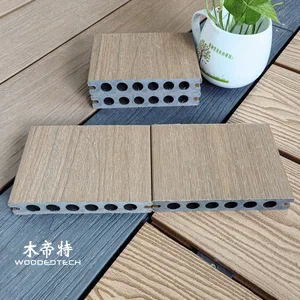 GD13823 Double Sided Flat Surface Co Extruded WPC Decking Features a Popular Width and Thickness with Round Hollow Structure
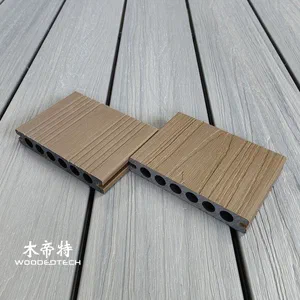 GD13823-3 Teak TK Co Extruded Decking Is a Popular Choice from Composite Decking Suppliers for Outdoor Flooring Projects
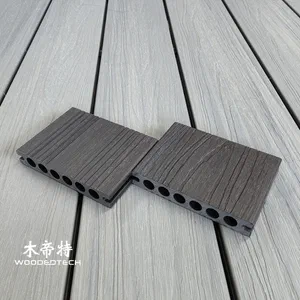 GD13823-3 Walnut WN Co Extruded Decking Features a Dark Rich Color That Helps Resist Visible Dirt and Stains