
WPC decking detail explains profile structures and installation features for outdoor applications
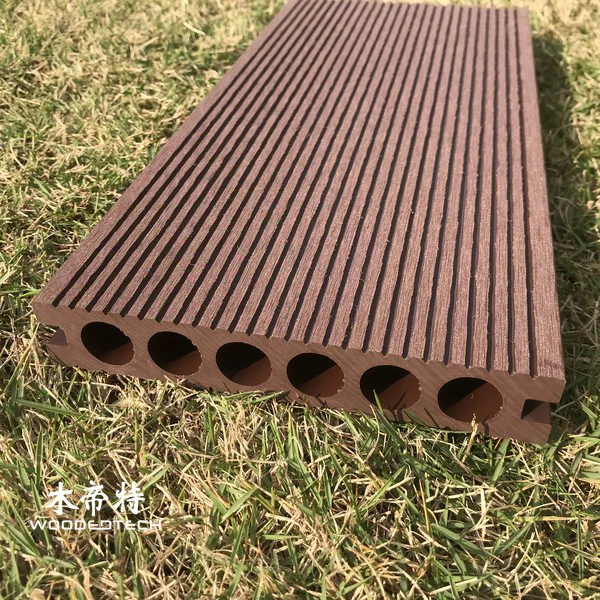
WPC decking profile design directly affects how the board performs outdoors. Hollow sections, solid sections, internal ribs, and surface textures each change strength, weight, cost, and how fast a deck can be installed.
How profile structure changes performance
In WPC extrusion, the profile is not just a shape; it is the main factor that determines product behavior on site. A well-designed deck board must balance stiffness, thermal movement, screw holding, and material use. That is why the same wood plastic composite can feel very different depending on whether it is made as a hollow board, a solid board, or a ribbed structural profile.
Hollow profiles reduce raw material consumption and lower board weight, which helps with shipping and manual handling. They are easier to carry, faster to cut, and usually more economical for large-area projects. Solid profiles, by contrast, offer higher density, stronger impact resistance, and better tolerance for heavy foot traffic or commercial use. The trade-off is higher material cost and more weight during installation.
Hollow, solid, and ribbed board choices
Hollow WPC decking is often used where moderate loading and cost control matter most. It works well for residential balconies, garden decks, and raised platforms when the internal chambers are properly designed. The chamber size, wall thickness, and partition layout must be carefully controlled; if the walls are too thin, the board can flex too much or lose fastening stability.
Solid WPC decking is preferred for demanding outdoor applications where strength and stability are critical. It provides a more uniform feel underfoot and is less sensitive to localized damage. Rib designs sit between the two. Internal ribs reinforce the profile without making the board fully solid, improving load capacity while keeping weight and cost under control.
Why ribs matter in extrusion mold design

Ribs are one of the most important details in WPC extrusion mold design. They increase section modulus, reduce deflection, and help the profile keep its shape during cooling. Good rib placement also improves screw grip and clip retention, which directly affects installation quality. If ribs are uneven or poorly distributed, the board may warp, twist, or create inconsistent gaps after installation.
Rib design also influences material flow in the die. Smooth flow paths reduce surface defects, improve dimensional accuracy, and make trimming and cutting cleaner at the job site. For manufacturers, this means fewer rejects and more stable output. For installers, it means straighter boards and fewer alignment problems.
Surface patterns and installation performance
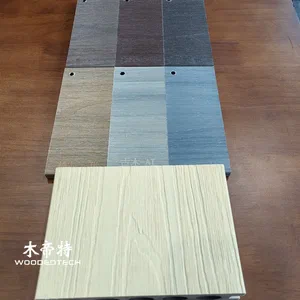
Surface pattern is not only about appearance. Grooved, brushed, embossed, and wood-grain finishes can improve slip resistance and hide light scratches, making the deck more suitable for outdoor use. A deeper texture can also affect cleaning effort and heat absorption, so the pattern should match the target market and climate.
Practical result for outdoor projects
For buyers, the best WPC decking design depends on the project requirement:
- Hollow boards for lighter weight and lower cost
- Solid boards for maximum strength and heavy-duty use
- Ribbed profiles for balanced performance
- Textured surfaces for better grip and outdoor appearance
The right profile design shortens installation time, improves fastening reliability, and gives the deck a longer service life in wet, hot, or high-traffic environments.
FAQ
Q: What is the main advantage of hollow WPC decking? A: It uses less material, so it is lighter and more cost-effective. It is a practical choice for residential outdoor projects with moderate loading.
Q: When should solid WPC decking be selected? A: Solid boards are better for areas that need higher strength, better impact resistance, and a more stable feel underfoot. They are often used in commercial or heavy-use settings.
Q: Do surface patterns really affect installation? A: Yes. Surface texture influences slip resistance, appearance, and maintenance, while the profile structure affects fastening, alignment, and long-term stability.
Related Articles
 composite decking framework provides a stable foundation system for outdoor deck installation
 DIY Composite Decking Guide for Easy Outdoor Deck Installation
 Outdoor WPC Decking for Beautiful Durable and Low Maintenance Outdoor Living
 WPC Decking Blog with Expert Guides Installation Tips and Industry Insights
Related Products
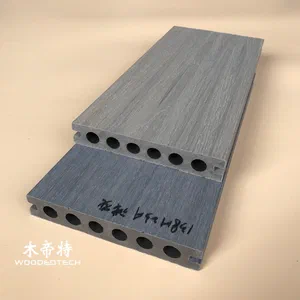 GD13823 Composite Decking Material Features Six Small Round Holes to Reduce Weight While Maintaining Structural Strength
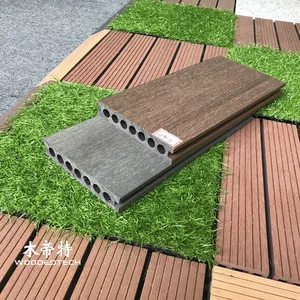 GD13823-2 Wood Versus Composite Decking Features Seven Round Holes with Wood Grain and Brushed Textures on Opposite Sides
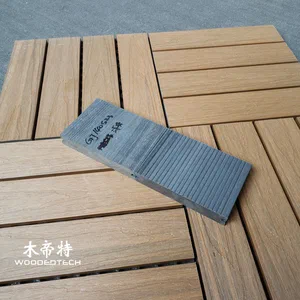 GD14023S Composite Deck Materials Feature a Solid Structure and Side Grooves for Better Adaptability in Extremely Cold Climates