
WPC Deck Flooring: A Comprehensive Guide to Materials, Performance, and Applications
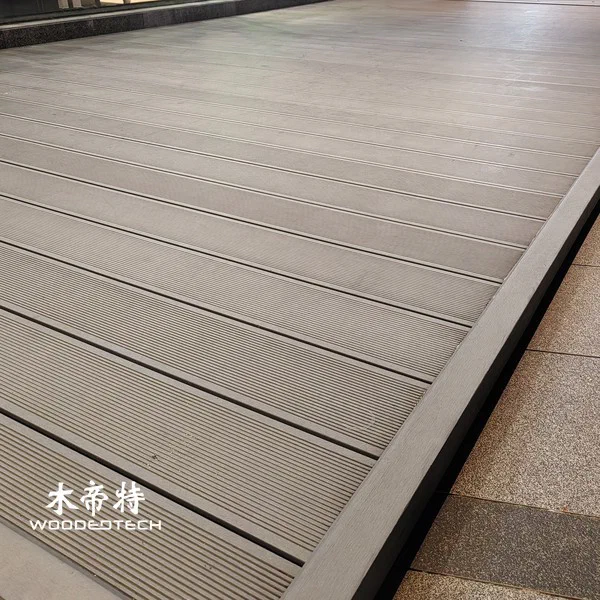
WPC deck flooring combines wood fiber or wood flour with thermoplastic polymers to create an outdoor flooring material that balances natural wood aesthetics, durability, and maintenance requirements. Developing a high-performance wood plastic composite decking formula requires careful control of fiber content, plastic ratio, additives, and extrusion conditions to achieve reliable performance at a competitive cost.
Material Selection and Formulation Balance
The main components of outdoor WPC decking are wood flour, thermoplastic resin, coupling agents, lubricants, stabilizers, and processing aids. Wood flour, typically derived from wood waste or other suitable plant-based sources, provides stiffness, texture, and a natural appearance. HDPE, PVC, and PP are commonly used polymer systems, each offering different processing characteristics and mechanical properties. The appropriate resin depends on the target application, production equipment, and required service life.
For many HDPE-based decking formulations, wood flour content may fall within approximately 50–65% by weight, with the remaining formulation comprising polymer and functional additives. Higher fiber loading can reduce raw material costs and increase stiffness, but excessive loading may compromise impact resistance, moisture stability, and extrusion quality. Increasing the polymer fraction generally improves fiber encapsulation and toughness, although it can raise material costs. The best ratio is established through trials rather than a universal recipe.
Additives That Improve Outdoor Performance
Additives help address the main challenges of exterior exposure, including moisture absorption, ultraviolet radiation, temperature fluctuations, and mechanical wear. Their selection should reflect the intended climate, product geometry, and customer performance requirements.
- Coupling agents, such as maleic anhydride-grafted polyethylene, improve bonding between wood fibers and the polymer matrix.
- Lubricants support stable extrusion, reduce processing friction, and help maintain consistent surface quality.
- UV stabilizers and suitable pigments reduce weathering, fading, and surface degradation.
- Antioxidants help protect susceptible polymers during processing and service.
- Moisture control through proper fiber drying and effective polymer encapsulation reduces the risk of swelling and dimensional instability.
For premium applications, co-extrusion adds a protective polymer cap around the composite core. This surface layer can improve resistance to staining, fading, moisture, and everyday wear. However, cap quality, core compatibility, and interface bonding must be validated to prevent delamination or premature failure.
Performance Optimization and Cost Control
A successful WPC deck flooring formula must satisfy both laboratory requirements and real-world installation conditions. Engineers should evaluate flexural strength, impact resistance, water absorption, dimensional changes, slip resistance, color stability, and resistance to freeze-thaw or heat exposure where relevant. UV weathering and accelerated aging tests help compare formulations, but field exposure remains valuable for assessing long-term performance.
Cost optimization should consider the full lifecycle rather than raw material prices alone. Recycled polymers and properly controlled wood residues may reduce material costs, provided their moisture content, particle size, contamination, and batch consistency are managed. Excessive filler loading or insufficient additive levels can increase scrap, reduce production efficiency, and shorten service life. Optimizing screw configuration, melt temperature, cooling, and line speed also helps maintain product consistency.
Applications and Product Lifespan

WPC decking is widely used for patios, balconies, pool surrounds, garden walkways, and commercial outdoor platforms. Related formulations can be adapted for wall cladding, fencing, pergolas, and landscape products by adjusting stiffness, surface protection, profile geometry, and load requirements. Deck boards require particular attention to span, support spacing, drainage, fastening, and slip resistance.
Service life depends on the complete system, including formulation, manufacturing quality, installation, climate, and maintenance. A well-engineered product can provide years of outdoor use, but no single wood-to-plastic ratio guarantees a specific lifespan. Manufacturers should validate their claims through standardized testing, installation guidance, and documented field performance.
FAQ
Q: What is the ideal wood fiber content for WPC decking?
A: Many HDPE-based formulations use approximately 50–65% wood flour by weight. The optimal loading depends on resin type, additive package, extrusion conditions, and required mechanical performance.
Q: How can manufacturers improve WPC decking durability?
A: Use compatible coupling agents, effective UV stabilizers, controlled fiber moisture, and optimized extrusion conditions. Co-extruded protective caps can further improve surface weathering and stain resistance.
Q: Is a lower-cost WPC formulation always more economical?
A: No. Lower-cost ingredients may increase defects, production waste, maintenance needs, or replacement frequency. Lifecycle cost and verified performance provide a more reliable basis for formulation decisions.
Related Articles
 wood plastic decking nz solutions are designed for outdoor environments requiring low maintenance flooring systems
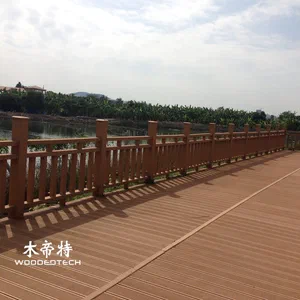 Composite Decking Kits 5m x 3m: Industrial Supply Guide 2026
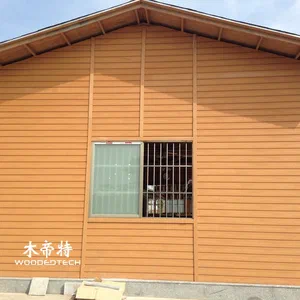 best composite decking brands for Industrial Buyers in 2026
 4.8 Meter Composite Decking Boards Provide Long Board Options for Professional Outdoor Installations
Related Products
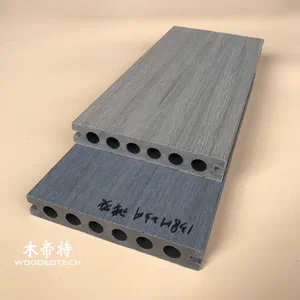 GD13823 Composite Decking Material Features Six Small Round Holes to Reduce Weight While Maintaining Structural Strength
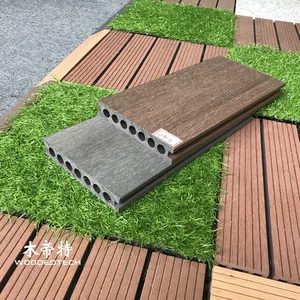 GD13823-2 Wood Versus Composite Decking Features Seven Round Holes with Wood Grain and Brushed Textures on Opposite Sides
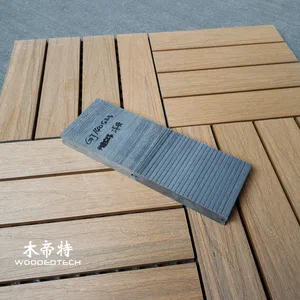 GD14023S Composite Deck Materials Feature a Solid Structure and Side Grooves for Better Adaptability in Extremely Cold Climates