
WPC Co-Extrusion Technology: Benefits, Applications, and Industrial Manufacturing Trends
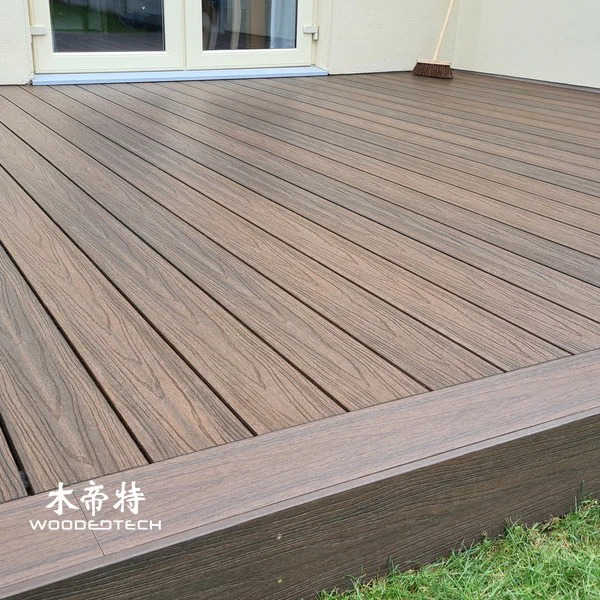
WPC co-extrusion technology combines a wood-plastic composite (WPC) core with a protective polymer outer layer to produce durable, weather-resistant building materials. Unlike traditional single-layer extrusion, this process creates a functional surface that improves moisture resistance, UV protection, scratch resistance, and color stability. It is increasingly used in outdoor decking, wall cladding, fencing, and architectural profiles where long-term performance and low maintenance are important.
1. How WPC Co-Extrusion Technology Works
WPC co-extrusion is a manufacturing process in which two or more material streams are extruded simultaneously through a specially designed co-extrusion die. The main extrusion line produces the structural WPC core, while a secondary extrusion line supplies a protective polymer layer, commonly made from HDPE or another compatible thermoplastic formulation.
The core typically consists of wood flour, recycled or virgin plastic, coupling agents, lubricants, stabilizers, and processing additives. The outer cap layer uses a higher-performance polymer formulation with UV stabilizers, pigments, and other functional additives. Both layers bond during extrusion, forming a unified profile without requiring a separate coating process.
The main advantage is the combination of structural strength and surface protection. The WPC core provides rigidity and dimensional stability, while the outer layer helps protect against moisture penetration, staining, fading, and everyday surface wear. This makes co-extrusion particularly suitable for demanding outdoor environments.
2. Complete WPC Co-Extrusion Manufacturing Process
Material Mixing and Preparation
Consistent raw material preparation is essential for stable extrusion. Wood flour must have controlled particle size and moisture content because excessive moisture can cause bubbles, surface defects, and unstable output. Drying equipment is commonly used to reduce moisture before compounding.
The main WPC formulation combines wood flour, thermoplastic resin, coupling agents, lubricants, and stabilizers. Additive proportions depend on the required mechanical properties, processing characteristics, and intended application.
The cap-layer formulation is prepared separately. It generally contains a weather-resistant polymer, color masterbatch, UV absorbers, antioxidants, and other functional additives. The two formulations must have compatible processing temperatures and sufficient interfacial adhesion to prevent delamination.

High-speed hot and cold mixing equipment helps distribute additives evenly and maintain consistent material quality. Accurate batching and temperature monitoring are important for reducing differences between production batches.
Pelletizing and Material Compounding
After mixing, the core and cap materials may undergo separate compounding and pelletizing processes, depending on the production line configuration. A twin-screw extruder is commonly used to achieve uniform dispersion of wood flour, polymer, and additives.
During compounding, the material passes through controlled heating, mixing, and conveying zones. The compounded material is then cooled and pelletized into granules suitable for subsequent extrusion.
Consistent pellet size, moisture content, and material composition help maintain stable feeding rates. For manufacturers using direct extrusion without pelletizing, the prepared mixture can be fed directly into the production extruder, provided the equipment is designed for that process.
Co-Extrusion Temperature Control
Temperature control is one of the most important factors in WPC co-extrusion. The core material and protective cap layer must reach suitable processing conditions while maintaining good bonding and avoiding thermal degradation.
A typical production line uses independently controlled heating zones for the main extruder, secondary extruder, and co-extrusion die. Temperature settings depend on the polymer type, wood content, screw configuration, and production speed.
For many HDPE-based WPC formulations, processing temperatures are commonly within approximately 150–190°C, although the actual operating window must be established through material trials.
Excessive temperatures can cause wood degradation, discoloration, unpleasant odors, and unstable melt flow. Insufficient temperatures may result in poor plasticization, uneven extrusion, and weak bonding between the core and cap layers.
Operators should monitor melt pressure, motor load, screw speed, and temperature fluctuations throughout production rather than relying only on heating-zone settings.
Co-Extrusion Mold and Die Design
The co-extrusion die determines the final profile geometry and the distribution of the protective outer layer. Its internal flow channels must guide the core and cap materials into the correct positions before they exit the die.
Good die design requires balanced melt distribution, suitable flow resistance, and consistent cap-layer thickness. Poor flow balance can produce uneven surface coverage, exposed core material, or excessive material consumption.
For outdoor decking and wall cladding, manufacturers must also consider profile thickness, hollow or solid structures, reinforcement ribs, drainage requirements, and dimensional tolerances.
A properly designed die should minimize dead zones and material accumulation while allowing convenient cleaning and adjustment. This is particularly important when manufacturers produce multiple profile sizes or colors on the same extrusion line.
Cooling, Calibration, and Surface Treatment
After leaving the die, the hot WPC profile enters a vacuum calibration and cooling system. Calibration equipment maintains the required dimensions, straightness, and cross-sectional geometry while the material gradually solidifies.
Cooling must be uniform. Excessively rapid cooling can create internal stress, surface distortion, or dimensional instability. Insufficient cooling may cause bending, deformation, and inaccurate dimensions during pulling and cutting.
Once the profile reaches a stable temperature, a haul-off machine controls pulling speed, followed by automatic cutting to the required length.
Surface treatment can include embossing, brushing, sanding, and wood-grain texturing. These processes improve appearance and provide different surface finishes for outdoor applications. Co-extruded products can also be manufactured with matte, textured, or natural wood-look surfaces, depending on customer requirements and equipment configuration.
3. Main Benefits and Applications of WPC Co-Extrusion
The biggest advantage of co-extrusion is the additional protection provided by the outer polymer layer. Compared with conventional uncapped WPC products, properly manufactured co-extruded profiles generally offer better resistance to staining, moisture exposure, UV degradation, and surface wear.
Key benefits include:
- Improved weather resistance: The protective cap helps reduce the effects of rain, sunlight, and changing outdoor conditions.
- Better stain resistance: The outer layer makes everyday cleaning easier and helps prevent common contaminants from penetrating the surface.
- Enhanced appearance: Manufacturers can offer more consistent colors, realistic wood-grain textures, and different surface finishes.
- Reduced maintenance: Protective surfaces can reduce the need for frequent painting, sealing, and other treatments.
- Extended service life: A properly formulated and manufactured cap layer helps maintain product appearance and performance over time.
Common applications include outdoor WPC decking, poolside flooring, garden walkways, balcony flooring, exterior wall cladding, privacy fencing, and decorative architectural profiles. Commercial landscaping projects and public outdoor spaces also benefit from the combination of durability and low maintenance.
4. Common Production Problems and Solutions
Even with advanced extrusion equipment, manufacturers may encounter several production challenges.
| Production problem | Possible cause | Recommended solution |
|---|---|---|
| Cap-layer delamination | Poor material compatibility or insufficient bonding | Optimize polymer formulation and die temperature |
| Uneven cap thickness | Unbalanced melt flow or incorrect die alignment | Adjust flow channels and extrusion output |
| Surface bubbles | Excessive moisture in raw materials | Improve drying and material storage |
| Profile bending | Uneven cooling or excessive pulling tension | Optimize cooling and haul-off speed |
| Rough surface finish | Poor plasticization or unstable material feeding | Adjust temperature, screw speed, and formulation |
| Color variation | Inconsistent pigment dispersion or temperature fluctuations | Improve mixing and temperature control |
| Dimensional instability | Improper calibration or cooling | Adjust vacuum settings and cooling conditions |
Production quality should be monitored throughout the entire manufacturing process. Important inspection items include cap-layer thickness, profile dimensions, impact strength, water absorption, color consistency, bonding strength, and resistance to weathering.
Manufacturers should also establish standardized production parameters and maintain batch records to identify the causes of recurring defects.
5. Industrial Manufacturing Trends and Future Development
WPC co-extrusion technology is moving toward higher automation, improved material efficiency, and more advanced surface performance. Manufacturers are investing in precision dosing systems, intelligent temperature controllers, automatic thickness monitoring, and integrated extrusion lines to improve production consistency.
Material development is another important trend. Recycled polymers, responsibly sourced wood fibers, improved coupling agents, and more effective UV stabilizers are helping manufacturers develop products with better environmental credentials and outdoor performance.
Customized product development is also becoming increasingly important in international markets. Buyers are looking beyond standard decking profiles and requesting specific colors, textures, dimensions, surface finishes, and mechanical properties. Flexible co-extrusion equipment allows manufacturers to develop different product structures while maintaining consistent production quality.
For WPC manufacturers, the key to successful co-extrusion is not simply adding a protective outer layer. It requires coordinated control of material formulation, compounding, extrusion temperature, die design, cooling, and surface finishing. Manufacturers that establish stable processing conditions and reliable quality-control systems can produce higher-value outdoor composite products and respond more effectively to changing construction and landscaping market requirements.
Related Articles

Related Products
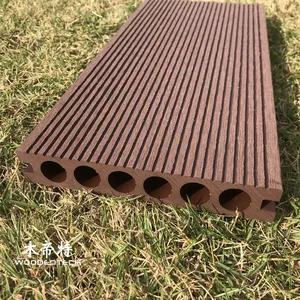
 The GD14023 Best Composite Decks Feature a Single-Sided Co Extrusion Surface with a Classic Round Hole Structure for Outdoor Applications
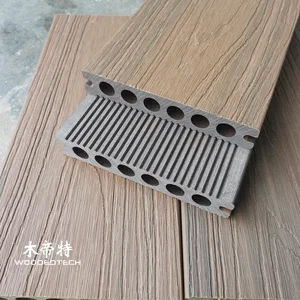
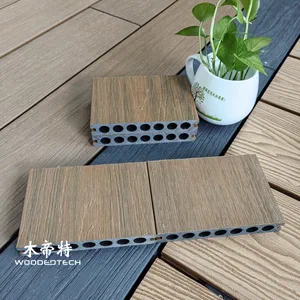 The GD14622 Decking in WPC Features a Classic Round Hole Co Extrusion Design That Has Remained Popular for Years
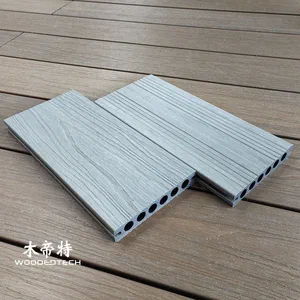 Antique Wood GD13823-3 Co Extruded Composite Wood Decking Boards with Round Holes Are Available in Stock in 3 Meter Lengths Year Round