
wpc co extrusion decking surface treatment improves appearance durability and outdoor weather resistance performance

WPC co-extrusion decking is built for outdoor use where appearance and durability both matter. The process combines a wood-plastic core with a protective cap layer, giving the board better weather resistance, lower maintenance, and a cleaner surface finish for long service life.
Material Preparation and Mixing
The process starts with stable raw material control. Wood fiber, PVC or PE resin, calcium carbonate, lubricants, coupling agents, stabilizers, pigments, and processing additives must be weighed accurately, then blended until the mix is uniform. If moisture is not controlled at this stage, the final board can show bubbles, weak bonding, or unstable dimensions.
After premixing, many factories use pelletizing to improve feeding consistency and dispersion. Well-made pellets help the extruder run more steadily, reduce color variation, and make the co-extrusion layer easier to control. This step is especially important for premium wpc co extrusion decking where surface quality is judged closely.
Extrusion, Temperature Control, and Mold Design
Extrusion temperature control is the core of product stability. The barrel, screw, die, and cap layer each need a different temperature profile depending on the resin system. Too low, and the material will plasticize poorly; too high, and the surface may degrade, lose color, or create internal stress. Operators normally watch melt pressure, motor load, and board appearance together rather than relying on temperature alone.
Mold design determines profile accuracy and bonding quality. The die flow channel must distribute the core and cap materials evenly so the surface layer wraps the board without shifting or thinning. For co-extrusion decking, the interface between layers must be tight and uniform. Poor die balance can cause uneven thickness, edge warping, or cap separation after cooling.
Cooling Calibration and Surface Treatment

Once the profile leaves the die, cooling calibration fixes the size and shape. Vacuum calibration tables, water cooling, and controlled haul-off speed must work together to keep the board straight and dimensionally stable. If cooling is too fast, internal stress can build up; if it is too slow, the surface may distort and the profile may not hold tolerance.
Surface treatment is what gives the deck its final look and performance. Embossing, brushing, sanding, and protective cap finishing can improve slip resistance, hide wear, and create a more natural wood appearance. For outdoor projects, a well-processed surface also improves resistance to UV, rain, staining, and daily cleaning.
Common Production Problems
The most common problems are poor layer bonding, color inconsistency, rough surface finish, warping, foaming, and dimensional drift. These usually come from unstable moisture content, wrong temperature settings, poor screw design, or uneven cooling. In practice, stable production depends on matching formulation, equipment, and process settings as one system.
For buyers, the value of wpc co extrusion decking surface treatment improves appearance durability and outdoor weather resistance performance only when the full process is controlled correctly. A good product is not just about the cap layer; it is the result of balanced materials, precise extrusion, and disciplined finishing.
FAQ
Q: Why is co-extrusion better for outdoor decking? A: It adds a protective surface layer that improves stain resistance, weather resistance, and appearance retention. The core still provides strength and structure.
Q: What causes cap layer separation in WPC decking? A: The usual causes are poor melt compatibility, unstable temperature control, or insufficient pressure at the die. Moisture and contamination can also weaken bonding.
Q: How does surface treatment improve WPC decking performance? A: It can increase slip resistance, reduce visible wear, and give the board a more natural finish. It also helps the product perform better in outdoor exposure.
Related Articles
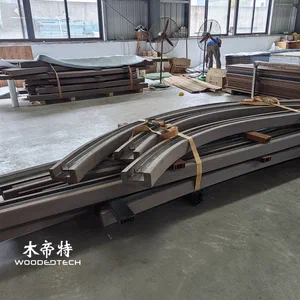 WPC co extrusion decking offers enhanced surface protection with modern outdoor flooring designs
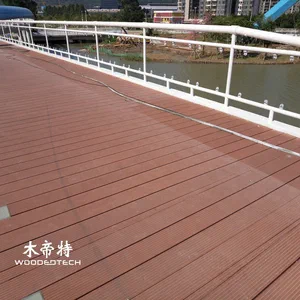 Various Types of WPC Decking Profiles and Surface Treatments
 capped composite decking problems can be evaluated through material structure installation and maintenance factors
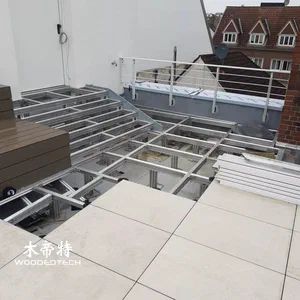 2x6 composite decking provides a practical size option for residential and commercial outdoor decks
Related Products
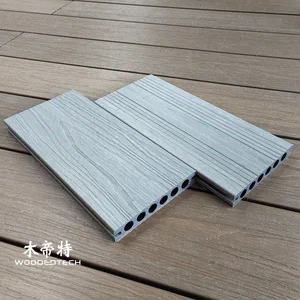 Antique Wood GD13823-3 Co Extruded Composite Wood Decking Boards with Round Holes Are Available in Stock in 3 Meter Lengths Year Round
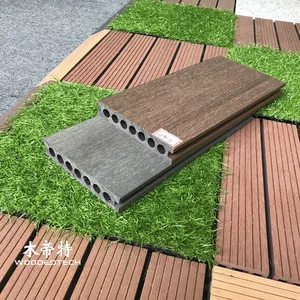 GD13823-2 Wood Versus Composite Decking Features Seven Round Holes with Wood Grain and Brushed Textures on Opposite Sides
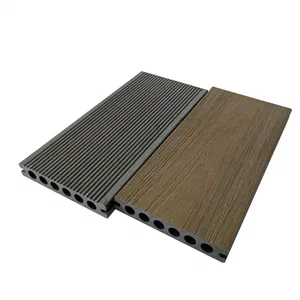 GD14023 Composite Decking Versus Wood Decking Features a Round Hole Structure with Semi Capped Co Extrusion