
Wood Polymer Composite Manufacturing: Material Selection and Production Optimization
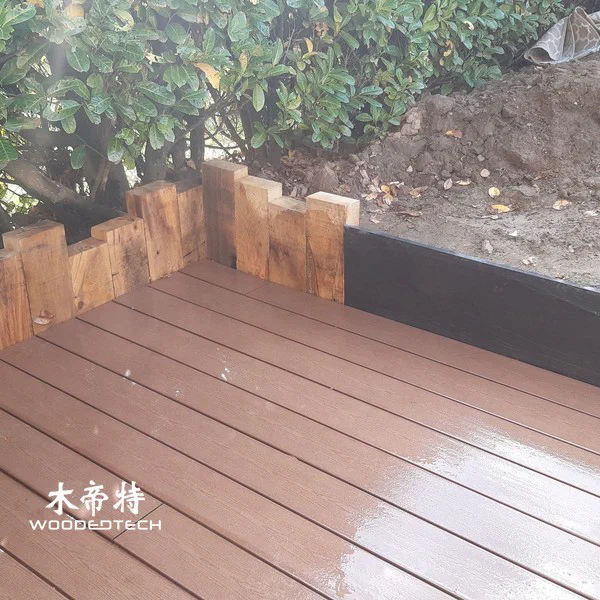
Wood polymer composite (WPC) manufacturing depends on more than simply mixing wood fiber with plastic. A high-performance formulation must balance raw material selection, fiber loading, polymer compatibility, additive performance, and extrusion conditions to produce durable outdoor products at a competitive cost. For decking, wall cladding, fencing, pergolas, and landscaping applications, the right material formulation determines dimensional stability, weather resistance, mechanical strength, surface quality, and service life.
1. Selecting the Right Wood Fiber and Polymer Ratio
The wood-to-plastic ratio is one of the most important decisions in WPC formulation development. Wood fiber provides stiffness, natural appearance, and cost advantages, while the plastic matrix binds the fibers together and provides moisture resistance and structural integrity.
For outdoor applications, a typical starting formulation may contain:
- Wood flour or wood fiber: 50–65%
- Thermoplastic resin: 25–40%
- Additives and processing aids: 5–10%
These ranges are development guidelines rather than fixed production specifications. The optimal ratio depends on the intended product, resin type, extrusion equipment, and performance requirements.
Wood fiber content directly influences rigidity, density, surface texture, and production cost. Higher fiber loading can reduce polymer consumption and improve stiffness, but excessive wood content increases water absorption, reduces impact resistance, and makes processing more difficult.
Plastic content has the opposite effect in many respects. Increasing the polymer ratio generally improves fiber encapsulation, moisture resistance, and impact performance. However, it also raises material costs and may reduce stiffness if the formulation contains too much polymer.
For solid outdoor decking boards, a relatively balanced formulation can provide the necessary strength and dimensional stability. Hollow decking profiles may require additional attention to melt strength and extrusion stability. Wall cladding and decorative profiles may prioritize surface quality, dimensional accuracy, and resistance to temperature changes.
2. Choosing the Right Polymer and Wood Raw Materials
The choice of polymer significantly affects the processing window and final product properties.
HDPE is widely used in outdoor WPC manufacturing because of its moisture resistance, chemical stability, and impact performance. It is particularly suitable for decking, fencing, pergolas, and landscape products.
PP offers higher stiffness and better heat resistance in many formulations, making it useful for applications requiring greater rigidity. However, its lower impact resistance at low temperatures must be considered during product development.
PVC is another option for WPC profiles, especially where dimensional stability, flame performance, and specific surface requirements are important. Its processing system and additive package differ considerably from those used with polyolefin-based WPC.
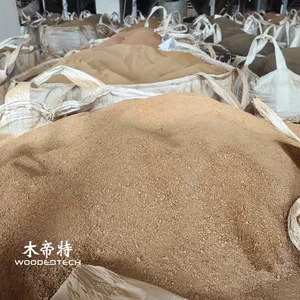
Wood flour should also be selected carefully. Particle size, moisture content, species, and consistency all influence processing and product quality. Fine particles generally support smoother surfaces, while controlled fiber sizes can improve reinforcement and mechanical performance.
Before extrusion, wood flour should be adequately dried. Excessive moisture can cause bubbles, surface defects, internal voids, and inconsistent density. Maintaining stable moisture levels is essential for reliable production.
3. Optimizing Additives for Outdoor Durability
Additives are not simply optional ingredients used to improve processing. They are essential components of a reliable outdoor WPC formulation.
A suitable additive package should address the weaknesses of both wood and plastic while maintaining compatibility with the selected polymer system.
Key additives include:
- Coupling agents: Maleic anhydride-grafted polyethylene (MAPE) is commonly used in HDPE-based WPC to improve adhesion between wood fibers and the polymer matrix.
- Lubricants: Internal and external lubricants help control melt flow, reduce processing resistance, and improve surface finish. Excessive lubrication can weaken interfacial bonding.
- UV stabilizers: UV absorbers and hindered amine light stabilizers (HALS) help reduce sunlight-induced degradation, discoloration, and surface deterioration.
- Antioxidants: These protect polymers against thermal oxidation during processing and long-term exposure.
- Colorants: Weather-resistant pigments help maintain consistent product appearance. Inorganic pigments are often considered for demanding outdoor applications.
- Fungicides and biocides: Where permitted and appropriate, these can provide additional protection against biological deterioration.
The correct dosage matters as much as additive selection. Too little coupling agent may result in weak fiber-matrix bonding, while excessive lubricant can reduce mechanical strength. A formulation engineer should evaluate additives through controlled laboratory trials rather than relying solely on supplier recommendations.

4. Formulation Strategies for Different Outdoor WPC Products
Different applications require different performance priorities. A single formulation is rarely the best solution for every outdoor product.
For wood plastic composite decking, the priorities are bending strength, impact resistance, slip resistance, low water absorption, and resistance to repeated temperature changes. Solid and hollow profiles may require different polymer ratios and processing conditions.
For exterior wall cladding, dimensional stability, surface appearance, UV resistance, and resistance to moisture penetration are particularly important. Fine wood flour, effective coupling agents, and stable color systems help achieve consistent decorative finishes.
For wood plastic composite fencing, impact resistance, stiffness, and resistance to wind loading are key considerations. Fence posts, rails, and decorative panels may require different mechanical properties depending on their structural functions.
Pergolas and outdoor landscape products, including planters, benches, and decorative screens, require a combination of rigidity, weather resistance, and long-term appearance retention. Structural profiles should be designed around actual load requirements rather than simply increasing material density.
Co-extrusion technology provides another option for demanding applications. A protective polymer-rich outer layer can improve surface durability, reduce moisture exposure, and provide better resistance to staining and UV-related deterioration. However, the core and cap materials must have compatible processing characteristics and reliable interlayer bonding.
5. Production Optimization: From Mixing to Extrusion
Even a well-designed formulation cannot deliver consistent performance without appropriate manufacturing controls.
The production process generally involves raw material preparation, drying, blending, compounding, extrusion, cooling, sizing, and final cutting.
First, wood flour and recycled or virgin plastic should meet consistent quality specifications. Variations in particle size, moisture, polymer melt flow, and contamination can create significant differences between production batches.
High-speed mixing helps distribute additives and prepare the material for compounding. Temperature and mixing time should be controlled to avoid premature polymer degradation or thermal damage to the wood fiber.
During extrusion, screw configuration, barrel temperature, screw speed, feeding rate, and die design must work together. Insufficient melting can cause poor bonding and uneven surfaces, while excessive temperature or residence time can damage wood components and reduce product quality.
Cooling is equally important. Uneven cooling can produce internal stress, warping, dimensional variation, and profile deformation. Production engineers should establish stable cooling conditions and verify finished dimensions throughout the manufacturing run.
6. Balancing Manufacturing Cost and Product Lifespan
The lowest-cost formulation is not necessarily the most economical solution over the product’s service life. Reducing polymer content, eliminating coupling agents, or using insufficient UV protection may lower initial production costs but increase the risk of premature failure, customer complaints, and warranty claims.
A more effective cost-control strategy evaluates the total formulation against measurable performance targets.
Manufacturers can optimize costs by using properly classified recycled HDPE or PP, improving wood flour utilization, selecting cost-effective pigment systems, and adjusting additive dosages based on experimental results. Recycled polymers should be controlled for contamination, melt flow, and batch consistency.
Quality testing should include flexural strength, impact resistance, water absorption, dimensional stability, accelerated UV weathering, and relevant slip-resistance measurements. For structural applications such as pergolas and fencing, load testing and profile-specific engineering validation are also necessary.
Long-term outdoor performance should be evaluated under conditions representative of the target market, including temperature fluctuations, humidity, rainfall, and sunlight exposure. Accelerated weathering tests are useful for comparing formulations, but they should not be treated as direct guarantees of real-world service life.
A successful WPC manufacturing strategy combines material selection, formulation engineering, and production optimization. By developing application-specific material ratios, using functional additives correctly, and maintaining consistent extrusion conditions, manufacturers can produce outdoor composite products that meet demanding performance requirements without unnecessary material costs. The objective is not simply to maximize wood or plastic content, but to achieve the best balance of durability, processability, appearance, and long-term commercial value.
Related Articles
 What is Wood Polymer Composite? Comprehensive Overview of Materials & Benefits
 Wood Polymer Composite: Industrial Applications, Benefits and Market Trends
 Plastic Wood Composite Sheets Provide Versatile Materials For Outdoor Construction And Decoration
 core decking wpc provides a stable outdoor flooring solution with reliable composite performance
Related Products
 GD13823-3 Composite Boards for Decking Are Available in Multiple Stock Colors with 3 Meter Lengths and Single Piece Delivery
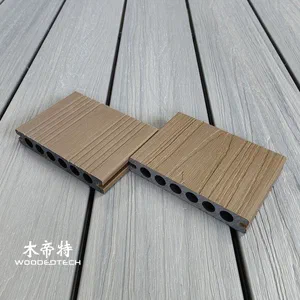 GD13823-3 Teak TK Co Extruded Decking Is a Popular Choice from Composite Decking Suppliers for Outdoor Flooring Projects
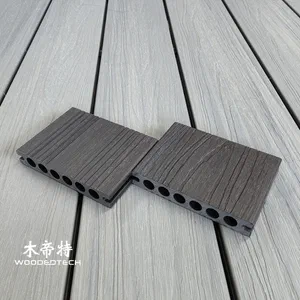 GD13823-3 Walnut WN Co Extruded Decking Features a Dark Rich Color That Helps Resist Visible Dirt and Stains