
Wood Plastic Composite Flooring Price: A B2B Cost and Market Analysis for 2026
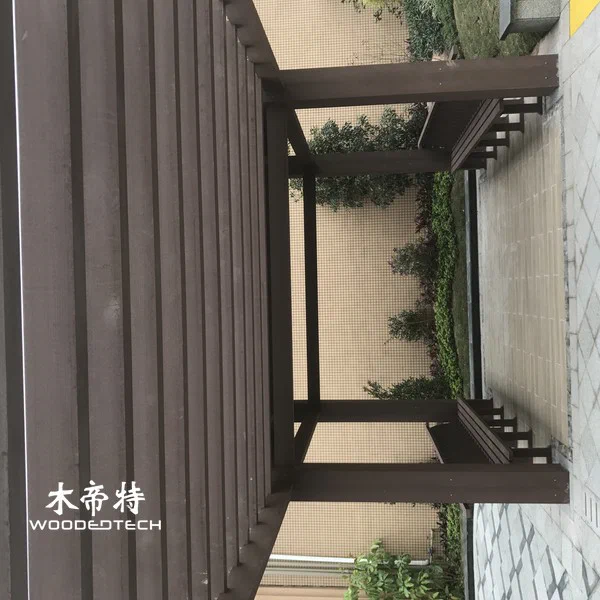
Wood plastic composite (WPC) flooring prices in 2026 vary according to material formulation, board structure, surface treatment, manufacturing technology, and order volume. For international importers, distributors, wholesalers, and construction contractors, understanding these cost factors is essential to finding competitive suppliers and maintaining healthy profit margins. As global demand for low-maintenance outdoor building materials increases, WPC decking and related composite products are creating new opportunities across residential, commercial, and landscape markets.
2026 WPC Flooring Price: Understanding Wholesale Cost Differences
There is no single international price for WPC flooring. Factory quotations depend on product specifications, production capacity, raw material costs, and trade terms such as EXW and FOB. As a general 2026 purchasing reference, standard hollow WPC decking may cost approximately USD 8–15 per square meter at the factory level. Co-extruded hollow boards commonly range from USD 15–25, while solid co-extruded products may reach USD 22–35. Premium deep-embossed products can exceed USD 30–45 per square meter, depending on their specifications and manufacturing requirements. These are indicative supplier-market ranges rather than universal transaction prices.
For B2B buyers, the difference between these price levels reflects more than appearance. Standard uncapped boards are generally positioned in the economy segment, making them suitable for price-sensitive residential projects and large-volume distribution. Co-extrusion adds a protective polymer layer that improves resistance to stains, moisture, and surface wear. Solid boards offer a different structural solution for applications requiring greater material density and a substantial feel underfoot. Premium embossed finishes appeal to customers seeking a more natural wood appearance without the maintenance requirements of traditional timber. Comparing products by price alone can therefore lead to incorrect purchasing decisions.

Key Factors Affecting Wood Plastic Composite Flooring Price
Raw materials remain one of the biggest influences on WPC manufacturing costs. Most outdoor WPC flooring combines wood fibers or wood flour with polyethylene, polypropylene, or other polymer materials, together with pigments, stabilizers, and processing additives. Changes in plastic resin prices, recycled material availability, energy costs, and transportation expenses can affect factory quotations. The quality and consistency of recycled feedstock also matter because unstable material composition may influence color, dimensional stability, and finished-product performance.
Product construction and manufacturing technology create another important pricing difference. Hollow decking generally uses less material than solid decking, helping manufacturers offer more competitive prices for large projects. However, wall thickness, internal reinforcement, profile dimensions, and extrusion precision all influence structural performance. Co-extrusion requires additional processing and specialized equipment, while 3D embossing and brushed surface treatments add manufacturing steps. Buyers should also consider UV resistance, slip resistance, water absorption, and dimensional stability when evaluating the relationship between cost and quality.
Order quantity and international logistics are equally important. Full-container orders usually provide better unit economics than small mixed shipments because production setup, packaging, and loading costs are distributed across more products. Custom colors, special board lengths, private-label packaging, and OEM specifications may increase the quotation. Importers should calculate the complete landed cost, including ocean freight, insurance, customs duties, port charges, and inland transportation. A supplier offering a lower FOB price may not necessarily deliver the lowest final purchasing cost.
Global Market Trends and Regional Opportunities in 2026
The global wood plastic composites market continues to benefit from the replacement of natural timber, demand for sustainable building materials, and investment in outdoor living spaces. Mordor Intelligence estimates that the global WPC market will increase from approximately USD 9.63 billion in 2026 to USD 14.57 billion by 2031, representing a projected compound annual growth rate of 8.64%. Construction applications, particularly decking, fencing, and exterior cladding, remain important sources of demand.
Regional demand patterns offer different opportunities for international suppliers. North America remains an established market, supported by residential deck renovation, commercial landscaping, and consumer familiarity with composite decking. Buyers in this region often prioritize capped boards, consistent product quality, attractive wood-grain finishes, and reliable warranty support. Europe offers opportunities for products incorporating recycled materials and solutions that support long-term outdoor durability. Meanwhile, Asia-Pacific benefits from urban development, residential construction, resort projects, and expanding infrastructure investment. Emerging markets in South America and the Middle East also present potential for outdoor flooring, fencing, pergolas, and landscaping products as construction activity develops.
Future Opportunities Beyond WPC Flooring
One important opportunity for manufacturers and distributors is the expansion from individual decking products into complete outdoor building material solutions. Customers increasingly want coordinated designs across outdoor flooring, WPC wall cladding, composite fencing, pergolas, decorative screens, and landscape furniture. Offering matching colors, surface textures, and structural components can help distributors increase average order values while creating stronger relationships with contractors and project developers.
Technology differentiation will also influence future purchasing decisions. Co-extruded decking, improved UV-resistant formulations, realistic 3D wood-grain textures, and more stable extrusion profiles can help manufacturers move beyond price competition. Commercial applications such as hotels, resorts, public parks, waterfront developments, and apartment complexes offer additional opportunities for solid decking, slip-resistant surfaces, and durable outdoor flooring systems. Buyers serving these sectors should prioritize documented performance, consistent production batches, and dependable technical support.
Sustainability will become increasingly important in international sourcing. Manufacturers that can demonstrate responsible use of recycled plastics, recovered wood fibers, efficient production processes, and transparent material specifications may gain advantages in markets with stronger environmental purchasing requirements. However, recycled content alone does not guarantee product quality. Importers should request material composition information, relevant test reports, and samples before committing to large orders.
For international B2B buyers, the most effective purchasing strategy in 2026 is to balance factory price, product performance, and long-term market positioning. Comparing at least three suppliers using identical specifications can reveal meaningful differences in manufacturing quality and commercial terms. Request quotations covering board dimensions, weight per meter, material composition, surface treatment, packaging, MOQ, production lead time, and FOB destination port. Suppliers capable of offering consistent WPC flooring alongside cladding, fencing, pergolas, and customized landscape products can provide greater value than manufacturers competing solely on the lowest unit price.
Related Articles
 Decking Composite Decking: A B2B Guide to Materials and Market Trends
 Composite Decking Kits 5m x 3m: Industrial Supply Guide 2026
 Plastic Wood Decking Boards: Industrial Solutions for Global Projects
 Wood Plastic Composite Decking Manufacturer Provides Durable Outdoor Flooring Solutions for Global Markets
Related Products
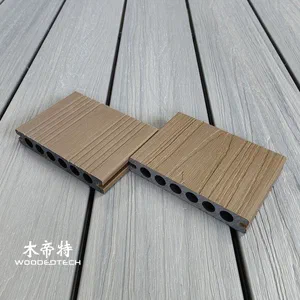 GD13823-3 Teak TK Co Extruded Decking Is a Popular Choice from Composite Decking Suppliers for Outdoor Flooring Projects
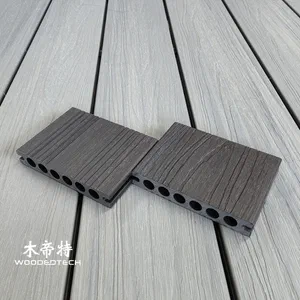 GD13823-3 Walnut WN Co Extruded Decking Features a Dark Rich Color That Helps Resist Visible Dirt and Stains
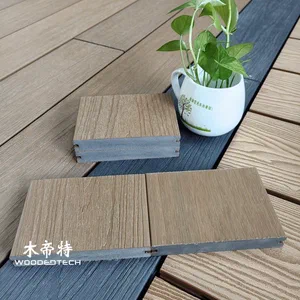 The GD14020S Composite Decking on Sale Features a Solid Core Structure Designed to Withstand Extreme Outdoor Temperature Changes and Freezing Conditions