
Where to Buy Composite Deck Boards: A Guide for Industrial Buyers
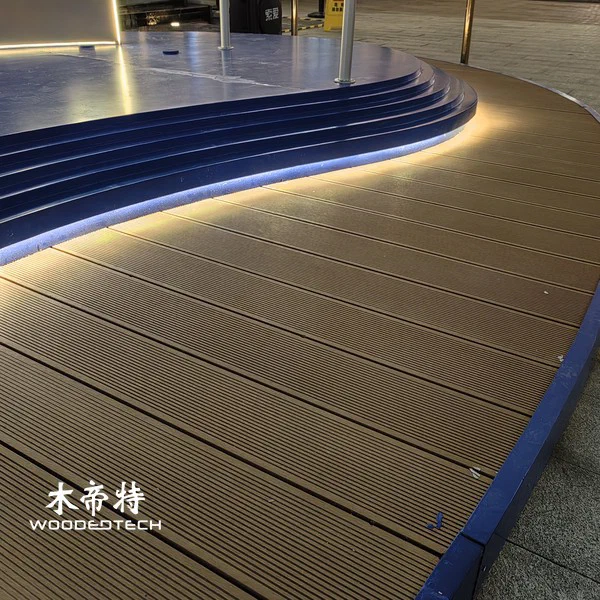
Composite deck boards can be purchased directly from WPC manufacturers, through authorized distributors, or from wholesale building material suppliers. For industrial buyers, importers, contractors, and decking distributors, choosing the right supplier involves more than comparing prices. Factory capabilities, product quality, material specifications, production consistency, and export experience all play an important role in securing a reliable long-term supply.
1. Identify the Right Type of Composite Decking Supplier
Before contacting suppliers, determine which sourcing channel best matches your purchasing requirements. Different suppliers offer different levels of pricing, customization, technical support, and production control.
- Direct WPC manufacturers: Buying directly from a factory usually provides better control over specifications, production schedules, and bulk pricing. It is suitable for importers, wholesalers, project contractors, and private-label brands.
- Authorized distributors: Distributors often maintain local inventory and provide convenient access to established product ranges. However, their prices may include additional distribution costs.
- Wholesale building material suppliers: These companies offer multiple product categories and can simplify purchasing when composite decking is only one part of a larger order.
- OEM and ODM manufacturers: Buyers developing their own decking brands or requiring special profiles, colors, and surface finishes should consider factories with custom manufacturing capabilities.
For large-volume orders, working directly with an experienced wood plastic composite decking manufacturer can help reduce intermediary costs and improve communication throughout the purchasing process.
2. Evaluate Factory Capabilities Before Placing an Order
A professional website and attractive product catalog do not necessarily indicate strong manufacturing capabilities. Overseas buyers should verify the supplier’s actual production facilities, equipment, and quality management procedures.
When evaluating a WPC factory, pay attention to the following factors:
- Production equipment: Check whether the factory operates its own extrusion lines and has sufficient equipment to handle your expected order volume.
- Raw material management: Ask about the sourcing and control of recycled plastics, wood fibers, additives, and other materials.
- Production capacity: Confirm monthly output, available production lines, and current order schedules.
- Quality control: Check whether the factory performs inspections during raw material preparation, extrusion, cooling, cutting, and final packaging.
- Export experience: Look for experience supplying overseas markets, preparing export documentation, and handling international shipping requirements.
Factory audits are particularly valuable for buyers planning regular container shipments. If an in-person visit is not practical, request a live video inspection showing production equipment, raw material storage, finished goods, and warehouse conditions.
Also ask whether the manufacturer can provide relevant test reports, quality certificates, and product documentation. Verify that the documents apply to the actual products being purchased rather than unrelated product categories.
3. Confirm Product Specifications Before Requesting a Quotation
Composite deck boards are available in different structures, dimensions, formulations, and surface treatments. Two products with similar appearances may perform differently under outdoor conditions.

Buyers should establish a clear technical specification sheet before requesting quotations from multiple suppliers.
Important specifications include:
- Material composition: Confirm the wood fiber and plastic content, including the type of plastic used, such as HDPE or other polymers.
- Board structure: Determine whether the product is solid, hollow, or designed with a reinforced internal structure.
- Dimensions: Specify board width, thickness, length, and dimensional tolerances.
- Surface treatment: Choose between brushed, embossed, wood-grain, or other available finishes.
- Surface protection: Confirm whether the decking uses an uncapped structure or a protective polymer cap.
- Color options: Request physical samples to evaluate color consistency and surface appearance.
- Mechanical performance: Review relevant test results for bending strength, impact resistance, and load-bearing performance.
- Outdoor durability: Check available data on water absorption, UV resistance, weathering, and slip resistance.
For projects in coastal, high-humidity, or high-temperature environments, environmental performance deserves particular attention.
Co-extrusion decking is worth considering when additional surface protection is required. Its outer polymer layer is designed to improve resistance to staining, moisture, and weather exposure. However, buyers should still compare actual test results and manufacturing quality rather than assuming every co-extruded product offers identical performance.
4. Compare Suppliers Beyond the Quoted Price
Price is an important purchasing factor, but the lowest quotation does not always represent the lowest overall cost.
When comparing composite decking suppliers, make sure every quotation uses the same specifications, order quantity, packaging requirements, and delivery terms. Otherwise, differences in board dimensions, material composition, or product structure can make direct price comparisons misleading.
Request a detailed quotation covering:
- Unit price and minimum order quantity (MOQ).
- Available board dimensions and colors.
- Packaging specifications and loading quantities.
- Sample costs and production lead times.
- Payment terms and accepted currencies.
- Incoterms, such as EXW, FOB, or CIF.
- Warranty coverage and after-sales support.
For international buyers, landed cost is more useful than factory price alone. Freight, customs duties, import taxes, insurance, inland transportation, and potential storage expenses should all be considered.
It is also advisable to request a formal quotation with a validity period. Raw material prices and international shipping costs can change, so written pricing terms help avoid misunderstandings during order confirmation.
5. Request Samples and Test Product Consistency
Samples allow buyers to evaluate product quality before committing to a large purchase. A professional manufacturer should be willing to provide samples representing its regular production materials and processes.
During sample evaluation, inspect the board’s surface finish, color uniformity, dimensional accuracy, edge quality, and overall appearance. Compare the physical sample with the supplier’s technical specifications and product photographs.
For larger projects, consider arranging independent laboratory testing based on the intended application and relevant local standards. Testing requirements may include bending strength, water absorption, slip resistance, UV aging, and fire performance where applicable.
One important point is to confirm that mass production will follow the approved sample. Buyers should request written confirmation of the agreed formulation, dimensions, color, surface treatment, and acceptable tolerances.
A pre-shipment inspection can provide another layer of protection. It helps identify production defects, packaging problems, and specification deviations before the goods leave the factory.
6. Avoid Common Risks in International WPC Purchasing
Cross-border purchasing involves risks that extend beyond product quality. Poor communication, unclear contracts, unexpected production delays, and unsuitable packaging can all affect project schedules and profitability.
To reduce these risks, establish clear purchasing procedures from the beginning.
First, verify the supplier’s registered company information and ensure that the receiving bank account belongs to the contracting company or an authorized entity. Avoid making large advance payments without appropriate documentation.
Second, use a detailed purchase agreement. It should specify product descriptions, technical requirements, quantities, prices, delivery dates, inspection procedures, payment conditions, and responsibilities for defective products.
Third, confirm packaging suitability for long-distance transportation. Composite deck boards should be properly bundled and protected against moisture, impact, and deformation during handling and shipping.
Finally, maintain written communication throughout the purchasing process. Keep approved drawings, samples, quotations, inspection records, and production confirmations together. These documents provide a clear reference if disagreements arise.
Build a Reliable Long-Term Supply Relationship
Finding a suitable source for composite deck boards is not simply about locating a factory with competitive prices. Industrial buyers need a manufacturing partner that can maintain consistent quality, support bulk production, communicate efficiently, and respond to changing market requirements.
For importers and distributors, an experienced Chinese WPC manufacturer can offer advantages in production flexibility, product customization, and wholesale supply. Taking the time to evaluate factory capabilities, verify specifications, test samples, and establish clear purchasing agreements helps create a more predictable sourcing process. A reliable supplier should be able to support not just the first shipment, but also the quality and consistency of future orders as your business grows.
Related Articles
Related Products
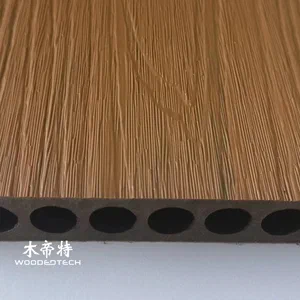
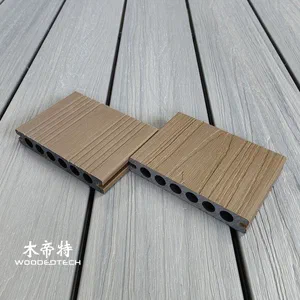 GD13823-3 Teak TK Co Extruded Decking Is a Popular Choice from Composite Decking Suppliers for Outdoor Flooring Projects
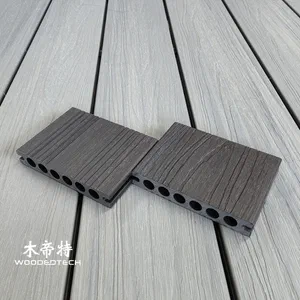 GD13823-3 Walnut WN Co Extruded Decking Features a Dark Rich Color That Helps Resist Visible Dirt and Stains
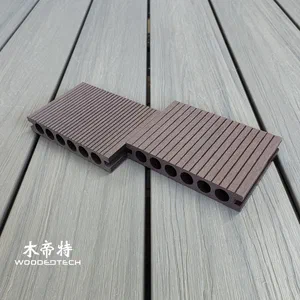 The D14025-6 Composite Decking 2 x 4 Features a Practical Walnut Design with Double-Sided Large and Small Grooves for Versatile Outdoor Applications