
What Is WPC? Key Manufacturing Standards, Performance Metrics, and Industrial Uses
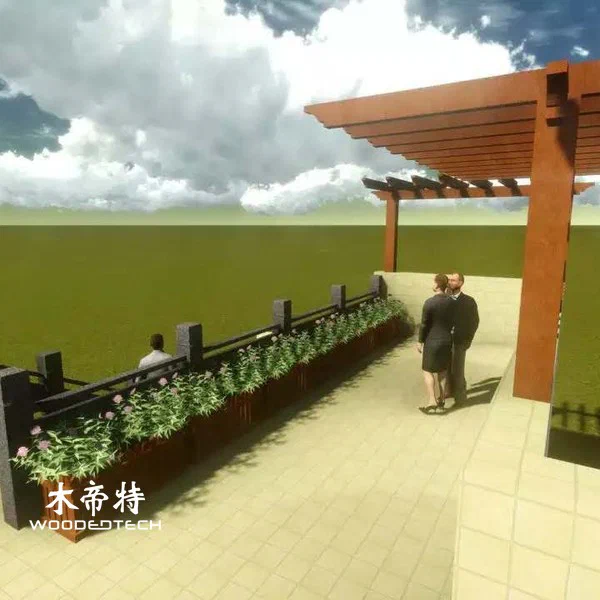
Wood-plastic composite (WPC) is an engineered material made by combining wood fibers or wood flour with thermoplastic polymers and functional additives. It offers the natural appearance of wood with improved resistance to moisture, decay, and everyday outdoor exposure. As a WPC manufacturer in Guangdong, China, with more than 10 years of production experience, we see WPC as a material whose quality depends not only on its formulation but also on manufacturing precision, process control, and application-specific performance.
What Is WPC and How Is It Manufactured?

WPC, short for wood-plastic composite, typically contains wood flour, recycled or virgin plastics such as HDPE, PP, or PVC, and additives that improve processing and product performance. Common additives include coupling agents, lubricants, antioxidants, UV stabilizers, pigments, and impact modifiers. The proportions vary according to the intended application, polymer type, and required performance.
The manufacturing process starts with raw material selection and preparation. Wood flour must have controlled particle size and moisture content because excess moisture can cause bubbles, surface defects, and inconsistent extrusion. Plastic materials are selected according to their compatibility with the wood component and the required mechanical properties. After accurate batching, the materials are mixed, compounded, and processed through extrusion equipment.
During extrusion, temperature, screw speed, pressure, and material feeding must remain within controlled operating ranges. The molten composite passes through a profile die to form decking boards, wall panels, fence profiles, or other customized products. Calibration, cooling, cutting, and surface treatment follow. Depending on the product design, manufacturers may also apply sanding, brushing, embossing, or co-extrusion to achieve specific textures and protective surfaces.
In our factory, we consider extrusion stability one of the most important indicators of manufacturing capability. A consistent production process helps maintain profile dimensions, surface appearance, density, and mechanical performance across different production batches.
Key Manufacturing Standards and Quality Control
WPC does not have one universal quality standard covering every product category. Applicable requirements depend on the product, installation environment, destination market, and intended use. For outdoor decking, ASTM D7032 is an important reference for establishing performance ratings for WPC deck boards, stair treads, guards, and handrails. It addresses flexural performance, temperature and moisture effects, UV resistance, freeze-thaw resistance, biological deterioration, and relevant fire performance requirements.
For manufacturers and importers, the important point is to select testing standards according to the actual application rather than relying on general statements such as premium quality or weatherproof material.
Our quality control philosophy covers three stages:
- Incoming material inspection: Check polymer grades, wood flour moisture, particle consistency, additive specifications, and supplier batch records.
- In-process inspection: Monitor extrusion temperature, production speed, profile dimensions, weight per meter, surface finish, and cooling conditions.
- Finished-product inspection: Check dimensional tolerances, appearance, color consistency, mechanical properties, packaging, and product identification.
We also recommend maintaining traceable production records and retaining samples from different batches. This makes it easier to investigate customer feedback and maintain consistent specifications during repeat orders.
Performance Metrics That Matter
A reliable WPC product should be evaluated through measurable performance indicators. Appearance is important, but it cannot replace laboratory testing or practical installation evaluation.
Flexural strength and flexural modulus indicate how a board responds to bending loads. These properties are particularly important for decking installed over supporting joists. Span ratings should be established using the relevant product testing and installation conditions rather than estimated from board thickness alone.
Water absorption and dimensional stability are equally important for outdoor applications. Although WPC generally absorbs less water than untreated wood, its performance depends on polymer content, wood fiber quality, processing conditions, and product structure. Excessive moisture absorption can contribute to swelling, dimensional changes, and long-term deterioration.
Other important performance metrics include:
- UV resistance: Evaluates color stability and surface degradation after exposure to ultraviolet radiation.
- Impact resistance: Measures the ability to withstand sudden mechanical loads.
- Creep resistance: Assesses long-term deformation under sustained loading.
- Fastener holding strength: Evaluates the reliability of screws and other mechanical connections.
- Slip resistance: Important for decking around swimming pools, walkways, and commercial outdoor spaces.
- Thermal expansion: Determines how much installation gaps and expansion provisions are required under temperature changes.
There is no single numerical target suitable for every WPC formulation. A heavy-duty commercial decking board and a decorative exterior wall panel have different performance requirements. We therefore recommend defining acceptance criteria before mass production and confirming them through appropriate testing.
Industrial Uses of WPC Products
WPC has developed into a versatile material for residential, commercial, and public infrastructure projects. Outdoor decking remains one of its most established applications, particularly for gardens, balconies, terraces, pool surrounds, and hospitality facilities.
Beyond decking, manufacturers can produce exterior wall cladding, decorative wall panels, privacy fences, railing components, pergolas, louvers, and garden furniture. These products allow architects and contractors to maintain a coordinated wood-like appearance across different outdoor structures while reducing routine maintenance requirements.
Commercial applications require additional attention to structural loading, pedestrian traffic, weather exposure, and installation conditions. For example, decking used in hotels, restaurants, and public walkways needs appropriate load ratings and slip-resistance testing. Exterior cladding requires consideration of fixing systems, ventilation, thermal movement, and local fire regulations.
For specialized projects, custom extrusion profiles offer another advantage. Experienced factories can develop different cross-sections, dimensions, colors, textures, and functional structures according to technical drawings and project specifications.
Choosing an Experienced WPC Manufacturing Partner
After more than 10 years in WPC production, we believe a dependable manufacturing partner should offer more than competitive pricing and a large product catalogue. Buyers should evaluate extrusion capacity, raw material management, quality inspection procedures, product development capabilities, and experience with international orders.
For OEM and ODM projects, clear technical communication is essential. Before production begins, both parties should confirm material composition, dimensions, tolerances, color references, surface treatments, packaging requirements, and applicable testing standards. For new profiles, we recommend developing samples and conducting necessary performance evaluations before approving mass production.
A good factory should also understand that different markets have different installation practices and environmental conditions. Products designed for a humid coastal environment may require different formulation and testing considerations from those intended for a dry inland climate.
Our approach is to build long-term customer relationships through stable production, transparent specifications, consistent inspection, and practical technical support. WPC is not simply wood mixed with plastic; it is an engineered building material whose reliability comes from the interaction between material science, manufacturing expertise, and application-specific quality control.
Related Articles
 Made in PRC Which Country: Industrial Sourcing Guide 2026
 What Is WPC? A Comprehensive Guide to Materials, Applications, and Benefits
 Plastic Wood Panels Exterior for Durable Outdoor Walls Cladding and Building Applications
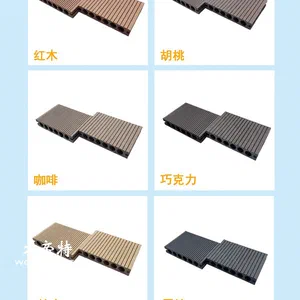 WPC Deck Flooring for Durable Outdoor Patios Gardens Balconies and Landscape Applications
Related Products
 GD13823-3 Composite Boards for Decking Are Available in Multiple Stock Colors with 3 Meter Lengths and Single Piece Delivery
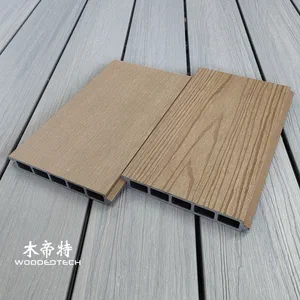 3DGL18024 WPC Longboard Fence Features Premium Co Extruded 3D Embossed Teak Wood Grain Texture with Realistic Natural Wood Fibers
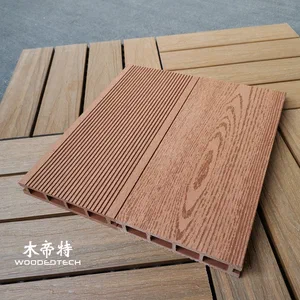 The Classic D14025-4 Red Wood WPC Wood Sheet Features a Timeless 2D Flat Wood Grain Design That Remains Popular After Twenty Years