
What Is Wpc Cladding

I’ll draft the article directly, keeping it SEO-friendly and B2B-focused, and I’ll include the required FAQ, tags, description, and keywords while avoiding banned phrasing and inline emphasis.Wpc cladding is a durable exterior wall covering made from a blend of wood fiber and thermoplastic materials. It is widely used in commercial, industrial, and residential projects because it offers the appearance of timber with improved resistance to moisture, weathering, and maintenance issues. For buyers comparing façade materials, WPC cladding is often valued for its balance of performance, aesthetics, and long service life.
What Wpc Cladding Means
WPC stands for wood-plastic composite. In cladding applications, this composite is manufactured into panels, boards, or profiles that are installed on exterior walls as a protective and decorative layer. The material typically combines wood flour or fiber with plastic polymers and performance additives, creating a product that is stronger and more stable than natural wood in many outdoor environments.
For industrial and B2B buyers, the key advantage is consistency. Unlike timber, which can vary by grain, density, and moisture content, WPC cladding is engineered to deliver uniform quality and repeatable dimensions. That makes it easier to specify for large projects, standardize procurement, and manage installation across multiple sites.
How Wpc Cladding Is Made

Common surface finishes include:
- Wood grain textures
- Brushed or matte finishes
- Smooth contemporary surfaces
- Embossed linear patterns
Some products are co-extruded, meaning they have an outer protective layer designed to improve stain resistance, fade resistance, and surface durability. This construction is especially useful for projects exposed to strong sunlight, heavy rain, or airborne pollutants.
Main Benefits For Commercial Projects
Wpc cladding is often selected because it solves practical problems that traditional materials can create. It performs well in demanding environments while reducing maintenance burden over time.
Key benefits include:
- Moisture resistance: Unlike untreated wood, WPC does not absorb water in the same way, helping reduce swelling, warping, and rot.
- Low maintenance: It usually requires only basic cleaning, with no frequent sealing, painting, or staining.
- Weather durability: Quality products can handle sun, rain, temperature shifts, and humidity better than many natural alternatives.
- Design flexibility: Available in multiple colors, textures, and profiles to support modern façade concepts.
- Stable dimensions: Engineered composition helps minimize cracking and distortion.
- Long service life: Suitable for projects where replacement and maintenance costs must be controlled.
- Sustainable positioning: Many products use recycled content, which can support green building goals.
For developers, contractors, and distributors, these benefits can translate into lower lifecycle costs and easier asset management.
Typical Applications
Wpc cladding is used in a wide range of exterior and semi-exterior applications. It is not limited to one sector, which is one reason it has become popular in global trade and project supply.
Common uses include:
- Commercial building façades
- Industrial facility exteriors
- Office parks and mixed-use developments
- Hospitality and resort projects
- Retail fronts and storefront accents
- Residential apartment buildings
- Garden walls, balcony screens, and boundary features
In industrial settings, it is often chosen for buildings that need a cleaner appearance without the upkeep associated with timber. It can also be used to improve visual identity, especially on offices, showrooms, and customer-facing facilities.
Wpc Cladding Compared With Other Materials
Buyers often compare WPC cladding with wood, PVC, fiber cement, aluminum composite panels, and natural stone. Each material has strengths, but the best choice depends on budget, appearance, maintenance expectations, and local climate.
Compared with timber, WPC usually offers better resistance to moisture and pests, with less ongoing maintenance. Compared with PVC, it often provides a more natural look and better structural feel. Compared with metal panels, WPC can create a warmer, wood-like aesthetic and may be easier to integrate into architectural designs that prioritize texture.
It is not the right answer for every project. In extremely high-heat applications or places with severe fire-rating requirements, buyers should verify compliance carefully and choose products that meet the relevant local standards.
What Buyers Should Check Before Purchasing
For B2B sourcing, product appearance is only one part of the decision. Technical verification matters just as much, especially when the material will be used on a large building or specified across multiple projects.
Important points to review include:
- Material composition and polymer type
- UV resistance and color retention
- Fire performance ratings
- Surface treatment or co-extrusion layer
- Installation system and accessory compatibility
- Thickness, width, and length tolerances
- Warranty terms
- Testing reports and certifications
- Packaging quality for export and long-distance transport
A reliable supplier should be able to provide technical data sheets, installation guidance, and documentation that supports project approval. For international buyers, consistency across batches is especially important because it helps avoid color variation and fit issues during installation.
Installation Considerations
Wpc cladding is generally installed on a substructure rather than directly fixed to the wall surface. The exact system depends on the product type, building design, and local construction practices. Proper ventilation behind the cladding is often recommended to help manage moisture and temperature changes.
Good installation practice usually includes:
- Preparing a level and stable substrate
- Using corrosion-resistant fasteners or clips
- Allowing for thermal expansion and contraction
- Maintaining proper gaps and alignment
- Following supplier guidelines for spacing and support
Poor installation can reduce performance even when the material itself is high quality. For this reason, many project teams prefer suppliers who can offer both product and technical support.
Why It Matters For International Trade
Wpc cladding has become an important product category in cross-border sourcing because it fits several market needs at once: attractive appearance, predictable quality, export-friendly packaging, and broad application potential. It is also appealing to distributors because it can serve multiple buyer segments, including builders, contractors, architects, and project developers.
From a trading perspective, it helps to position the product by performance and use case rather than only by material type. Buyers often want to know how it behaves outdoors, what certifications are available, whether color matching is possible, and how well it performs over time in their climate zone.
Choosing the Right Supplier
For B2B purchasing, the supplier relationship can matter as much as the product itself. A strong supplier should offer stable production, clear specifications, responsive communication, and export experience.
Look for a supplier that can provide:
- Consistent dimensions and surface quality
- Custom colors or profiles if needed
- Documentation for compliance and testing
- Reliable lead times
- Secure export packaging
- After-sales technical support
If you are sourcing for repeated projects, ask for samples from the same production line used for mass orders. That helps reduce risk and improves confidence before placement of a larger contract.
FAQ
Q: What is Wpc cladding made of? A: It is made from wood fibers and plastic polymers combined with additives that improve durability, stability, and appearance.
Q: Is Wpc cladding suitable for exterior walls? A: Yes. It is designed for exterior use and performs well in many climates when installed correctly.
Q: Does Wpc cladding require painting? A: No. Most products are prefinished and designed for low maintenance, so painting is usually not necessary.
Q: Is Wpc cladding better than wood? A: It is often better for moisture resistance and maintenance, but the right choice depends on project goals and budget.
Q: Can Wpc cladding be used on commercial buildings? A: Yes. It is widely used on commercial, industrial, and mixed-use projects because it combines visual appeal with practical performance.
Related Articles
Related Products
 3D17618wood look plastic cladding with three dimensional embossed texture offers unique exterior wall decoration effects
 Q14520.5 wpc cladding outdoor with single layer structure provides a cost effective solution for exterior wall decoration
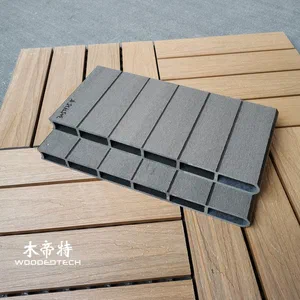 Q30525.4 Extra Wide 300mm Wood Cladding for Exterior Walls with Modern Outdoor Design