
What Is The Best Composite Deck Material for Durable and Beautiful Outdoor Flooring Applications

The quality of wood plastic composite (WPC) products is significantly influenced by the raw materials used in their production. Key components such as wood powder, HDPE or PVC polymers, additives, pigments, and modifiers play critical roles in determining the durability, weather resistance, and overall performance of outdoor WPC flooring. Understanding these elements can help manufacturers optimize their products for better quality and longer lifespan.
Components Affecting WPC Quality
Wood powder serves as the primary filler in WPC products, providing the natural look and feel of wood. The fineness and quality of the wood powder directly impact the composite’s strength and stability. A higher quality wood powder enhances bonding with the polymer matrix, which results in improved durability.

Polymers like HDPE or PVC are crucial as they form the matrix that binds the wood particles together. HDPE is favored for its excellent resistance to moisture, UV rays, and chemicals, making it suitable for outdoor applications. Conversely, PVC offers good rigidity and weatherability, but may be less flexible than HDPE. The choice between these polymers can influence the performance characteristics of the final product.
Additives such as stabilizers, lubricants, and processing aids improve the manufacturability and longevity of WPC products. UV stabilizers protect against sun damage, while anti-fungal agents can prevent mold and mildew growth. These additives ensure that the final product maintains its aesthetic and structural properties over time.
Pigments are used to enhance the visual appeal of WPC products. They need to be carefully selected to ensure colorfastness and resistance to fading under sunlight. High-quality pigments can significantly improve the aesthetic value while maintaining durability.
Modifiers such as coupling agents improve the compatibility between the wood powder and the polymer, enhancing impact resistance and overall performance. The right combination of modifiers can lead to a more robust WPC product that withstands the rigors of outdoor use.
Factory Inspection Methods and Quality Standards
To ensure the quality of the raw materials and final products, robust factory inspection methods are essential. Regular sampling and testing of wood powder for particle size and moisture content can guarantee consistency. For polymers, analyzing melt flow index and tensile strength can help assess their suitability for WPC production.
Additives and pigments should be evaluated for their effectiveness and concentration. Implementing stringent quality standards, such as ASTM and ISO certifications, can provide benchmarks for performance, ensuring that products meet industry expectations.
Manufacturers should also conduct weathering tests to evaluate the long-term performance of WPC products under various environmental conditions. This includes exposure to UV light, moisture, and extreme temperatures to simulate real-world usage.
By focusing on the quality of raw materials and implementing comprehensive inspection processes, WPC manufacturers can produce durable and aesthetically pleasing outdoor flooring solutions that stand the test of time.
FAQ
Q: What are the benefits of using HDPE over PVC in WPC products?
A: HDPE offers better moisture resistance and flexibility, making it more suitable for outdoor environments compared to PVC.
Q: How can additives improve the performance of WPC products?
A: Additives like UV stabilizers and anti-fungal agents enhance durability and resistance to environmental factors, extending the lifespan of WPC products.
Q: What standards should WPC products meet for quality assurance?
A: WPC products should meet certifications such as ASTM and ISO to ensure they meet industry performance and safety standards.
Related Articles
 Best WPC Decking Provides High Quality Outdoor Flooring Solutions for Global Markets
 HDPE Composite Lumber Offers Strong and Durable Material Solutions for Outdoor Construction Projects
 Pros and Cons Of Composite Decking Help Customers Understand Performance and Applications Before Choosing
 WPC Deck Provides Natural Wood Appearance with Long Lasting Outdoor Performance
Related Products
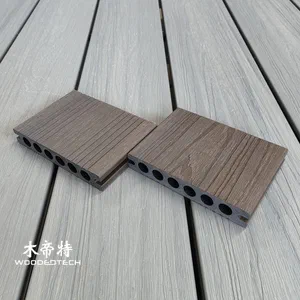 Purple Sandalwood GD13823-3 Co Extruded WPC Outdoor Decks with Round Holes Are Available in Stock in 3 Meter Lengths Year Round
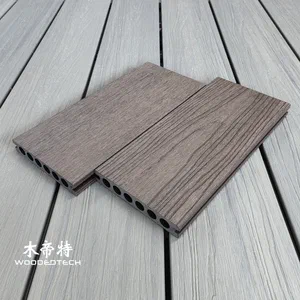 3DGD13823 Second Generation 3D Embossed Rosewood Composite Balcony Decking Delivers Ultra Realistic Wood Grain Texture and a Premium Natural Wood Experience
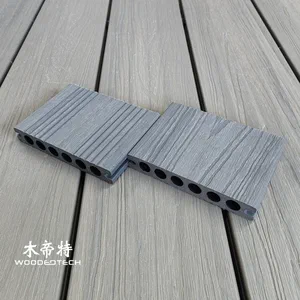 GD13823-3 Light Grey Premium Co Extrusion WPC Composite Decking Offers LG Texture and Excellent UV Resistance for Outdoor Spaces