
What are the disadvantages of composite decking? An Honest Guide
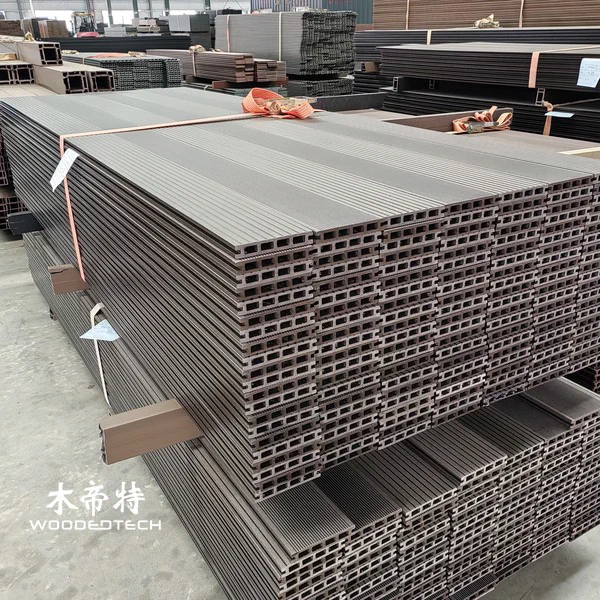
Composite decking has become a popular option for commercial projects, hospitality spaces, and large residential developments because it reduces routine maintenance and offers a consistent look. But it is not a perfect material, and buyers comparing it with timber or other exterior finishes should understand its trade-offs before placing bulk orders.
The main disadvantages
The most common drawback is cost. Composite decking usually has a higher upfront price than pressure-treated wood, especially when buyers specify capped composite decking boards or premium co-extrusion decking products. For procurement teams, the initial budget can be harder to justify on projects where short-term capex matters more than lifecycle savings.
Heat retention is another issue. In strong sun, darker composite boards can become noticeably hot underfoot, which may affect comfort on rooftop terraces, pool decks, and public walkways. This matters for commercial sites in warm climates, where surface temperature and user experience are part of the specification.
Composite decking can also show scratches, stains, and fading depending on the product grade. Lower-end boards may suffer more visible wear in high-traffic areas, while even better products can lose some color over time. That is why project teams often compare capped composite decking problems across brands rather than assuming all boards perform the same way.

Installation and structural limits
Composite decking is not always as forgiving as wood during installation. It may require tighter attention to joist spacing, fastening systems, expansion gaps, and ventilation. If the substructure is not planned correctly, boards can move, trap moisture, or create surface issues later. For this reason, wood plastic composite decking installation should be handled by crews familiar with the material’s behavior.
Weight can also be a factor. Some solid composite decking products are heavier than timber alternatives, which can affect handling, shipping, and structural loading on elevated decks. In large B2B projects, that can influence both logistics and engineering decisions.
Another limitation is repairability. Damaged boards are usually replaced rather than refinished, and matching older colors may be difficult if a product line changes. For asset owners managing multiple sites, this can create spare-part planning issues over time.
Where composite still makes sense
Even with these disadvantages, composite decking remains attractive for projects that value low maintenance, stable appearance, and predictable supply. The key is to choose the right quality level, confirm installation details early, and compare product specifications instead of only looking at price. Buyers sourcing composite decking for commercial use should request performance data, warranty terms, slip resistance, and fade resistance before confirming orders.
FAQ
Q: Is composite decking worth it for commercial projects? A: It often is when long-term maintenance savings matter more than the higher purchase price. It is especially useful for sites that need a uniform look and lower upkeep.
Q: What is the biggest problem with composite decking? A: The biggest concern is usually the balance between cost, heat retention, and product quality. Lower-grade boards can also show faster wear in demanding environments.
Q: Can composite decking be repaired easily? A: Minor surface damage is difficult to fully repair, so replacement is often the practical solution. That is why many buyers keep spare boards from the same batch.
Related Articles


Related Products
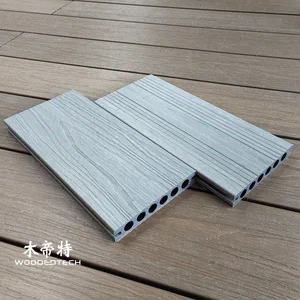 Antique Wood GD13823-3 Co Extruded Composite Wood Decking Boards with Round Holes Are Available in Stock in 3 Meter Lengths Year Round
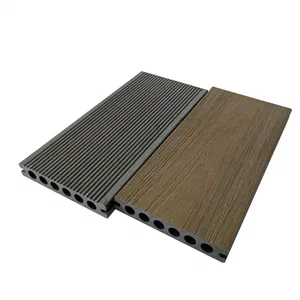 GD14023 Composite Decking Versus Wood Decking Features a Round Hole Structure with Semi Capped Co Extrusion
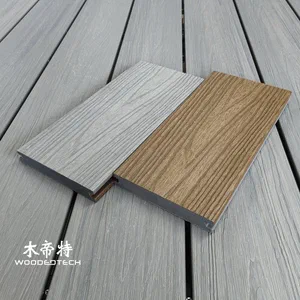 Second Generation Two Color Co Extruded 3D Embossed 3DGD14023S Composite Wood Deck Boards Feature an Extremely Realistic Antique Wood and Teak Grain Texture