
What Are The Best Composite Deck Flooring Options For Modern Outdoor Spaces

Modern outdoor spaces rely on composite materials that look refined, stay practical, and hold their shape through daily use. For decking, wall panels, fences, pergolas, gazebos, and landscape features, the best composite floor and surface choices combine stable performance with clean visual detail.
Design Direction in Modern Outdoor Products
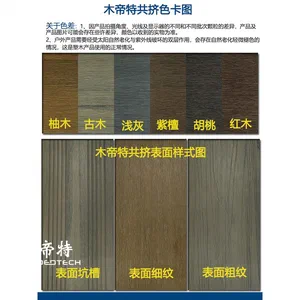
The strongest trend in outdoor WPC design is restraint. Instead of heavy grain patterns or high-contrast finishes, buyers now prefer balanced colors such as charcoal, teak, smoke gray, and warm brown, because these tones sit naturally beside stone, metal, glass, and planting. That makes composite deck flooring easier to coordinate across terraces, pool edges, roof decks, and courtyard circulation zones.
Texture matters just as much as color. Light embossed surfaces, fine wood grain, and low-gloss capped finishes give depth without looking artificial. On decking, that visual control helps large areas feel calm and architectural rather than busy. On wall panels and fences, matching texture across vertical and horizontal elements creates a unified outdoor identity.

Why Profiles And Module Systems Matter
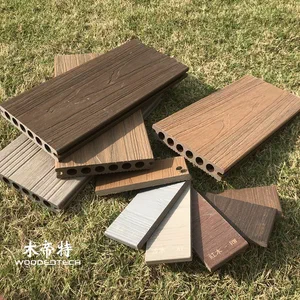
Profile choice affects both appearance and installation. Grooved boards work well where drainage and anti-slip performance are priorities, while solid capped boards suit premium spaces that need a cleaner edge and stronger long-term shape retention. Hidden-fastener profiles are popular in modern outdoor flooring because they reduce visual clutter and keep the surface continuous.
Modular systems are equally important. Deck tiles, interlocking panels, and repeatable pergola or screen components make it easier to build flexible layouts around seating, planters, steps, and transitions. This is especially useful in commercial courtyards and hospitality projects, where maintenance access and fast replacement are part of the design brief.
Coordinating Decking With Other WPC Elements
A modern outdoor space works best when the deck is not treated as a separate object. Composite deck flooring should visually connect with wall cladding, privacy screens, fences, pergolas, and gazebos through matching color families and compatible surface textures. When those elements share the same material language, the entire space feels planned rather than assembled.
Landscape products play a supporting role here. Planter boxes, benches, louvers, and grille screens can soften hard edges and define circulation without adding visual noise. The result is a space that feels ordered, low-maintenance, and suitable for both residential and project-based use.
What Buyers Should Prioritize
For modern outdoor applications, the best composite deck flooring options usually share these qualities:
- Stable color performance under sun exposure
- Slip-resistant texture for wet zones
- Capped or co-extruded surfaces for easier cleaning
- Profiles that support hidden fixing or modular installation
- Compatible matching products for walls, fencing, and shade structures
These choices reduce upkeep while improving the overall look of the site. They also give designers more control when specifying a full outdoor package rather than a single surface.
FAQ
Q: What makes composite deck flooring suitable for modern outdoor spaces? A: It combines a clean architectural look with practical benefits like moisture resistance, low maintenance, and stable color options.
Q: Which colors work best for contemporary WPC decking? A: Neutral tones such as gray, charcoal, teak, and coffee are widely used because they coordinate well with stone, aluminum, and greenery.
Q: Can decking, fencing, and pergolas be matched in one design? A: Yes, using coordinated profiles and finishes creates a unified outdoor scheme across flooring, screens, shade structures, and boundary elements.
Related Articles


Related Products
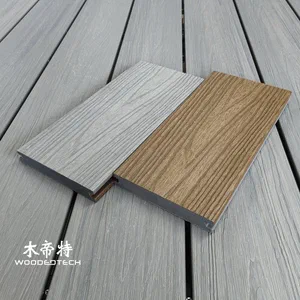 Second Generation Two Color Co Extruded 3D Embossed 3DGD14023S Composite Wood Deck Boards Feature an Extremely Realistic Antique Wood and Teak Grain Texture
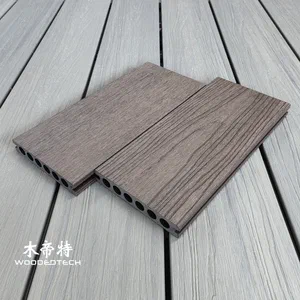 3DGD13823 Second Generation 3D Embossed Rosewood Composite Balcony Decking Delivers Ultra Realistic Wood Grain Texture and a Premium Natural Wood Experience
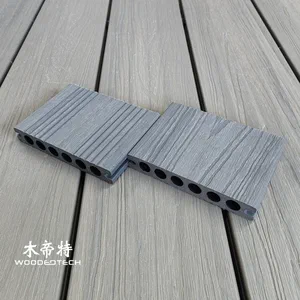 GD13823-3 Light Grey Premium Co Extrusion WPC Composite Decking Offers LG Texture and Excellent UV Resistance for Outdoor Spaces