
Weight of Composite Decking vs Wood: A Technical Load Comparison
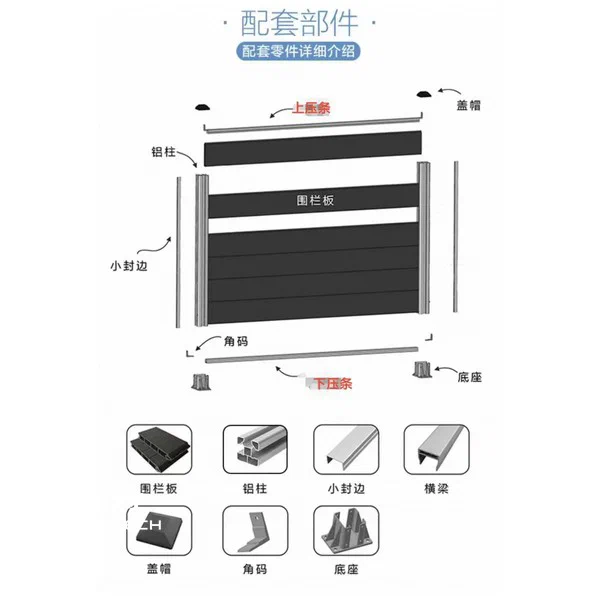
Weight is an important engineering consideration when comparing composite decking with natural wood, but board weight alone does not determine structural performance. Wood plastic composite (WPC) decking often weighs more per unit volume than timber, yet its hollow structures, internal ribs, wall thickness, and profile geometry can significantly reduce material consumption while maintaining the required load-bearing capacity. For manufacturers, understanding these factors is essential when designing extrusion profiles that balance strength, weight, production cost, and installation efficiency.
1. Understanding the Weight Difference Between Composite Decking and Wood
Natural wood and composite decking have different material structures, which directly influence their weight and mechanical properties. Timber is a natural cellular material whose density varies according to species, moisture content, grain direction, and processing conditions. WPC decking, by comparison, combines wood fiber or wood flour with thermoplastic polymers and additives to create a more consistent engineered material.
Because WPC contains both wood-based components and plastic, its density is generally higher than that of many lightweight timber species. However, comparing material density alone can be misleading. A solid wood board and a hollow WPC board with identical external dimensions may have substantially different actual weights.
For a meaningful technical comparison, manufacturers and buyers should consider weight per linear meter, weight per square meter of installed decking, and the structural load capacity of the finished board. These measurements provide a clearer picture of transportation costs, installation requirements, and deck performance.
2. How Hollow and Solid WPC Structures Influence Weight and Strength
The internal structure of a composite decking profile is one of the most important factors in determining its weight and mechanical performance.

Hollow composite decking uses internal cavities to reduce material consumption. Instead of filling the entire profile with WPC material, the extrusion die forms one or multiple hollow chambers within the board. This approach reduces the board’s weight and can lower raw material costs, making hollow profiles attractive for residential projects and applications where the structural requirements are moderate.
However, cavity geometry must be carefully designed. Excessively large hollow sections or thin outer walls can increase the risk of local deformation, cracking, or failure under concentrated loads. The extrusion mold must maintain consistent wall thickness and accurate cavity dimensions to ensure reliable production.
Solid composite decking contains more material across its cross-section. Its greater mass generally provides better resistance to localized impact and can offer higher stiffness and load capacity for comparable external dimensions. Solid profiles are particularly suitable for commercial installations, high-traffic areas, and applications requiring greater resistance to concentrated loads.
The trade-off is higher material consumption, increased transportation weight, and potentially greater installation effort. Solid construction does not automatically guarantee superior performance, however. The final result also depends on material formulation, profile dimensions, support spacing, and manufacturing quality.
3. Internal Rib Designs: Improving Strength Without Adding Excessive Weight
Internal ribs are essential design elements in hollow WPC extrusion profiles. They connect the outer walls, reinforce the internal structure, and help distribute loads across the board.
A well-designed rib structure can improve bending resistance and reduce deformation without requiring a completely solid profile. Rib thickness, spacing, orientation, and connection points all influence structural performance.
Several design considerations are particularly important:
- Rib thickness: Ribs must be thick enough to resist bending and deformation while avoiding unnecessary material consumption.
- Rib spacing: Proper spacing distributes loads more evenly and reduces unsupported wall sections.
- Rib orientation: Vertical or strategically angled ribs can improve resistance to bending under different loading conditions.
- Wall-to-rib connections: Smooth transitions help reduce stress concentrations and improve structural continuity.
From an extrusion mold design perspective, rib geometry must also support stable material flow. Excessively thin ribs may cause incomplete filling, uneven cooling, or dimensional instability. Large differences between wall thicknesses can create inconsistent cooling rates and increase the risk of warping.
The objective is not simply to minimize weight. It is to achieve the required mechanical performance with an efficient cross-sectional design that can be manufactured consistently.
4. Profile Geometry and Surface Patterns: Their Impact on Cost and Installation
The external geometry of a WPC decking board influences its bending stiffness, connection strength, material consumption, and installation performance. Board width, height, wall thickness, edge design, and fastening grooves should be evaluated together rather than independently.
A deeper profile can provide greater bending stiffness because material positioned farther from the neutral axis contributes more effectively to resistance against bending. This means that a properly engineered hollow profile can sometimes achieve competitive structural performance with less material than a shallower solid profile.
Surface patterns also influence product design and manufacturing requirements. Embossed wood-grain textures, brushed finishes, and grooves can improve appearance and provide different surface characteristics. However, decorative patterns should not compromise the effective thickness of the board or create unnecessarily weak sections.
Installation details are equally important. Side grooves must be accurately dimensioned to accommodate hidden fasteners, while board edges need sufficient strength to resist installation forces and service loads. Poorly designed fastening areas can crack or deform even when the main profile has adequate bending strength.
For manufacturers, integrating structural geometry and installation features into the extrusion mold design helps reduce unnecessary machining, simplify installation, and improve product consistency.
5. Comparing Weight, Load Capacity, and Manufacturing Cost
The relationship between board weight and load capacity is not linear. A heavier board may provide greater stiffness, but its actual performance depends on its cross-sectional geometry, material properties, and support conditions.
The following comparison illustrates the typical engineering differences:
| Design factor | Hollow WPC | Solid WPC | Natural wood |
|---|---|---|---|
| Material consumption | Lower | Higher | Depends on species |
| Board weight | Generally lower | Generally higher | Varies considerably |
| Internal structure | Hollow chambers and ribs | Mostly solid | Natural cellular structure |
| Local impact resistance | Depends on wall design | Generally higher | Depends on timber species |
| Bending performance | Geometry-dependent | Generally consistent | Grain-dependent |
| Raw material cost | Generally lower | Generally higher | Market-dependent |
| Installation handling | Easier due to lower weight | Requires more handling effort | Depends on timber density |
For extrusion manufacturers, material consumption is a major component of production cost. Reducing profile weight can lower polymer and wood fiber requirements, but excessive weight reduction may increase rejection rates or compromise product durability.
A successful profile should therefore be evaluated using bending tests, concentrated load tests, impact resistance, and deflection measurements under specified support spacing. Comparing these results on a per-board or per-square-meter basis provides a more reliable assessment than simply comparing kilograms per cubic meter.
6. Designing WPC Extrusion Profiles for Practical Load Requirements
When developing a new composite decking product, engineers should begin by identifying its intended application. Residential balconies, garden decks, commercial walkways, and public outdoor platforms have different loading requirements and installation conditions.
The extrusion profile should then be developed around the required board dimensions, expected support spacing, fastening system, and target weight. Hollow chambers and reinforcing ribs can be adjusted to achieve an appropriate balance between material efficiency and mechanical strength.
Mold design also plays a critical role. Die flow channels, wall thickness transitions, cavity positioning, and cooling conditions must be optimized to maintain dimensional accuracy throughout production. Consistent extrusion quality is especially important for hollow profiles, where uneven material distribution can affect both strength and board stability.
Manufacturers should avoid selecting a profile based on weight reduction alone. A lightweight board that requires closer joist spacing may increase the total installation cost, while a heavier board with excessive material consumption may be unnecessarily expensive. The best solution is a profile that meets the required load specifications while minimizing total material usage and installation complexity.
For WPC decking manufacturers and project suppliers, the most effective design is not necessarily the lightest or heaviest board. It is the one that delivers predictable structural performance, efficient manufacturing, manageable transportation weight, and reliable installation under real operating conditions.
Related Articles

Related Products
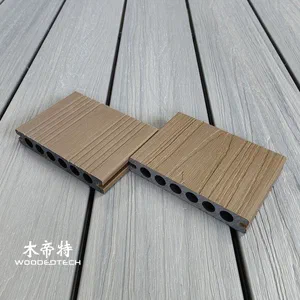 GD13823-3 Teak TK Co Extruded Decking Is a Popular Choice from Composite Decking Suppliers for Outdoor Flooring Projects
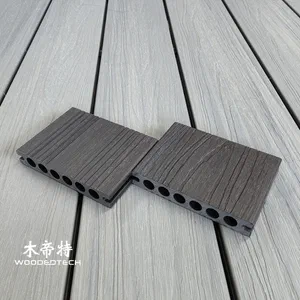 GD13823-3 Walnut WN Co Extruded Decking Features a Dark Rich Color That Helps Resist Visible Dirt and Stains
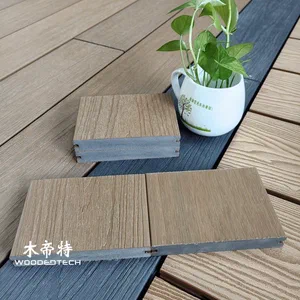 The GD14020S Composite Decking on Sale Features a Solid Core Structure Designed to Withstand Extreme Outdoor Temperature Changes and Freezing Conditions