
Various Types of WPC Decking Profiles and Surface Treatments
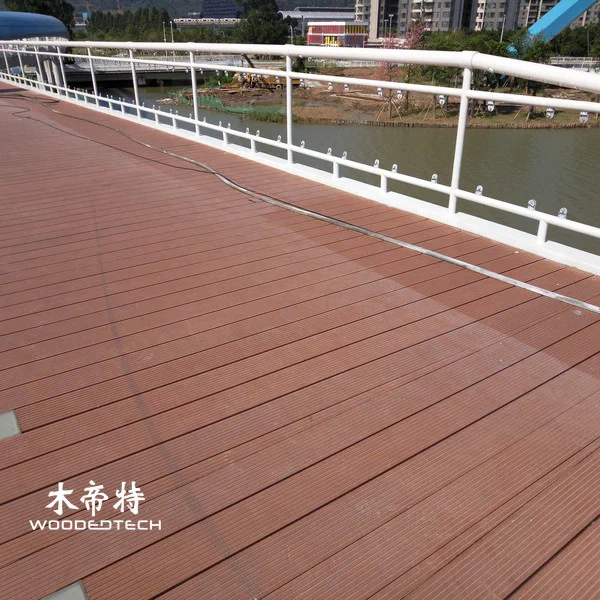
Various WPC decking profiles and surface treatments give buyers more control over performance, appearance, and installation efficiency. For industrial buyers, the right profile and finish can improve slip resistance, reduce maintenance, and better match project requirements in commercial, residential, and public outdoor spaces.
Common WPC Decking Profiles
WPC decking is typically supplied in several profile types, each suited to different load and budget needs. Hollow boards are popular for large-area projects because they are lighter, easier to handle, and more cost-effective. Solid boards are heavier and more rigid, making them a better choice for high-traffic decks, stairs, and platforms where extra strength matters.
Profile shape also affects installation. Grooved boards are widely used with hidden fastening systems for a cleaner surface and faster assembly. Square-edge boards are often chosen when contractors want visible fixing or need more flexibility in edge finishing. For OEM and wholesale buyers, consistent profile dimensions are important because they help reduce installation errors and simplify inventory planning.
Surface Treatments That Change Performance

Co-extrusion is now one of the most requested upgrades in the market. A protective outer layer improves stain resistance, color stability, and moisture protection, which can lower long-term maintenance costs. This makes co-extruded WPC decking suitable for buyers looking for better durability and stronger product positioning in competitive markets.
Selecting the Right Combination for Projects
The best profile and surface treatment depend on the application. A resort deck may need capped, slip-resistant boards with a premium wood grain finish, while a logistics or municipal project may prioritize solid profiles and simple maintenance. Buyers should also consider climate exposure, UV resistance, board thickness, and fastening method before placing bulk orders.
For manufacturers and distributors, offering multiple combinations helps serve different price points. A standard grooved hollow board may work for volume sales, while a co-extruded solid board can target higher-end projects. Clear product differentiation also supports faster quoting and easier communication with contractors and specifiers.
Why B2B Buyers Focus on Specification
In B2B trade, small technical details can affect both project performance and customer satisfaction. Profile consistency, surface treatment quality, and color stability all influence installation speed and the final appearance of the deck. Buyers who source from a reliable WPC supplier can reduce complaints, improve repeat orders, and build a stronger product line for export markets.
FAQ
Q: What is the most common WPC decking profile? A: Hollow grooved boards are widely used because they are lightweight and economical. Solid boards are chosen when higher strength or better impact resistance is needed.
Q: Which surface treatment is best for outdoor use? A: Co-extruded and embossed finishes are often preferred for outdoor projects. They offer better protection, improved slip resistance, and a more refined look.
Q: How do I choose between capped and uncapped WPC decking? A: Capped decking provides better stain and moisture resistance, making it suitable for demanding environments. Uncapped options are usually lower in cost and may fit simpler projects better.
Related Articles
Related Products
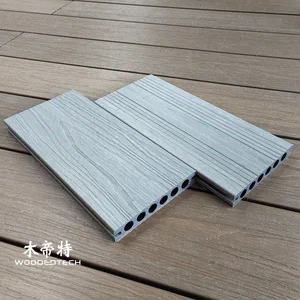 Antique Wood GD13823-3 Co Extruded Composite Wood Decking Boards with Round Holes Are Available in Stock in 3 Meter Lengths Year Round
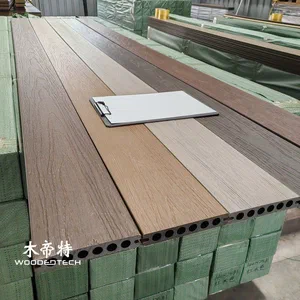
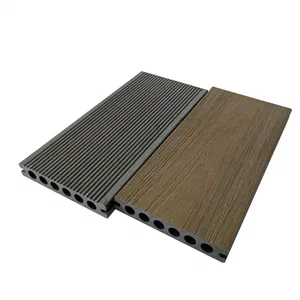 GD14023 Composite Decking Versus Wood Decking Features a Round Hole Structure with Semi Capped Co Extrusion
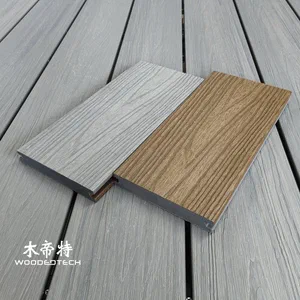 Second Generation Two Color Co Extruded 3D Embossed 3DGD14023S Composite Wood Deck Boards Feature an Extremely Realistic Antique Wood and Teak Grain Texture