
Trending Composite Deck Colors and Fade-Resistant Palette Guide
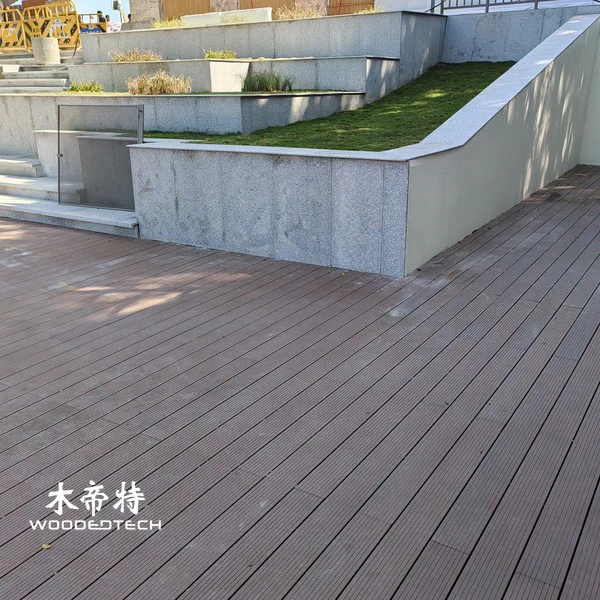
Composite deck colors are moving toward warmer, more architectural palettes that fit hospitality, commercial housing, and premium residential projects. For buyers, the best choice is not only visual appeal but also long-term color stability, surface texture, and how the shade performs under heavy outdoor exposure.
What’s trending in composite deck colors
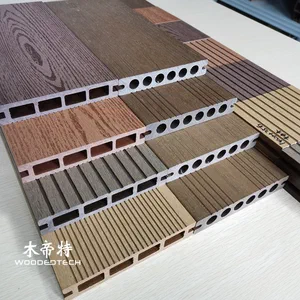
Current composite decking colors lean into natural wood tones with a cleaner, more consistent finish. Popular options include weathered gray, walnut brown, teak, coffee, and charcoal, because they work well across modern façades, pool decks, and public walkways. These shades also help distributors and contractors offer a broader design range without increasing installation complexity.
Neutral colors remain strong in B2B projects because they are easier to match with aluminum railings, wall cladding, and outdoor furniture. Darker boards create a high-end look, while lighter grays and beige tones suit larger developments where a softer, low-contrast appearance is preferred. For buyers sourcing composite deck boards in volume, color consistency across batches is just as important as the shade itself.
How fade resistance should be evaluated
Fade resistance depends on the core material, cap layer quality, pigment technology, and UV protection. Co-extrusion and fully capped composite decking generally perform better than uncapped products because the protective shell reduces exposure to moisture, stains, and sunlight. That matters in commercial settings where replacement costs and maintenance access are both expensive.
When comparing suppliers, ask for weathering data, color retention test results, and project references from similar climates. A board that looks rich on day one should still hold its tone after years of UV exposure, especially for rooftop decks, coastal projects, and high-traffic hospitality spaces. Buyers should also check whether the finish is smooth, embossed, or wood-grain textured, since surface treatment can affect how fading is perceived over time.
Selecting the right palette for your market
The best composite deck colors depend on the end-use environment. Hospitality projects often favor teak and walnut for a premium appearance, while commercial developers may choose charcoal or ash gray for a cleaner, more modern profile. For public projects, mid-tone colors are often the safest option because they hide dust and wear better than very dark boards.
A practical buying strategy is to request physical samples under natural light and compare them against adjacent products such as composite railing, cladding, and pergola systems. This helps ensure a unified exterior package and avoids mismatched tones across different product lines. For OEM and wholesale buyers, a stable palette also improves repeat orders and simplifies catalog planning.
FAQ

Q: Do darker composite decking colors fade faster? A: Dark colors can show UV change more visibly, but quality capped boards with strong UV protection are designed to minimize that risk.
Q: What should buyers ask suppliers about fade resistance? A: Request weathering test reports, cap layer details, pigment information, and samples from the same production batch.
Related Articles
Related Products
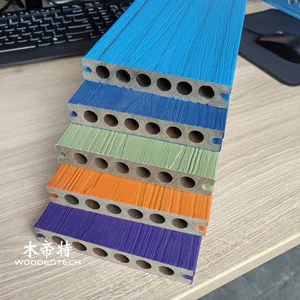
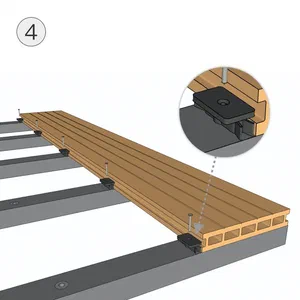
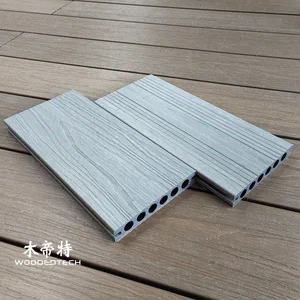 Antique Wood GD13823-3 Co Extruded Composite Wood Decking Boards with Round Holes Are Available in Stock in 3 Meter Lengths Year Round
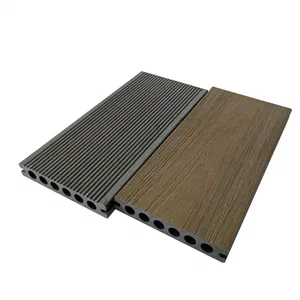 GD14023 Composite Decking Versus Wood Decking Features a Round Hole Structure with Semi Capped Co Extrusion
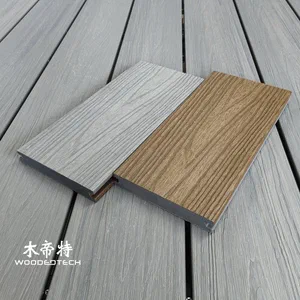 Second Generation Two Color Co Extruded 3D Embossed 3DGD14023S Composite Wood Deck Boards Feature an Extremely Realistic Antique Wood and Teak Grain Texture