
Spiced Teak Composite Decking: Specifications, Performance and Applications
Spiced teak composite decking combines the warm, reddish-brown appearance of natural teak with the durability and low-maintenance characteristics of wood plastic composite (WPC). Designed for outdoor environments, it offers a practical surface solution for residential decks, commercial terraces, garden pathways, poolside areas, and hospitality projects. Its performance depends on the balance of wood fiber, polymer content, functional additives, surface technology, and manufacturing quality.
Understanding Spiced Teak Composite Decking
Spiced teak is a distinctive composite decking color inspired by the rich tones of natural teak. Its warm brown base, subtle reddish undertones, and realistic wood-grain texture create an inviting outdoor appearance that works well with contemporary, traditional, and tropical architectural styles.
Unlike conventional timber decking, WPC decking combines wood fiber or wood flour with thermoplastic polymers such as HDPE, PVC, or PP, depending on the product formulation. This combination provides a balance between natural wood aesthetics and plastic-based moisture resistance.
A typical outdoor WPC decking formulation contains approximately 50–65% wood fiber and 30–40% polymer, with the remaining percentage allocated to additives, pigments, and processing aids. These proportions are starting points rather than fixed specifications. The optimal ratio depends on the polymer system, extrusion equipment, target mechanical properties, and intended application.
For spiced teak decking, color consistency is particularly important. Manufacturers should use carefully selected heat-resistant pigments and UV stabilizers to maintain the brown tone during prolonged outdoor exposure. Proper pigment dispersion also helps prevent uneven coloring, streaking, and visible differences between production batches.
Material Specifications and Formulation Design
High-performance spiced teak composite decking starts with a carefully engineered material formulation. Wood fiber content influences stiffness, surface texture, dimensional stability, and material cost. Increasing wood content can improve the natural wood-like appearance and reduce polymer consumption, but excessive fiber loading may increase water absorption and make the boards more susceptible to cracking or dimensional changes.
The polymer ratio plays an equally important role. HDPE is widely used in outdoor WPC decking because of its moisture resistance, impact performance, and processing characteristics. A sufficient polymer phase helps bind wood particles together and improves resistance to environmental exposure. However, excessive polymer content can increase raw material costs and change the surface appearance and mechanical behavior.
Functional additives should be selected according to the required performance level:
- Coupling agents improve bonding between wood fibers and the polymer matrix, supporting strength and reducing moisture-related performance loss.
- Lubricants help control melt flow, reduce extrusion friction, and improve surface finish.
- UV stabilizers and antioxidants help protect the material against sunlight, heat, and oxidative aging.
- Color masterbatch provides consistent spiced teak pigmentation throughout production.
- Moisture-control agents and suitable processing aids help maintain extrusion stability and reduce surface defects.
- Impact modifiers can improve toughness where the selected polymer system requires additional impact resistance.

The formulation should be optimized as a complete system rather than by maximizing any single ingredient. For example, increasing wood fiber content without adjusting the coupling agent and processing conditions may reduce bonding quality. Similarly, reducing stabilizer levels to lower material costs can lead to premature fading and shorter service life.
Outdoor Performance and Durability
Outdoor composite decking must withstand changing temperatures, rainfall, humidity, sunlight, and repeated foot traffic. Spiced teak decking should therefore be evaluated for water absorption, dimensional stability, flexural strength, impact resistance, surface wear, and UV weathering.
Water resistance is particularly important in exposed installations. Although WPC is generally more moisture-resistant than untreated wood, it should not automatically be described as completely waterproof. Water can enter through cut ends, exposed surfaces, or poorly designed installation details. A well-balanced formulation, controlled extrusion process, and appropriate drainage design help reduce moisture-related problems.
UV resistance is another important consideration. Prolonged exposure to sunlight can gradually change the color of outdoor composite materials. High-quality UV stabilizers, suitable pigments, and consistent processing help slow this process. Some initial color adjustment may still occur as the material weathers, so manufacturers should communicate realistic color-retention expectations.
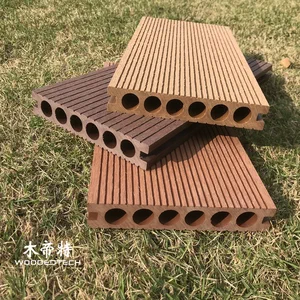
Mechanical performance also depends on board geometry. Solid and hollow profiles offer different weight, stiffness, and cost characteristics. Solid boards can provide greater material mass and are suitable for applications requiring a substantial profile, while hollow boards reduce material consumption and overall weight. Both designs require appropriate joist spacing and installation support to prevent excessive deflection.
Surface Design and Application Options
Spiced teak composite decking is suitable for a range of outdoor projects where natural wood aesthetics and reduced maintenance requirements are important.
- Residential decking: Creates warm, attractive outdoor living spaces for gardens, balconies, patios, and poolside environments.
- Commercial terraces: Provides a consistent architectural finish for restaurants, hotels, resorts, and outdoor entertainment areas.
- Garden pathways: Offers a wood-inspired appearance for landscape walkways and recreational spaces.
- Pergolas and outdoor structures: Can be coordinated with composite pergola components, privacy screens, and decorative battens.
- Landscape projects: Complements composite benches, planters, fencing, and other exterior WPC products.
Surface treatment also influences the final product. Embossed wood-grain textures create a more realistic timber appearance, while brushed finishes provide a subtle, natural-looking surface. Deep embossing can improve visual definition, although actual slip resistance must be verified through appropriate testing rather than assumed from texture alone.
For projects requiring enhanced weather protection and surface durability, co-extrusion technology is another option. This process applies a protective polymer cap around a composite core, improving resistance to moisture, staining, and surface fading. Co-extruded spiced teak decking can be particularly suitable for demanding outdoor installations, although its additional manufacturing complexity should be considered when evaluating project budgets.
Cost Control Without Compromising Product Lifespan
Cost-effective WPC formulation development requires more than selecting the cheapest available raw materials. The real objective is to achieve the required service performance at a competitive manufacturing cost.
Wood fiber and recycled polymer can help control material expenses, but their quality must remain consistent. Variations in fiber moisture, particle size, polymer composition, and contamination can affect extrusion stability and finished-board performance. Incoming material inspection and standardized processing conditions are essential for maintaining production consistency.
Additive selection should also be based on measurable performance requirements. Using an appropriate coupling agent and sufficient UV protection may increase the initial formulation cost, but these components can reduce the risk of premature product deterioration, customer complaints, and warranty claims.
Manufacturers should evaluate total lifecycle cost rather than focusing exclusively on the initial purchase price. A decking system that maintains its appearance and structural performance for longer can offer better value through reduced maintenance, fewer replacements, and lower long-term ownership costs.
Quality control should cover raw material inspection, extrusion temperature, screw speed, cooling conditions, profile dimensions, color consistency, and finished-product testing. Outdoor aging tests, water absorption tests, and mechanical performance evaluations provide useful evidence when establishing product specifications and comparing formulations.
Choosing the Right Spiced Teak WPC Decking
Selecting the right spiced teak composite decking requires matching the material formulation, board structure, surface finish, and installation system to the project environment. Residential gardens may prioritize natural appearance and affordability, while commercial terraces and poolside installations may require stronger mechanical performance, enhanced surface protection, and more rigorous durability testing.
For WPC manufacturers and international buyers, product specifications should clearly identify the polymer type, wood fiber content, board dimensions, profile structure, surface treatment, applicable test standards, and warranty conditions. These details make it easier to compare suppliers and determine whether a product meets the requirements of its intended application.
A well-developed spiced teak WPC decking product is not simply a wood-look alternative to traditional timber. It is an engineered outdoor building material in which formulation balance, extrusion technology, pigment stability, and quality control work together to deliver reliable performance, attractive appearance, and competitive lifecycle value.
Related Articles
Related Products
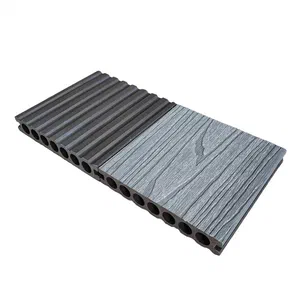
 GD13820 M Shape Co Extruded Composite Deck Planks Feature a Special Profile Design for Distinctive Outdoor Decking Applications
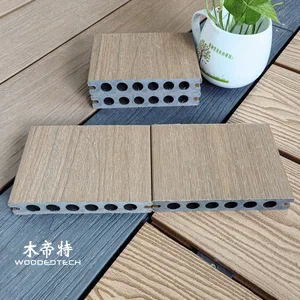 GD13823 Double Sided Flat Surface Co Extruded WPC Decking Features a Popular Width and Thickness with Round Hollow Structure
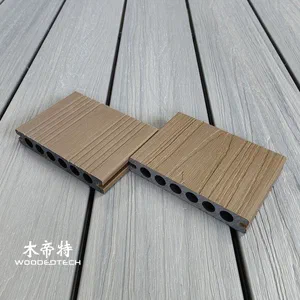 GD13823-3 Teak TK Co Extruded Decking Is a Popular Choice from Composite Decking Suppliers for Outdoor Flooring Projects