
Premium Composite Decking Quality Standards and Testing Criteria
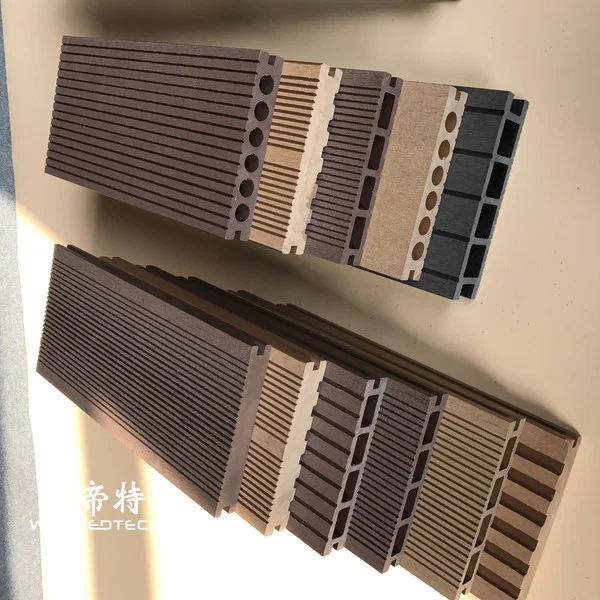
Premium composite decking quality standards define how a product performs in real outdoor projects, from residential terraces to large commercial walkways. For B2B buyers, testing criteria matter as much as appearance, because product consistency, safety, and long-term value drive every purchase decision.
What Quality Means in Composite Decking
High-grade composite decking is judged by more than color and surface texture. The core expectation is stable performance under sun, rain, load, and repeated cleaning, with minimal warping, fading, cracking, or splintering. Buyers should ask for clear specifications on raw material ratio, board density, cap thickness, and dimensional tolerances before placing volume orders.
A dependable product range typically includes:
- consistent board length, width, and thickness
- accurate groove geometry for installation
- stable color matching across production batches
- low moisture absorption and strong slip resistance
- clean edges and uniform surface finish
These details affect installation speed, warranty claims, and site performance. In export trade, they also reduce disputes over shipment acceptance and replacement costs.

Core Testing Criteria for B2B Procurement
Reputable suppliers verify composite decking through mechanical, physical, and weathering tests. Common checks include flexural strength, impact resistance, screw-holding performance, water absorption, and thermal expansion. For outdoor projects, UV aging and freeze-thaw resistance are especially important, since boards must maintain shape and color in changing climates.
Fire behavior, surface slip resistance, and load-bearing capacity should also be reviewed for commercial applications. If the decking will be used around pools, public boards, or hospitality spaces, the buyer should request test reports from recognized labs and confirm whether the results match local building or import requirements.
Manufacturing Control and Consistency
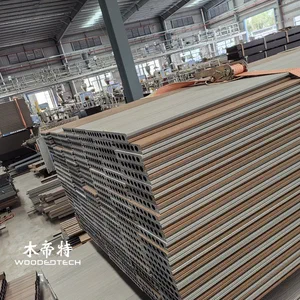
Testing alone is not enough if production control is weak. A reliable composite decking manufacturer should monitor raw material blending, extrusion temperature, cooling, and surface treatment to keep each batch within tolerance. This is where factory audits, sample approval, and pre-shipment inspection become valuable for importers and distributors.
For private label or OEM programs, buyers should also confirm packaging protection, batch traceability, and labeling accuracy. Those controls help avoid mix-ups in mixed-container orders and support after-sales service when projects require matching replacement stock.
What Buyers Should Request Before Ordering
A serious supplier should provide:
- product specification sheet
- test reports for mechanical and weathering performance
- installation and maintenance guidance
- warranty terms and coverage limits
- sample boards for visual and physical approval
These documents make it easier to compare composite decking quality levels across suppliers, especially when pricing looks similar. The cheapest offer is rarely the lowest-risk option if the boards fail on site.
FAQ
Q: Which test is most important for composite decking? A: There is no single test that covers everything, but UV resistance, water absorption, and flexural strength are the most important for outdoor performance.
Q: How can buyers verify decking quality before bulk purchase? A: Request test reports, check samples for consistency, and confirm production standards through factory inspection or third-party audits.
Q: Why do capped boards often perform better? A: The protective cap improves stain resistance, moisture control, and color stability, which helps the boards last longer in demanding outdoor use.
Related Articles
Related Products
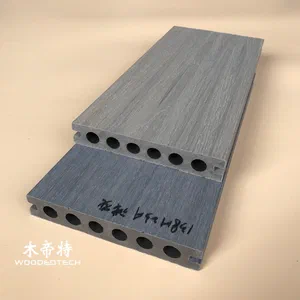 GD13823 Composite Decking Material Features Six Small Round Holes to Reduce Weight While Maintaining Structural Strength
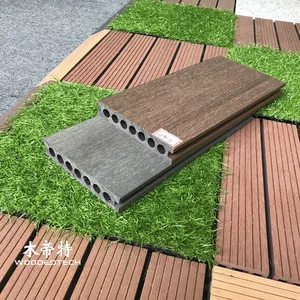 GD13823-2 Wood Versus Composite Decking Features Seven Round Holes with Wood Grain and Brushed Textures on Opposite Sides
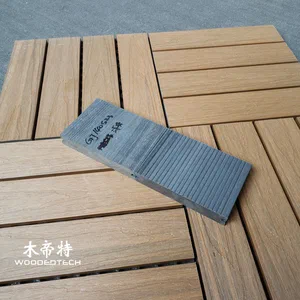 GD14023S Composite Deck Materials Feature a Solid Structure and Side Grooves for Better Adaptability in Extremely Cold Climates