
Plastic Wood Deck Floor Offers Low Maintenance And Natural Looking Outdoor Flooring Performance

The quality of outdoor wood plastic composite (WPC) products greatly depends on the raw materials used, including wood powder, HDPE/PVC polymers, additives, pigments, and modifiers. Each component plays a crucial role in determining durability, weather resistance, and overall performance, ensuring the final product meets the required standards for long-lasting outdoor use.
Key Components and Their Impact
Wood powder is a primary ingredient that gives WPC its natural wood-like appearance. The quality of the wood powder influences not only the aesthetic but also the mechanical properties of the composite. Higher-quality wood powder can enhance the structure’s strength and stability, making it less prone to warping and splitting over time.
HDPE (high-density polyethylene) and PVC (polyvinyl chloride) polymers provide the necessary plasticity and durability. These polymers are engineered to resist moisture, insects, and UV damage, which are vital for outdoor applications. The choice between HDPE and PVC can affect the product’s resistance to fading and cracking, as well as its overall lifespan.
Additives and modifiers play essential roles in enhancing performance. For instance, UV stabilizers protect the WPC from sun damage, while anti-oxidants can prolong the life of the polymers. Fillers may also be added to improve processing characteristics and reduce costs without sacrificing quality.
Pigments are crucial for achieving the desired color and finish of WPC products. Using high-quality pigments ensures that the color remains vibrant over time and does not fade with exposure to the elements. This is particularly important for outdoor applications where aesthetics contribute significantly to user satisfaction.
Quality Control and Inspection Methods

To ensure the highest quality of WPC products, several inspection methods are implemented throughout the manufacturing process. These include:
Raw Material Testing: Each batch of wood powder, polymers, and additives undergoes rigorous testing for moisture content, particle size, and chemical composition to ensure consistency and quality.
In-Process Monitoring: During production, parameters such as temperature, pressure, and mixing times are closely monitored. This ensures that the materials are processed correctly, maintaining the integrity of the composite.
Final Product Testing: Finished WPC products are subjected to various tests, including tensile strength, impact resistance, and weathering tests. These tests evaluate the durability and performance characteristics of the decking under real-life conditions.
Quality standards such as ISO certifications and compliance with local regulations are adhered to, ensuring that the WPC products meet international benchmarks for safety, performance, and environmental impact.
Conclusion
The use of high-quality raw materials and stringent quality control measures is essential in producing durable and weather-resistant outdoor WPC products. By focusing on the right balance of wood powder, polymers, additives, and pigments, manufacturers can deliver low-maintenance and aesthetically pleasing solutions suitable for various outdoor applications.
FAQ
Q: What are the benefits of using HDPE versus PVC in WPC products?
A: HDPE typically offers better resistance to impact and moisture, while PVC is often more cost-effective and can provide superior UV resistance.
Q: How can I ensure the longevity of my outdoor WPC decking?
A: Regular cleaning and maintenance, combined with the use of UV-protected products, can significantly extend the life of WPC decking.
Q: What are the environmental benefits of WPC products?
A: WPC products are often made from recycled materials, reducing waste and minimizing the need for virgin wood, making them a sustainable choice for outdoor applications.
Related Articles
 Waterproof Plastic Wood Provides Reliable Outdoor Performance In Different Weather Conditions
 Best WPC Decking Provides High Quality Outdoor Flooring Solutions for Global Markets
 WPC Deck Provides Natural Wood Appearance with Long Lasting Outdoor Performance
 WPC Decking Weight Information Helps Customers Choose Suitable Outdoor Flooring Materials
Related Products
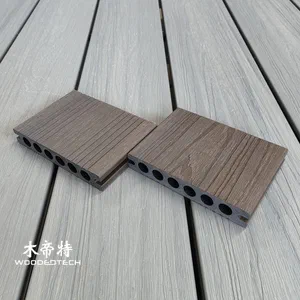 Purple Sandalwood GD13823-3 Co Extruded WPC Outdoor Decks with Round Holes Are Available in Stock in 3 Meter Lengths Year Round
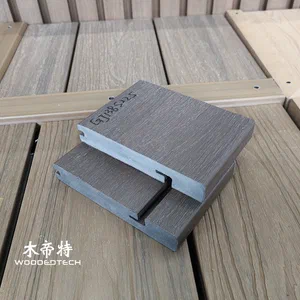 GD13822.5S Fully Capped Solid Starter Wood Polymer Composite Decking Provides a Stable Starting Structure for the First Decking Board
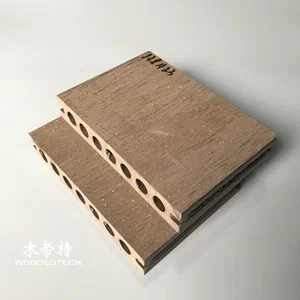 D13823 Round Hole Double Sided Flat WPC Bamboo Decking Boards With Strong Quality And Various Wood Grain Surface Treatments