
Painting Composite Decks: Surface Preparation, Adhesion and Coating Performance
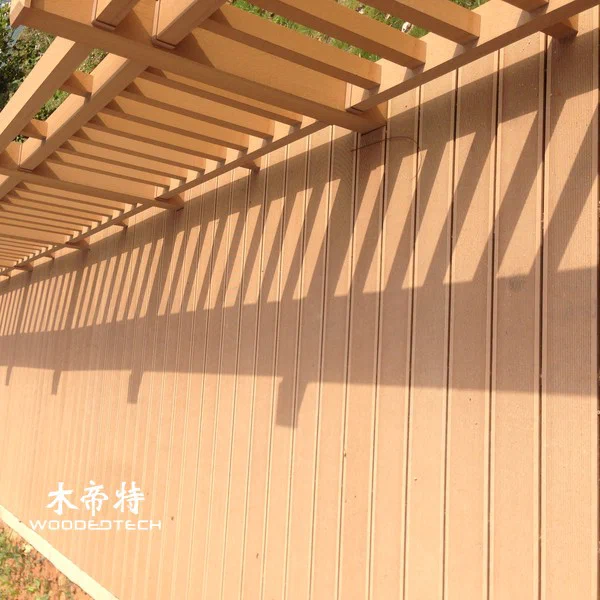
Painting a composite deck requires more than applying a coat of paint to the board surface. Wood plastic composite (WPC) decking contains wood fibers, polymers, additives, and processing agents that influence surface energy, coating adhesion, moisture resistance, and long-term durability. Proper surface preparation, compatible coating selection, and controlled application are essential for achieving a consistent finish without peeling, cracking, or premature discoloration.
Understanding Composite Deck Surfaces Before Painting
Before selecting a coating, manufacturers and contractors need to understand the type of composite decking being treated. Uncapped WPC boards typically have an exposed wood-polymer composite surface, while capped composite decking features a protective polymer layer surrounding the core. These structures respond differently to sanding, cleaning, primers, and paint systems.

Uncapped boards may absorb some coating components because of their exposed wood fibers. However, surface contamination, residual processing agents, and uneven porosity can still interfere with adhesion. Capped boards generally present a greater challenge because their polymer-rich outer layer has relatively low surface energy, making it difficult for conventional paints to bond securely.
The surface condition also depends on the extrusion process. During WPC production, wood flour, HDPE, PVC, or other polymer materials are blended under controlled conditions and processed through an extrusion die. Temperature fluctuations, poor material dispersion, excessive lubricant content, and inconsistent cooling can create surface defects that later affect coating performance.
For this reason, painting should never be treated as a substitute for proper extrusion quality control. A uniform, clean, defect-free board provides a much better foundation for subsequent surface finishing.
Surface Preparation: Cleaning, Sanding and Inspection
Surface preparation is the first major factor determining coating adhesion. Composite boards may contain dust, grease, mold-release residues, weathering deposits, and other contaminants that prevent coatings from making consistent contact with the substrate.
A suitable preparation process generally includes the following steps:
- Cleaning: Remove dirt, grease, mildew, and surface deposits using a cleaner compatible with the composite material. Rinse thoroughly and allow the boards to dry.
- Inspection: Check for scratches, cracks, exposed wood fibers, uneven textures, and manufacturing defects.
- Light sanding: Where permitted by the board manufacturer’s instructions, use controlled abrasion to improve mechanical bonding. Avoid removing protective caps or creating deep scratches.
- Dust removal: Eliminate sanding particles using clean equipment and allow the surface to dry completely.
- Moisture assessment: Confirm that the substrate meets the coating manufacturer’s moisture requirements before application.
Sanding requires particular attention when working with capped WPC decking. Aggressive abrasion can damage the protective outer layer, expose the underlying composite core, and compromise the board’s resistance to moisture and UV exposure.
A small test area is recommended before treating an entire deck. This allows operators to evaluate surface compatibility, coating appearance, and initial adhesion without risking a large production area.
Coating Selection and Adhesion Performance
Choosing the correct coating is essential because not all paints designed for wood or plastic are suitable for composite decking. The coating must be compatible with the board’s polymer composition, surface structure, and expected outdoor exposure.
For uncapped composite decking, exterior acrylic coatings and compatible specialty coatings may be considered, depending on the substrate and manufacturer’s recommendations. For capped boards, a coating specifically formulated and tested for the relevant polymer surface is generally necessary.
Important coating properties include:
- Adhesion strength: The coating should maintain a reliable bond under temperature changes and normal deck use.
- UV resistance: Outdoor coatings need to resist fading, chalking, and degradation caused by sunlight.
- Water resistance: The coating should withstand rain, humidity, and repeated wetting.
- Flexibility: Sufficient flexibility helps accommodate dimensional movement caused by temperature fluctuations.
- Abrasion resistance: Deck surfaces experience foot traffic, furniture movement, and repeated mechanical contact.
Primer selection also affects performance. A suitable adhesion-promoting primer may improve bonding on difficult polymer surfaces, but compatibility must be confirmed through testing. Applying an ordinary wood primer to a low-energy plastic-rich surface can result in poor adhesion even when the initial appearance seems satisfactory.
For industrial WPC manufacturers, coating evaluation should include adhesion testing, weathering exposure, abrasion resistance, and resistance to moisture. Cross-cut adhesion testing can help identify bonding problems, while accelerated UV testing provides useful information about color stability and coating degradation.
Application Conditions and Coating Performance
Even a compatible coating can fail when application conditions are poorly controlled. Temperature, relative humidity, substrate cleanliness, coating thickness, and curing time all influence the final result.
The coating manufacturer’s recommended application temperature and humidity range should always be followed. Applying paint to a hot deck under direct sunlight may cause rapid solvent or water evaporation, leading to uneven film formation. Excessive humidity can slow drying and affect curing.
Application methods include brushing, rolling, and spraying. Spraying can provide a more uniform finish on large production surfaces, while brushing and rolling may be more practical for small maintenance projects.
Coating thickness should remain within the specified range. Excessive application can produce slow curing, surface wrinkling, or cracking. Insufficient thickness may reduce UV protection and weather resistance.
Before opening the deck to regular use, allow the coating to cure fully rather than relying only on surface drying. Dry-to-touch and fully cured are not necessarily the same condition.
Common Painting Problems and Their Causes
Several recurring problems affect the appearance and service life of painted composite decks. Understanding their causes helps manufacturers, distributors, and contractors establish more reliable finishing procedures.
| Production or application problem | Possible cause | Recommended action |
|---|---|---|
| Paint peeling | Poor surface preparation or incompatible coating | Clean thoroughly and verify coating compatibility |
| Uneven color | Inconsistent substrate absorption or coating thickness | Standardize preparation and application |
| Blistering | Moisture, trapped air, or improper curing | Check substrate dryness and application conditions |
| Cracking | Insufficient coating flexibility or excessive film thickness | Select a suitable flexible coating |
| Poor adhesion on capped boards | Low surface energy | Use a tested polymer-compatible coating system |
| Premature fading | Inadequate UV resistance | Select an exterior-grade UV-resistant coating |
These problems are not always caused by the painting process itself. Poor extrusion conditions can also contribute to inconsistent surface quality. For example, excessive lubricant migration, incomplete material mixing, and unstable die temperatures may produce surfaces that are difficult to clean or coat uniformly.
WPC manufacturers should therefore coordinate extrusion quality control with downstream surface treatment requirements.
Integrating Surface Treatment into WPC Manufacturing
For companies producing outdoor WPC decking at commercial scale, coating performance should be considered during product development rather than addressed only after extrusion.
Material formulation, mixing uniformity, pelletizing conditions, extrusion temperature control, die design, and cooling calibration all influence the finished board. Stable processing helps maintain consistent density, dimensional accuracy, surface texture, and polymer distribution.
Manufacturers may also consider alternative finishing technologies, including sanding, brushing, embossing, co-extrusion, and specialized surface coatings. Co-extrusion is particularly relevant for products requiring a durable protective cap, as it creates a functional outer layer during the extrusion process rather than relying entirely on post-production painting.
However, not every composite deck needs additional paint. Many modern WPC products are designed with integral colors and textured surfaces that provide their intended appearance without conventional coatings. Painting should therefore be evaluated against the product’s original design, maintenance requirements, and warranty conditions.
For B2B buyers sourcing outdoor WPC decking, it is worth requesting technical information about surface composition, coating compatibility, weathering performance, and recommended maintenance procedures. Manufacturers should provide representative samples and test results before approving a coating system for large-scale production.
FAQ
Q: Can all composite decking boards be painted?
A: No. Uncapped and capped composite boards have different surface characteristics. Painting should only be undertaken when the board manufacturer confirms that the surface is compatible with the selected coating.
Q: Why does paint peel off composite decking?
A: Common causes include inadequate cleaning, incompatible primers, low surface energy, moisture contamination, and insufficient curing.
Q: Is co-extruded WPC decking better than painted composite decking?
A: Co-extruded decking has an integrated protective polymer cap that can improve surface durability and weather resistance. Painted decking relies on an applied coating, so performance depends more heavily on preparation, adhesion, and coating maintenance.
Related Articles
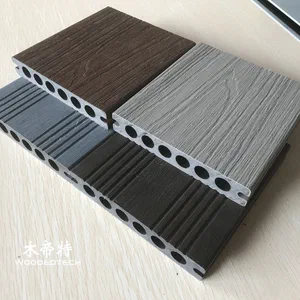 Painting Composite Decks: Industrial Coating Guide for 2026
 Composite Balcony Decking: Key Benefits and Selection Criteria for Commercial Projects
 Composite Decking Examples: Industrial Applications and Material Selection Guidelines
 How to Make Plastic Look Like Wood: Industrial Finishing Techniques and Applications
Related Products
 GD13820 M Shape Co Extruded Composite Deck Planks Feature a Special Profile Design for Distinctive Outdoor Decking Applications
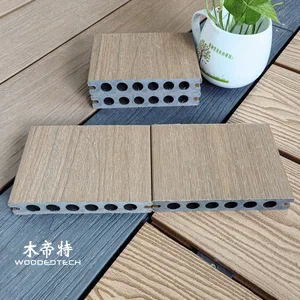 GD13823 Double Sided Flat Surface Co Extruded WPC Decking Features a Popular Width and Thickness with Round Hollow Structure
 GD13823-3 Composite Boards for Decking Are Available in Multiple Stock Colors with 3 Meter Lengths and Single Piece Delivery