Painting Composite Decks: Industrial Coating Guide for 2026
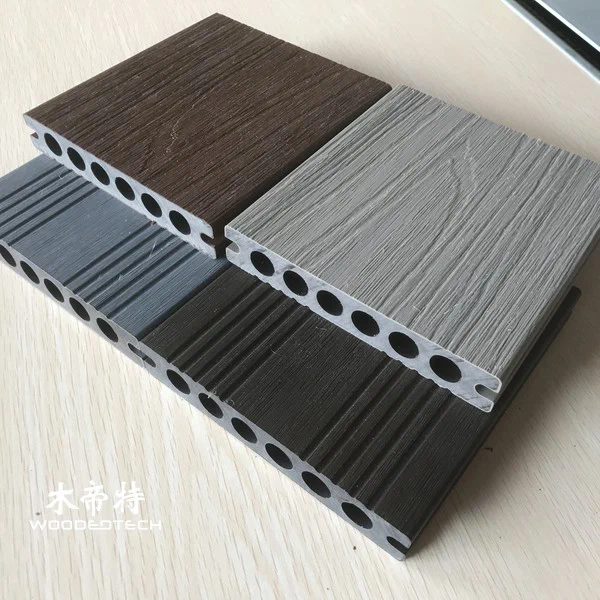
Painting composite decks requires a stable WPC (wood plastic composite) surface created through a controlled extrusion process. Industrial coating performance depends on every production stage, from raw material preparation and extrusion temperature management to surface treatment and final paint adhesion.
WPC extrusion process before painting
Outdoor WPC decking production starts with accurate material preparation. Wood fiber or wood flour is blended with thermoplastics such as PE or PVC, along with coupling agents, stabilizers, pigments, lubricants, and UV additives. The mixture must achieve uniform dispersion because uneven ingredients can cause color variation, weak bonding, or surface defects after painting.
After mixing, the compound is commonly pelletized to improve feeding stability. The pellets provide consistent material flow into the extrusion line and help manufacturers maintain stable production for large-volume orders. During extrusion, temperature control is critical. The barrel temperature is usually adjusted by heating zones to achieve proper plastic melting without damaging wood fibers. Excessive heat may create discoloration, gas release, or reduced mechanical strength.
The extrusion process uses a specially designed mold to form the final decking profile. Mold design affects board strength, expansion performance, surface appearance, and internal stress distribution. Engineers optimize cavity dimensions, flow channels, and pressure balance to avoid problems such as uneven thickness, bending, and incomplete filling.
Cooling calibration and surface preparation
After leaving the mold, the hot WPC profile enters the cooling calibration system. Vacuum calibration tables and water cooling tanks control the board dimensions while reducing deformation. Stable cooling is essential for achieving accurate width, thickness, and straightness, especially for long outdoor composite deck boards.
Before industrial coating, the WPC surface requires proper treatment. Sanding, brushing, embossing, corona treatment, or plasma treatment can improve coating adhesion. For painted composite decks, manufacturers often remove surface contaminants and create a slightly rough texture so coatings can bond effectively. UV-resistant primers and outdoor-grade paints are selected based on weather exposure, moisture resistance, and expected service life.
Common production and coating problems
Even advanced WPC extrusion lines can experience quality issues. Common problems include:

- Poor paint adhesion caused by insufficient surface preparation
- Color differences caused by unstable pigment mixing
- Cracks or warping caused by incorrect cooling conditions
- Surface bubbles caused by moisture in raw materials
- Low impact strength caused by improper material ratios
A reliable WPC production system combines precise extrusion technology with suitable coating methods. For manufacturers producing outdoor composite decks, controlling the complete process ensures better appearance, durability, and resistance against sunlight, rain, and temperature changes.
FAQ
Q: Can WPC composite decks be painted after extrusion? A: Yes, but the surface must be properly cleaned and treated to improve coating adhesion. Industrial preparation methods provide more reliable results than direct painting on untreated surfaces.
Q: Why is extrusion temperature control important for WPC decking? A: Correct temperature control prevents wood fiber degradation, discoloration, gas defects, and weak mechanical performance during production.
Q: What surface treatments improve composite deck coating quality? A: Sanding, brushing, embossing, and surface activation methods can increase coating adhesion and improve the final appearance.
Related Articles
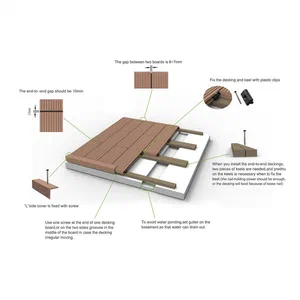
Related Products
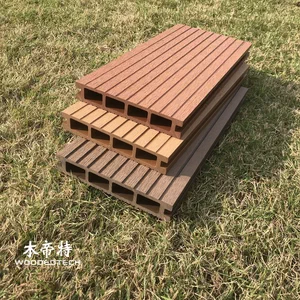 D14025-3 Square Hole Double Sided Grooved WPC Board Factory Producing Outdoor Decking Boards With Good Slip Resistance
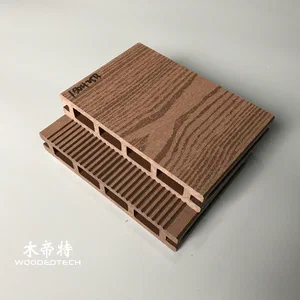 D15025-2 Classic Waterproof Insect Resistant Corrosion Resistant And Termite Resistant Composite Decking Types With Twenty Years Of Sales Experience
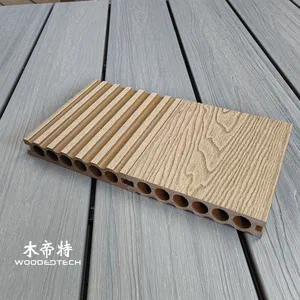 Single Side Embossed Grain 140-25 Round Hole Flooring F Type Teak Color Composite Deck Images For Cost Effective Engineering Projects