
Natural Aesthetics: composite decking wood look with Zero Maintenance
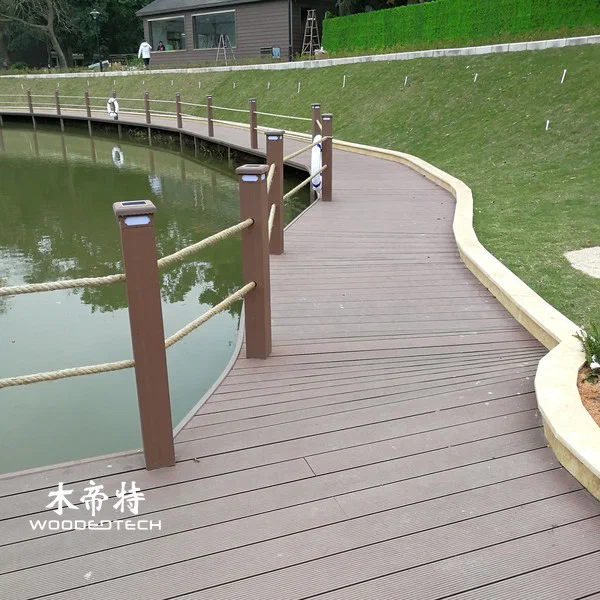
Natural aesthetics are no longer limited to timber. Composite decking with a wood look gives specifiers, contractors, and project owners a cleaner way to deliver warm, natural style with far less upkeep, making it a practical choice for commercial outdoor spaces.
Why the wood look matters
For hospitality terraces, apartment balconies, resort walkways, and public leisure areas, appearance affects how a space is used and valued. A realistic wood grain finish creates the familiar look clients want, while composite materials avoid the common problems of splintering, rotting, warping, and frequent repainting. That makes the product easier to specify for projects where long-term performance matters as much as first impressions.
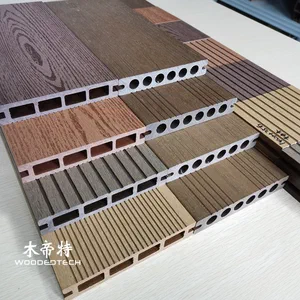
Modern manufacturing has raised the standard well beyond basic plastic-style boards. Textured surfaces, color variation, and improved embossing help composite decking resemble natural timber at a glance, but with more consistent quality from batch to batch. For B2B buyers, that consistency helps simplify procurement across larger developments and repeated project phases.
Zero maintenance, not zero responsibility
“Zero maintenance” is best understood as very low maintenance. Composite decking does not need sanding, staining, sealing, or regular recoating. Routine cleaning with water and a mild detergent is usually enough to keep the surface presentable, which reduces labor costs and limits disruption in active sites.
That low-maintenance profile is especially valuable in commercial environments where downtime is expensive. Facilities teams can keep outdoor areas in use without scheduling seasonal refinishing work, and procurement teams can better predict lifecycle costs. When comparing options, the real advantage is not only the product price, but the reduced expense of ownership over time.

Key advantages for industrial and B2B use
Composite decking wood look products are widely selected because they balance design and practicality:
- Stable appearance for consistent project branding
- Better resistance to moisture and UV exposure
- Lower ongoing maintenance than natural timber
- Suitable for high-traffic outdoor applications
- Easier specification for repeat orders and multi-site projects
These advantages make the material relevant for developers, contractors, hotel groups, and distributors looking for reliable outdoor surfacing. It also supports faster installation planning, especially when projects require coordinated finishes across decking, cladding, and railing systems.
Choosing the right supplier
Product quality varies, so buyers should review board structure, surface treatment, slip resistance, color stability, and warranty terms before placing an order. For export and wholesale buyers, it also helps to confirm factory capacity, packaging standards, and customization options. A dependable supplier should be able to support technical questions and provide samples for project approval.
When the goal is a natural look with predictable performance, composite decking offers a strong middle ground between aesthetics and operational efficiency. It gives commercial projects the warmth of wood without the maintenance burden that usually comes with it.
FAQ
Q: Is composite decking really maintenance-free? A: Not completely. It still needs periodic cleaning, but it avoids sanding, sealing, staining, and repainting.
Q: Does composite decking look like real wood? A: High-quality boards can closely mimic timber grain and color variation, especially with embossed or co-extruded surfaces.
Q: Where is it used most often? A: It is commonly used on terraces, pool surrounds, balconies, walkways, hospitality projects, and other outdoor commercial spaces.
Related Articles
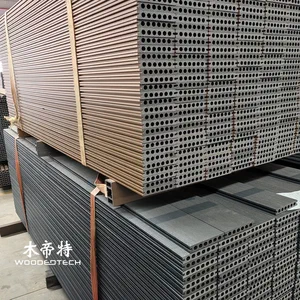
Related Products
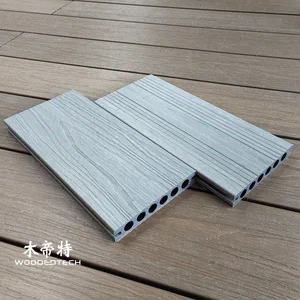 Antique Wood GD13823-3 Co Extruded Composite Wood Decking Boards with Round Holes Are Available in Stock in 3 Meter Lengths Year Round
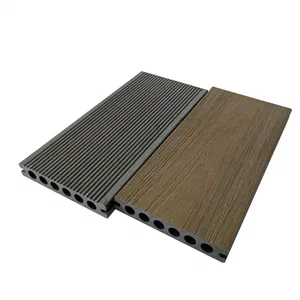 GD14023 Composite Decking Versus Wood Decking Features a Round Hole Structure with Semi Capped Co Extrusion
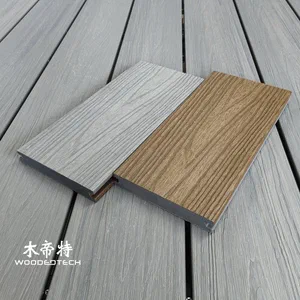 Second Generation Two Color Co Extruded 3D Embossed 3DGD14023S Composite Wood Deck Boards Feature an Extremely Realistic Antique Wood and Teak Grain Texture