
Manufacturing Techniques for Polymer Matrix Composites (PMCs): A Guide
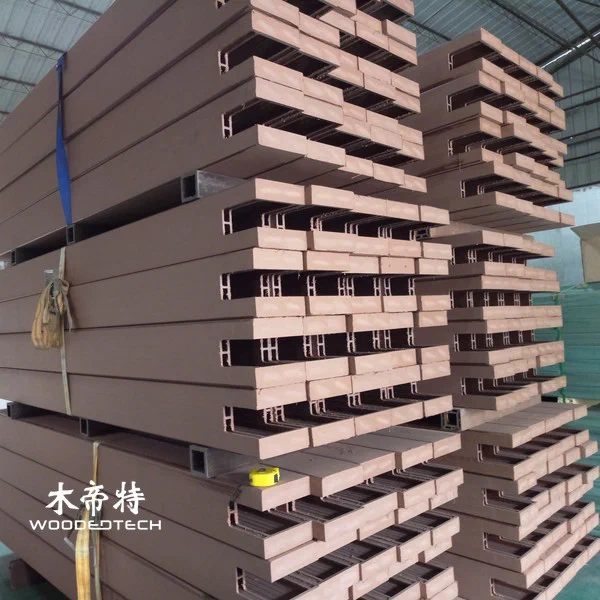
Polymer matrix composites (PMCs) are engineered materials made by combining a polymer resin with reinforcing materials to achieve specific strength, durability, and performance characteristics. In outdoor WPC manufacturing, the extrusion process plays a central role in producing consistent profiles for decking, wall cladding, fencing, and other exterior applications. Understanding each production stage helps manufacturers improve product quality, reduce waste, and maintain stable supply chain performance.
Understanding Polymer Matrix Composite Manufacturing
Polymer matrix composites combine a polymer-based matrix with reinforcing materials such as wood fibers, mineral fillers, or synthetic fibers. Wood plastic composite (WPC) is a common example, typically manufactured using thermoplastics such as HDPE, PVC, or PP combined with wood flour and functional additives.
The polymer matrix binds the reinforcing materials together, while the fillers influence stiffness, dimensional stability, texture, and cost. Additives such as coupling agents, lubricants, antioxidants, and UV stabilizers help improve processing and outdoor performance.
For outdoor WPC products, the formulation must balance several factors:
- Mechanical strength and impact resistance
- Moisture resistance and dimensional stability
- UV resistance and color retention
- Processing fluidity and extrusion stability
- Surface appearance and long-term durability
A consistent formulation is the starting point for reliable production.
Material Mixing and Pelletizing
The first production stage involves preparing and blending raw materials. Wood flour must have controlled particle size and moisture content before mixing. Excess moisture can cause bubbles, surface defects, and weak bonding during extrusion.
Manufacturers typically use high-speed hot mixers to distribute polymers, wood fibers, and additives evenly. Temperature and mixing time must be controlled to prevent premature degradation while ensuring sufficient dispersion.
After hot mixing, the material may enter a cooling mixer to reduce its temperature and prevent clumping. Depending on the production line and formulation, manufacturers can use direct powder feeding or pelletizing before extrusion.
Pelletizing converts the blended compound into uniform granules, making material feeding more stable and improving consistency during production. However, the pelletizing process must be carefully controlled to avoid excessive heat exposure, poor dispersion, or moisture absorption.
Extrusion Temperature Control
Extrusion is the core process in outdoor WPC manufacturing. The prepared compound enters a single-screw or twin-screw extruder, where heat and mechanical shear soften the polymer and distribute the wood fibers throughout the melt.
Temperature settings depend on the polymer type, formulation, screw configuration, and product design. Each heating zone needs independent control to maintain stable material flow.
Typical processing considerations include:
- Feeding zone: Maintain smooth material feeding without premature softening.
- Compression zone: Promote melting and uniform material mixing.
- Metering zone: Maintain consistent melt pressure and output.
- Die zone: Keep the material sufficiently fluid for accurate profile formation.
Excessive temperatures can cause wood fiber degradation, discoloration, unpleasant odors, and reduced mechanical performance. Temperatures that are too low can result in poor plasticization, high extrusion pressure, rough surfaces, and unstable output.
Experienced extrusion engineers monitor melt temperature, screw speed, motor load, pressure, and production speed together rather than relying only on heating-zone settings.
Mold Design and Profile Formation
The extrusion die determines the final cross-sectional shape and dimensional accuracy of WPC products. For decking boards, wall panels, and hollow profiles, mold design must account for material flow, wall thickness, internal cavities, and cooling behavior.
A well-designed mold provides balanced material distribution across the entire profile. Uneven flow can create differences in wall thickness, internal stress, surface defects, and dimensional variation.
Important mold design factors include:

- Die channel geometry and flow resistance
- Melt distribution across hollow and solid sections
- Wall thickness consistency
- Venting and pressure control
- Compatibility with the selected WPC formulation
For hollow decking boards, internal support structures and cavity arrangements must provide sufficient stiffness without unnecessarily increasing material consumption.
Mold calibration is equally important. Manufacturers should conduct trial runs, inspect profile dimensions, and adjust die settings before approving mass production.
Cooling Calibration and Dimensional Stability
After leaving the die, the hot WPC profile enters a calibration and cooling system. Vacuum calibration helps maintain the required shape and dimensions, while controlled water cooling reduces material temperature and stabilizes the profile.
Cooling speed must match extrusion output. If cooling is too rapid, internal stress may develop, increasing the risk of warping, cracking, or uneven shrinkage. Insufficient cooling can cause deformation during pulling, cutting, and stacking.
Engineers should pay particular attention to:
- Vacuum pressure and calibration accuracy
- Cooling water temperature and circulation
- Haul-off speed and synchronization
- Profile straightness and wall thickness
- Shrinkage after cooling
Stable cooling calibration is especially important for long outdoor WPC decking boards, where even small dimensional differences can affect installation and joint alignment.
Surface Treatment and Product Finishing
Surface treatment gives WPC products their final appearance and can improve functional performance. Common finishing techniques include sanding, brushing, embossing, sanding-texturing combinations, and co-extrusion.
Mechanical brushing creates a more natural wood-like texture, while embossing produces decorative grain patterns. These processes must be synchronized with the profile’s movement to avoid inconsistent patterns or surface damage.
Co-extrusion technology adds a protective polymer layer around the WPC core. This outer layer can improve resistance to staining, moisture, UV exposure, and surface wear, depending on the cap material and formulation.
After surface treatment, products undergo cutting, dimensional inspection, appearance checks, and packaging. Protective packaging is important during storage and transportation to prevent scratches, contamination, and deformation.
Common Production Problems and Quality Control
Even well-equipped WPC factories can experience production problems caused by raw material variation, incorrect processing parameters, or equipment wear.
Common issues include:
- Surface bubbles: Often associated with excessive raw material moisture or inadequate venting.
- Rough surfaces: May result from poor plasticization, unsuitable lubrication, or unstable melt flow.
- Profile warping: Commonly linked to uneven cooling, internal stress, or inconsistent haul-off speed.
- Color variation: Can be caused by inconsistent additive dispersion, raw material differences, or thermal degradation.
- Low mechanical strength: May indicate poor fiber-polymer bonding, incorrect formulation, or inadequate processing.
- Dimensional inconsistency: Often results from unstable extrusion pressure, worn calibration equipment, or incorrect pulling speed.
A reliable inspection system should include dimensional measurements, density testing, water absorption testing, impact resistance evaluation, bending strength tests, and appearance inspection. Outdoor products should also undergo appropriate UV and weathering evaluations.
Manufacturers should record production parameters and inspection results by batch. This makes it easier to identify recurring defects, trace raw material variations, and maintain consistent product quality across large orders.
For international buyers, understanding the manufacturing process provides a practical basis for evaluating a WPC supplier. A capable factory should demonstrate control over raw material preparation, extrusion technology, mold calibration, surface finishing, and final inspection. These production capabilities directly influence product consistency, delivery reliability, and the long-term performance of outdoor wood plastic composite products.
Related Articles

Related Products
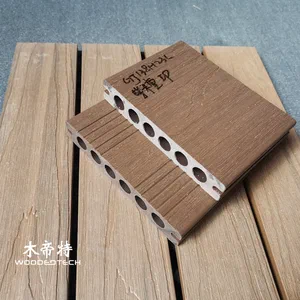 GD13823-3 Composite Boards for Decking Are Available in Multiple Stock Colors with 3 Meter Lengths and Single Piece Delivery
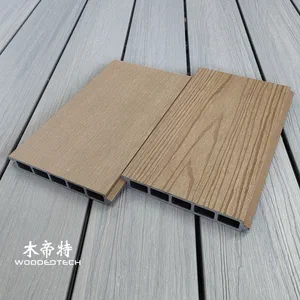 3DGL18024 WPC Longboard Fence Features Premium Co Extruded 3D Embossed Teak Wood Grain Texture with Realistic Natural Wood Fibers
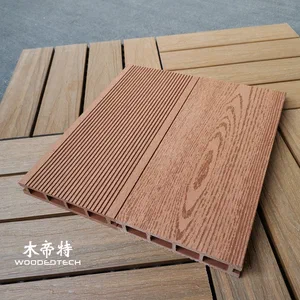 The Classic D14025-4 Red Wood WPC Wood Sheet Features a Timeless 2D Flat Wood Grain Design That Remains Popular After Twenty Years